Shuang Yu , Yesheng Zhou , Si Liu , Qian Zhang , Shutian Zhang , Shengtao Zhu , Shanshan Wu
{"title":"Both general and central obesity are associated with increased risk of irritable bowel syndrome: A large-scale prospective cohort study","authors":"Shuang Yu , Yesheng Zhou , Si Liu , Qian Zhang , Shutian Zhang , Shengtao Zhu , Shanshan Wu","doi":"10.1016/j.ajcnut.2025.03.001","DOIUrl":null,"url":null,"abstract":"<div><h3>Background</h3><div>Obesity has emerged as a major public health concern worldwide. However, the relationship between obesity and irritable bowel syndrome (IBS) remains unclear.</div></div><div><h3>Objectives</h3><div>We aimed to systematically examine the association of both general and central obesity measures with risk of incident IBS in a large population-based cohort.</div></div><div><h3>Methods</h3><div>Participants free of IBS, celiac disease, inflammatory bowel disease, and any cancer at baseline were included. Obesity was assessed using various measures of general and central obesity [i.e., Body mass index (BMI in kg/m<sup>2</sup>), waist circumference, etc.]. The primary outcome was incident IBS. The Cox proportional hazard model was conducted to estimate the association.</div></div><div><h3>Results</h3><div>Among 416,124 participants (mean age 56.2 y), 133,775 (32.1%), 178,283 (42.8%) and 102,139 (24.5%) were BMI-defined normal, overweight and obesity at baseline. During a median of 14.6-y follow-up, 8744 (2.1%) incident IBS were identified. After multiple adjustments, individuals with obesity had a 7% higher risk of developing IBS than those with normal BMI [hazard ratio (HR): 1.07; 95% confidence interval (CI): 1.01, 1.13]. As for central obesity, individuals with the highest quartiles of waist circumference (HR: 1.14; 95% CI: 1.06, 1.27) and visceral adipose tissue volume (HR: 1.35; 95% CI: 1.04, 1.75) had a 14% and 35% greater risk of IBS compared with the lowest quartiles. A similar positive association was observed in other general and central obesity measures, with an 8–35% higher risk of IBS occurrence in the highest quartile compared with the reference group. Further sensitivity analyses and subgroup analyses demonstrated similar results.</div></div><div><h3>Conclusions</h3><div>Both general and central obesity are associated with an increased risk of developing IBS, suggesting the importance of obesity management.</div></div>","PeriodicalId":50813,"journal":{"name":"American Journal of Clinical Nutrition","volume":"121 5","pages":"Pages 1054-1062"},"PeriodicalIF":6.9000,"publicationDate":"2025-05-01","publicationTypes":"Journal Article","fieldsOfStudy":null,"isOpenAccess":false,"openAccessPdf":"","citationCount":"0","resultStr":null,"platform":"Semanticscholar","paperid":null,"PeriodicalName":"American Journal of Clinical Nutrition","FirstCategoryId":"3","ListUrlMain":"https://www.sciencedirect.com/science/article/pii/S0002916525001273","RegionNum":1,"RegionCategory":"医学","ArticlePicture":[],"TitleCN":null,"AbstractTextCN":null,"PMCID":null,"EPubDate":"2025/3/5 0:00:00","PubModel":"Epub","JCR":"Q1","JCRName":"NUTRITION & DIETETICS","Score":null,"Total":0}
引用次数: 0
Abstract
Background
Obesity has emerged as a major public health concern worldwide. However, the relationship between obesity and irritable bowel syndrome (IBS) remains unclear.
Objectives
We aimed to systematically examine the association of both general and central obesity measures with risk of incident IBS in a large population-based cohort.
Methods
Participants free of IBS, celiac disease, inflammatory bowel disease, and any cancer at baseline were included. Obesity was assessed using various measures of general and central obesity [i.e., Body mass index (BMI in kg/m2), waist circumference, etc.]. The primary outcome was incident IBS. The Cox proportional hazard model was conducted to estimate the association.
Results
Among 416,124 participants (mean age 56.2 y), 133,775 (32.1%), 178,283 (42.8%) and 102,139 (24.5%) were BMI-defined normal, overweight and obesity at baseline. During a median of 14.6-y follow-up, 8744 (2.1%) incident IBS were identified. After multiple adjustments, individuals with obesity had a 7% higher risk of developing IBS than those with normal BMI [hazard ratio (HR): 1.07; 95% confidence interval (CI): 1.01, 1.13]. As for central obesity, individuals with the highest quartiles of waist circumference (HR: 1.14; 95% CI: 1.06, 1.27) and visceral adipose tissue volume (HR: 1.35; 95% CI: 1.04, 1.75) had a 14% and 35% greater risk of IBS compared with the lowest quartiles. A similar positive association was observed in other general and central obesity measures, with an 8–35% higher risk of IBS occurrence in the highest quartile compared with the reference group. Further sensitivity analyses and subgroup analyses demonstrated similar results.
Conclusions
Both general and central obesity are associated with an increased risk of developing IBS, suggesting the importance of obesity management.
期刊介绍:
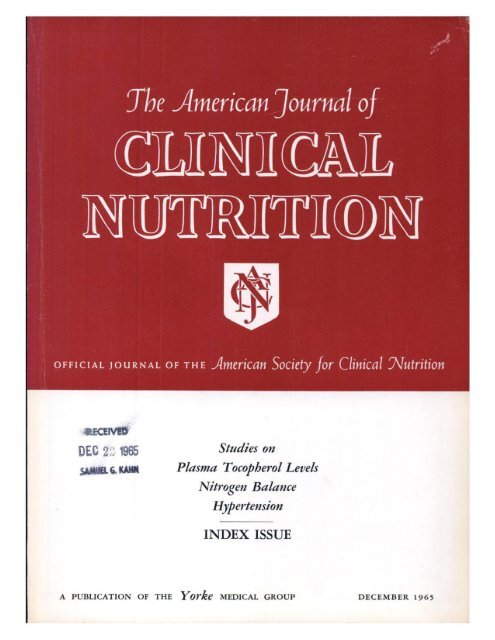
American Journal of Clinical Nutrition is recognized as the most highly rated peer-reviewed, primary research journal in nutrition and dietetics.It focuses on publishing the latest research on various topics in nutrition, including but not limited to obesity, vitamins and minerals, nutrition and disease, and energy metabolism.
Purpose:
The purpose of AJCN is to:
Publish original research studies relevant to human and clinical nutrition.
Consider well-controlled clinical studies describing scientific mechanisms, efficacy, and safety of dietary interventions in the context of disease prevention or health benefits.
Encourage public health and epidemiologic studies relevant to human nutrition.
Promote innovative investigations of nutritional questions employing epigenetic, genomic, proteomic, and metabolomic approaches.
Include solicited editorials, book reviews, solicited or unsolicited review articles, invited controversy position papers, and letters to the Editor related to prior AJCN articles.
Peer Review Process:
All submitted material with scientific content undergoes peer review by the Editors or their designees before acceptance for publication.



 京公网安备 11010802042870号
京ICP备2023020795号-1
京公网安备 11010802042870号
京ICP备2023020795号-1

 分享
分享
 求助内容:
求助内容: 应助结果提醒方式:
 扫码关注我们
