M J Potter, J D Heywood, S J Coeyman, W J Richardson
{"title":"Heart Scar-In-A-Dish: Tissue Culture Platform to Study Myocardial Infarct Healing In Vitro.","authors":"M J Potter, J D Heywood, S J Coeyman, W J Richardson","doi":"10.1101/2025.02.28.640625","DOIUrl":null,"url":null,"abstract":"<p><p>Myocardial Infarction (MI) is a major contributor to morbidity and mortality, wherein blood flow is blocked to a portion of the left ventricle and leads to myocardial necrosis and scar formation. Cardiac remodeling in response to MI is a major determinant of patient prognosis, so many therapies are under development to improve infarct healing. Part of this development involves in vitro therapy screening which can be accelerated by engineered heart tissues (EHTs). Unfortunately, EHTs often over-simplify the infarcted tissue microarchitecture by neglecting spatial variation found in infarcted ventricles. MI results in a spatially heterogeneous environment with an infarct zone composed mostly of extracellular matrix (ECM) and cardiac fibroblasts, contrasted with a remote (non-infarct) zone composed mostly of cardiomyocytes, and a border zone transitioning in between. The heterogeneous structure is accompanied by heterogeneous mechanics where the passive infarct zone is cyclically stretched under tension as the remote zone cyclically contracts with every heartbeat. We present an in vitro 3-dimensional tissue culture platform focused on mimicking the heterogeneous mechanical environment of post-infarct myocardium. Herein, EHTs were subjected to a cryowound injury to induce localized cell death in a central portion of beating tissues composed of neonatal rat cardiomyocytes and cardiac fibroblasts. After injury, the remote zone continued to contract (i.e., negative strains) while the wounded zone was cyclically stretched (i.e., positive tensile strains) with intermediate strains in the border zone. We also observed increased tissue stiffnesses in the wounded zone and border zone following injury, while the remote zone did not show the same stiffening. Collectively, this work establishes a novel in vitro platform for characterizing myocardial wound remodeling with both spatial and temporal resolution, contributing to a deeper understanding of MI and offering insights for potential therapeutic approaches.</p>","PeriodicalId":519960,"journal":{"name":"bioRxiv : the preprint server for biology","volume":" ","pages":""},"PeriodicalIF":0.0000,"publicationDate":"2025-03-02","publicationTypes":"Journal Article","fieldsOfStudy":null,"isOpenAccess":false,"openAccessPdf":"https://www.ncbi.nlm.nih.gov/pmc/articles/PMC11888419/pdf/","citationCount":"0","resultStr":null,"platform":"Semanticscholar","paperid":null,"PeriodicalName":"bioRxiv : the preprint server for biology","FirstCategoryId":"1085","ListUrlMain":"https://doi.org/10.1101/2025.02.28.640625","RegionNum":0,"RegionCategory":null,"ArticlePicture":[],"TitleCN":null,"AbstractTextCN":null,"PMCID":null,"EPubDate":"","PubModel":"","JCR":"","JCRName":"","Score":null,"Total":0}
引用次数: 0
Abstract
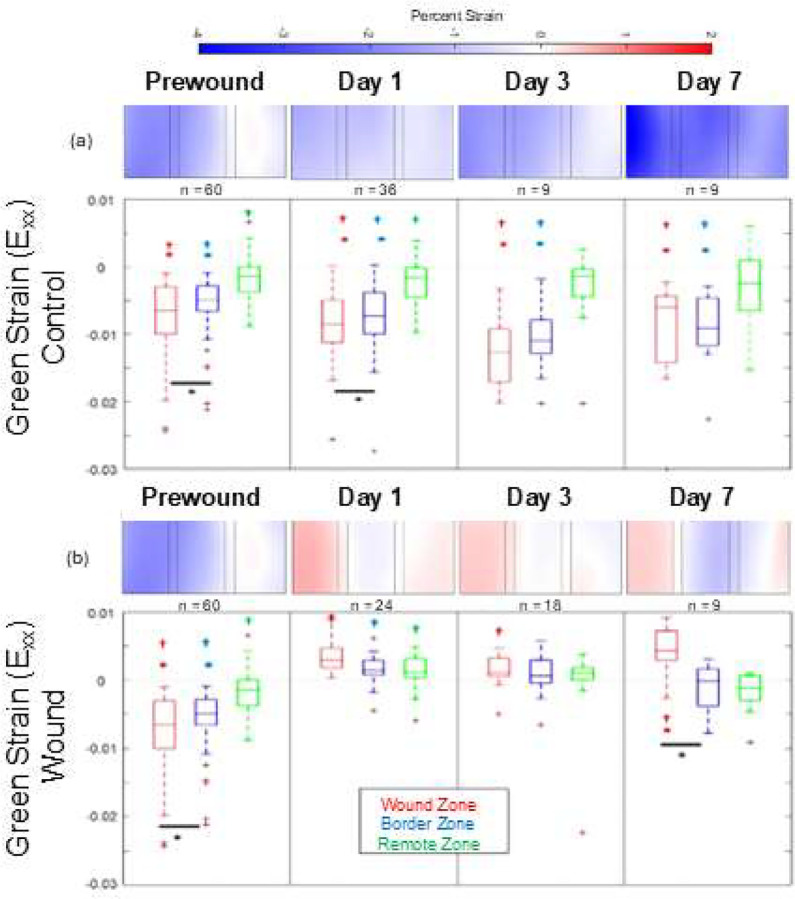
Myocardial Infarction (MI) is a major contributor to morbidity and mortality, wherein blood flow is blocked to a portion of the left ventricle and leads to myocardial necrosis and scar formation. Cardiac remodeling in response to MI is a major determinant of patient prognosis, so many therapies are under development to improve infarct healing. Part of this development involves in vitro therapy screening which can be accelerated by engineered heart tissues (EHTs). Unfortunately, EHTs often over-simplify the infarcted tissue microarchitecture by neglecting spatial variation found in infarcted ventricles. MI results in a spatially heterogeneous environment with an infarct zone composed mostly of extracellular matrix (ECM) and cardiac fibroblasts, contrasted with a remote (non-infarct) zone composed mostly of cardiomyocytes, and a border zone transitioning in between. The heterogeneous structure is accompanied by heterogeneous mechanics where the passive infarct zone is cyclically stretched under tension as the remote zone cyclically contracts with every heartbeat. We present an in vitro 3-dimensional tissue culture platform focused on mimicking the heterogeneous mechanical environment of post-infarct myocardium. Herein, EHTs were subjected to a cryowound injury to induce localized cell death in a central portion of beating tissues composed of neonatal rat cardiomyocytes and cardiac fibroblasts. After injury, the remote zone continued to contract (i.e., negative strains) while the wounded zone was cyclically stretched (i.e., positive tensile strains) with intermediate strains in the border zone. We also observed increased tissue stiffnesses in the wounded zone and border zone following injury, while the remote zone did not show the same stiffening. Collectively, this work establishes a novel in vitro platform for characterizing myocardial wound remodeling with both spatial and temporal resolution, contributing to a deeper understanding of MI and offering insights for potential therapeutic approaches.





 京公网安备 11010802042870号
京ICP备2023020795号-1
京公网安备 11010802042870号
京ICP备2023020795号-1

 分享
分享

 求助内容:
求助内容: 应助结果提醒方式:
 扫码关注我们
