Tao Wang, Aawrish Khan, Lunli Gong, Kim Hong, Lili Qi, Haiyan Cui
{"title":"Safety and Efficacy Evaluation of Composite Collagen in Human Infraorbital Anti-aging and Nude Mouse Skin Photoaging","authors":"Tao Wang, Aawrish Khan, Lunli Gong, Kim Hong, Lili Qi, Haiyan Cui","doi":"10.1007/s00266-025-04764-5","DOIUrl":null,"url":null,"abstract":"<div><h3>Background</h3><p>Collagen is currently a widely used injectable filler material. Due to the complexity and specificity of the infraorbital structure and function, it undergoes various aging changes earlier in the facial aging process. Additionally, continuous exposure to Ultraviolet (UV) leads to photoaging of the skin. In this study, we utilized type I and type III composite collagen as a filler material for injecting the infraorbital region of the human face and the dorsal region of a nude mouse skin photoaging model to assess its effectiveness and safety.</p><h3>Objective</h3><p>To assess the effectiveness of type I and type III composite collagen in treating age-related changes in the human infraorbital area, as well as in a nude mouse model of skin aging.</p><h3>Methods</h3><p>A total of 36 patients with infraorbital aging were enrolled to receive type I and type III composite collagen injections. The improvement of infraorbital aging was assessed at pre-injection, immediate post-injection, 1 week, 4 weeks, and 12 weeks. Additionally, nude mice photodamaged models were prepared and collagen injections were administered to treat photodamaged skin. The therapeutic efficacy was assessed by gross view, histological staining, gene expression analysis, and ELISA assay.</p><h3>Results</h3><p>Type I and Type III composite collagen injection can immediately fill depressed areas. However, one week after the injection, the collagen dehydrates and contracts, causing the material to be absorbed by the tissues and resulting in a slight regression of the filling effect. After one month, some of the collagen has degraded, with most of it degrading after three months. Additionally, in treating photoaging, type I and type III composite collagen has a more pronounced therapeutic effect on photoaging and demonstrates better results in collagen regeneration, inflammation reduction, and melanin control.</p><h3>Conclusion</h3><p>Type I and Type III composite collagen demonstrates superior efficacy and safety in addressing infraorbital aging and photoaging in nude mice skin, making it a more favorable choice as an injection material.</p><h3>Level of Evidence II</h3><p>This journal requires that authors assign a level of evidence to each article. For a full description of these Evidence-Based Medicine ratings, please refer to the Table of Contents or the online Instructions to Authors www.springer.com/00266.</p></div>","PeriodicalId":7609,"journal":{"name":"Aesthetic Plastic Surgery","volume":"49 9","pages":"2399 - 2410"},"PeriodicalIF":2.8000,"publicationDate":"2025-03-10","publicationTypes":"Journal Article","fieldsOfStudy":null,"isOpenAccess":false,"openAccessPdf":"","citationCount":"0","resultStr":null,"platform":"Semanticscholar","paperid":null,"PeriodicalName":"Aesthetic Plastic Surgery","FirstCategoryId":"3","ListUrlMain":"https://link.springer.com/article/10.1007/s00266-025-04764-5","RegionNum":3,"RegionCategory":"医学","ArticlePicture":[],"TitleCN":null,"AbstractTextCN":null,"PMCID":null,"EPubDate":"","PubModel":"","JCR":"Q2","JCRName":"SURGERY","Score":null,"Total":0}
引用次数: 0
Abstract
Background
Collagen is currently a widely used injectable filler material. Due to the complexity and specificity of the infraorbital structure and function, it undergoes various aging changes earlier in the facial aging process. Additionally, continuous exposure to Ultraviolet (UV) leads to photoaging of the skin. In this study, we utilized type I and type III composite collagen as a filler material for injecting the infraorbital region of the human face and the dorsal region of a nude mouse skin photoaging model to assess its effectiveness and safety.
Objective
To assess the effectiveness of type I and type III composite collagen in treating age-related changes in the human infraorbital area, as well as in a nude mouse model of skin aging.
Methods
A total of 36 patients with infraorbital aging were enrolled to receive type I and type III composite collagen injections. The improvement of infraorbital aging was assessed at pre-injection, immediate post-injection, 1 week, 4 weeks, and 12 weeks. Additionally, nude mice photodamaged models were prepared and collagen injections were administered to treat photodamaged skin. The therapeutic efficacy was assessed by gross view, histological staining, gene expression analysis, and ELISA assay.
Results
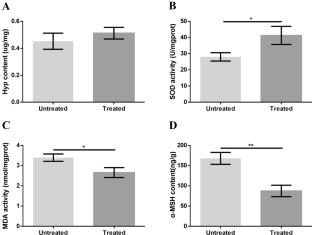
Type I and Type III composite collagen injection can immediately fill depressed areas. However, one week after the injection, the collagen dehydrates and contracts, causing the material to be absorbed by the tissues and resulting in a slight regression of the filling effect. After one month, some of the collagen has degraded, with most of it degrading after three months. Additionally, in treating photoaging, type I and type III composite collagen has a more pronounced therapeutic effect on photoaging and demonstrates better results in collagen regeneration, inflammation reduction, and melanin control.
Conclusion
Type I and Type III composite collagen demonstrates superior efficacy and safety in addressing infraorbital aging and photoaging in nude mice skin, making it a more favorable choice as an injection material.
Level of Evidence II
This journal requires that authors assign a level of evidence to each article. For a full description of these Evidence-Based Medicine ratings, please refer to the Table of Contents or the online Instructions to Authors www.springer.com/00266.
期刊介绍:
Aesthetic Plastic Surgery is a publication of the International Society of Aesthetic Plastic Surgery and the official journal of the European Association of Societies of Aesthetic Plastic Surgery (EASAPS), Società Italiana di Chirurgia Plastica Ricostruttiva ed Estetica (SICPRE), Vereinigung der Deutschen Aesthetisch Plastischen Chirurgen (VDAPC), the Romanian Aesthetic Surgery Society (RASS), Asociación Española de Cirugía Estética Plástica (AECEP), La Sociedad Argentina de Cirugía Plástica, Estética y Reparadora (SACPER), the Rhinoplasty Society of Europe (RSE), the Iranian Society of Plastic and Aesthetic Surgeons (ISPAS), the Singapore Association of Plastic Surgeons (SAPS), the Australasian Society of Aesthetic Plastic Surgeons (ASAPS), the Egyptian Society of Plastic and Reconstructive Surgeons (ESPRS), and the Sociedad Chilena de Cirugía Plástica, Reconstructiva y Estética (SCCP).
Aesthetic Plastic Surgery provides a forum for original articles advancing the art of aesthetic plastic surgery. Many describe surgical craftsmanship; others deal with complications in surgical procedures and methods by which to treat or avoid them. Coverage includes "second thoughts" on established techniques, which might be abandoned, modified, or improved. Also included are case histories; improvements in surgical instruments, pharmaceuticals, and operating room equipment; and discussions of problems such as the role of psychosocial factors in the doctor-patient and the patient-public interrelationships.
Aesthetic Plastic Surgery is covered in Current Contents/Clinical Medicine, SciSearch, Research Alert, Index Medicus-Medline, and Excerpta Medica/Embase.



 京公网安备 11010802042870号
京ICP备2023020795号-1
京公网安备 11010802042870号
京ICP备2023020795号-1

 分享
分享
 求助内容:
求助内容: 应助结果提醒方式:
 扫码关注我们
