Novel Smartphone App and Supportive Accountability for the Treatment of Childhood Disruptive Behavior Problems: Protocol for a Randomized Controlled Trial.
Oliver Lindhiem, Claire S Tomlinson, David J Kolko, Jennifer S Silk, Danella Hafeman, Meredith Wallace, I Made Agus Setiawan, Bambang Parmanto
{"title":"Novel Smartphone App and Supportive Accountability for the Treatment of Childhood Disruptive Behavior Problems: Protocol for a Randomized Controlled Trial.","authors":"Oliver Lindhiem, Claire S Tomlinson, David J Kolko, Jennifer S Silk, Danella Hafeman, Meredith Wallace, I Made Agus Setiawan, Bambang Parmanto","doi":"10.2196/67051","DOIUrl":null,"url":null,"abstract":"<p><strong>Background: </strong>Although evidence-based treatments have been developed for childhood behavior problems, many families encounter barriers to treatment access and completion (eg, local availability of services, transportation, cost, and perceived stigma). Smartphone apps offer a cost-efficient method to deliver content to families.</p><p><strong>Objective: </strong>The aim of this study is to evaluate the effectiveness of the UseIt! mobile health system as both stand-alone and coach-assisted interventions via a randomized controlled trial. The UseIt! System is designed to reduce disruptive behaviors in young children.</p><p><strong>Methods: </strong>A nationwide sample of parents of children aged 5 years to 8 years with disruptive behaviors (N=324 dyads) are randomly assigned to the stand-alone app (UseIt!; n=108), the coach-assisted app (UseIt! plus supportive accountability; n=108), or the control app (mindfulness app; n=108). The UseIt! App provides parents with tools and troubleshooting to address disruptive behaviors, along with a behavior diary to track behaviors and strategies over time. The coach-assisted condition includes a bachelor's level paraprofessional who provides weekly phone calls to promote engagement with the app. The control condition is composed of a mindfulness app. The web-based, self-assessed outcome measures (post treatment and 6-month follow-up) include measures of app usage, parenting knowledge (eg, knowledge of parent management training and cognitive behavioral therapy skills), and strategies (use of evidence-based parenting strategies), symptom reduction (eg, behavior problems), and parent mental health (eg, anxiety, stress, and depression). We hypothesize that both intervention conditions will show greater parent knowledge and use of skills along with greater symptom reduction relative to the control condition. Further, we hypothesize that those assigned to the coach assisted condition will report greater knowledge, skill use, and symptom reduction than the stand-alone app. We will use intent-to-treat analyses to regress outcomes on study conditions to evaluate for differences across conditions.</p><p><strong>Results: </strong>Recruitment of study participants began in December of 2022 and is ongoing. We have recruited over half of our intended sample of 324 parent-child dyads (n=214) as of December 2024. These dyads have been randomly allocated to each of the intervention conditions, with 71 assigned to the coach-assisted condition, 72 assigned to the stand-alone app, and 71 assigned to the control app condition. Data collection is projected to be completed by late 2026.</p><p><strong>Conclusions: </strong>The current study aims to address a gap in the literature regarding the feasibility, effectiveness, and utility of a smartphone app that includes a coach-assisted arm. Digital therapeutics have the potential to enhance the reach and scalability of skills-based psychosocial interventions. Findings from this study will advance scientific knowledge and have implications for clinical practice.</p><p><strong>Trial registration: </strong>ClinicalTrials.gov NCT05647772; https://clinicaltrials.gov/study/NCT05647772.</p><p><strong>International registered report identifier (irrid): </strong>DERR1-10.2196/67051.</p>","PeriodicalId":14755,"journal":{"name":"JMIR Research Protocols","volume":"14 ","pages":"e67051"},"PeriodicalIF":1.5000,"publicationDate":"2025-03-11","publicationTypes":"Journal Article","fieldsOfStudy":null,"isOpenAccess":false,"openAccessPdf":"https://www.ncbi.nlm.nih.gov/pmc/articles/PMC11937717/pdf/","citationCount":"0","resultStr":null,"platform":"Semanticscholar","paperid":null,"PeriodicalName":"JMIR Research Protocols","FirstCategoryId":"1085","ListUrlMain":"https://doi.org/10.2196/67051","RegionNum":0,"RegionCategory":null,"ArticlePicture":[],"TitleCN":null,"AbstractTextCN":null,"PMCID":null,"EPubDate":"","PubModel":"","JCR":"Q3","JCRName":"HEALTH CARE SCIENCES & SERVICES","Score":null,"Total":0}
引用次数: 0
Abstract
Background: Although evidence-based treatments have been developed for childhood behavior problems, many families encounter barriers to treatment access and completion (eg, local availability of services, transportation, cost, and perceived stigma). Smartphone apps offer a cost-efficient method to deliver content to families.
Objective: The aim of this study is to evaluate the effectiveness of the UseIt! mobile health system as both stand-alone and coach-assisted interventions via a randomized controlled trial. The UseIt! System is designed to reduce disruptive behaviors in young children.
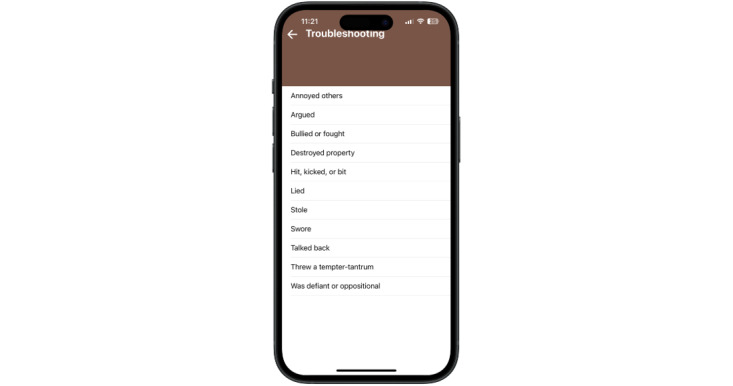
Methods: A nationwide sample of parents of children aged 5 years to 8 years with disruptive behaviors (N=324 dyads) are randomly assigned to the stand-alone app (UseIt!; n=108), the coach-assisted app (UseIt! plus supportive accountability; n=108), or the control app (mindfulness app; n=108). The UseIt! App provides parents with tools and troubleshooting to address disruptive behaviors, along with a behavior diary to track behaviors and strategies over time. The coach-assisted condition includes a bachelor's level paraprofessional who provides weekly phone calls to promote engagement with the app. The control condition is composed of a mindfulness app. The web-based, self-assessed outcome measures (post treatment and 6-month follow-up) include measures of app usage, parenting knowledge (eg, knowledge of parent management training and cognitive behavioral therapy skills), and strategies (use of evidence-based parenting strategies), symptom reduction (eg, behavior problems), and parent mental health (eg, anxiety, stress, and depression). We hypothesize that both intervention conditions will show greater parent knowledge and use of skills along with greater symptom reduction relative to the control condition. Further, we hypothesize that those assigned to the coach assisted condition will report greater knowledge, skill use, and symptom reduction than the stand-alone app. We will use intent-to-treat analyses to regress outcomes on study conditions to evaluate for differences across conditions.
Results: Recruitment of study participants began in December of 2022 and is ongoing. We have recruited over half of our intended sample of 324 parent-child dyads (n=214) as of December 2024. These dyads have been randomly allocated to each of the intervention conditions, with 71 assigned to the coach-assisted condition, 72 assigned to the stand-alone app, and 71 assigned to the control app condition. Data collection is projected to be completed by late 2026.
Conclusions: The current study aims to address a gap in the literature regarding the feasibility, effectiveness, and utility of a smartphone app that includes a coach-assisted arm. Digital therapeutics have the potential to enhance the reach and scalability of skills-based psychosocial interventions. Findings from this study will advance scientific knowledge and have implications for clinical practice.






 京公网安备 11010802042870号
京ICP备2023020795号-1
京公网安备 11010802042870号
京ICP备2023020795号-1

 分享
分享
 求助内容:
求助内容: 应助结果提醒方式:
 扫码关注我们
