Yulan Lu, Guozhuang Li, Yaqiong Wang, Kexin Xu, Xinran Dong, Jihao Cai, Bingbing Wu, Huijun Wang, Ping Fang, Jian Wang, Hua Wang, Luming Sun, Yongyu Ye, Qing Li, Yaping Liu, Li Liu, Ning Liu, Jiaqi Liu, Fang Song, Lin Yang, Zhengqing Qiu, Zefu Chen, Huaxia Luo, Dan Guo, Chanjuan Hao, Sen Zhao, Shangzhi Huang, Jing Peng, Xiaoqiang Cai, Ruifang Sui, Linkang Li, Nan Wu, Wenhao Zhou, Shuyang Zhang
{"title":"Expert consensus on clinical genome sequencing interpretation and reporting.","authors":"Yulan Lu, Guozhuang Li, Yaqiong Wang, Kexin Xu, Xinran Dong, Jihao Cai, Bingbing Wu, Huijun Wang, Ping Fang, Jian Wang, Hua Wang, Luming Sun, Yongyu Ye, Qing Li, Yaping Liu, Li Liu, Ning Liu, Jiaqi Liu, Fang Song, Lin Yang, Zhengqing Qiu, Zefu Chen, Huaxia Luo, Dan Guo, Chanjuan Hao, Sen Zhao, Shangzhi Huang, Jing Peng, Xiaoqiang Cai, Ruifang Sui, Linkang Li, Nan Wu, Wenhao Zhou, Shuyang Zhang","doi":"10.16288/j.yczz.24-296","DOIUrl":null,"url":null,"abstract":"<p><p>Genome sequencing (GS) refers to a technology that comprehensively and systematically detects the DNA sequences of an individual's nuclear and mitochondrial genomes. It aims to identify genetic variants and investigate their roles in human health and disease progression. As an emerging diagnostic tool, GS offers significant support for clinical diagnosis due to its high throughput, accuracy, and comprehensiveness. However, the complexity of data analysis and interpretation requires substantial professional expertise and experience, posing considerable challenges. When applying GS technology for molecular diagnosis of genetic diseases, ethical and technical issues related to clinical application arise, including informed consent, diagnostic data interpretation, and defining the scope and content of clinical reports. This expert consensus outlines the core workflow of clinical genome sequencing (cGS), clarifies its testing scope and technical limitations, and provides key steps for data quality control, analysis, annotation, and variant interpretation. It also addresses controversial issues related to report content and informed consent. This consensus aims to assist professionals in accurately understanding and appropriately utilizing clinical genome sequencing, thereby improving diagnostic accuracy for genetic diseases, enhancing the clinical utility of the technology, and advancing medical scientific research.</p>","PeriodicalId":35536,"journal":{"name":"遗传","volume":"47 3","pages":"314-328"},"PeriodicalIF":0.0000,"publicationDate":"2025-03-01","publicationTypes":"Journal Article","fieldsOfStudy":null,"isOpenAccess":false,"openAccessPdf":"","citationCount":"0","resultStr":null,"platform":"Semanticscholar","paperid":null,"PeriodicalName":"遗传","FirstCategoryId":"1091","ListUrlMain":"https://doi.org/10.16288/j.yczz.24-296","RegionNum":0,"RegionCategory":null,"ArticlePicture":[],"TitleCN":null,"AbstractTextCN":null,"PMCID":null,"EPubDate":"","PubModel":"","JCR":"Q3","JCRName":"Medicine","Score":null,"Total":0}
引用次数: 0
Abstract
Genome sequencing (GS) refers to a technology that comprehensively and systematically detects the DNA sequences of an individual's nuclear and mitochondrial genomes. It aims to identify genetic variants and investigate their roles in human health and disease progression. As an emerging diagnostic tool, GS offers significant support for clinical diagnosis due to its high throughput, accuracy, and comprehensiveness. However, the complexity of data analysis and interpretation requires substantial professional expertise and experience, posing considerable challenges. When applying GS technology for molecular diagnosis of genetic diseases, ethical and technical issues related to clinical application arise, including informed consent, diagnostic data interpretation, and defining the scope and content of clinical reports. This expert consensus outlines the core workflow of clinical genome sequencing (cGS), clarifies its testing scope and technical limitations, and provides key steps for data quality control, analysis, annotation, and variant interpretation. It also addresses controversial issues related to report content and informed consent. This consensus aims to assist professionals in accurately understanding and appropriately utilizing clinical genome sequencing, thereby improving diagnostic accuracy for genetic diseases, enhancing the clinical utility of the technology, and advancing medical scientific research.
期刊介绍:
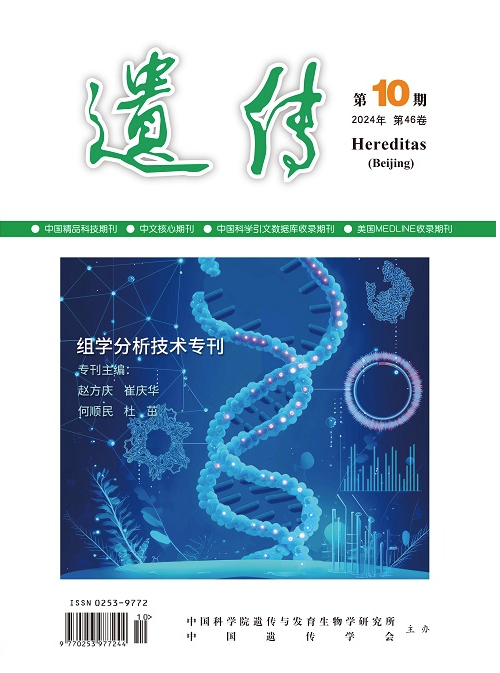
Hereditas is a national academic journal sponsored by the Institute of Genetics and Developmental Biology of the Chinese Academy of Sciences and the Chinese Society of Genetics and published by Science Press. It is a Chinese core journal and a Chinese high-quality scientific journal. The journal mainly publishes innovative research papers in the fields of genetics, genomics, cell biology, developmental biology, biological evolution, genetic engineering and biotechnology; new technologies and new methods; monographs and reviews on hot issues in the discipline; academic debates and discussions; experience in genetics teaching; introductions to famous geneticists at home and abroad; genetic counseling; information on academic conferences at home and abroad, etc. Main columns: review, frontier focus, research report, technology and method, resources and platform, experimental operation guide, genetic resources, genetics teaching, scientific news, etc.



 京公网安备 11010802042870号
京ICP备2023020795号-1
京公网安备 11010802042870号
京ICP备2023020795号-1

 分享
分享
 求助内容:
求助内容: 应助结果提醒方式:
 扫码关注我们
