Elaheh Mehrvarz, Ali Asghar Ghoreyshi, Ghasem D. Najafpour
{"title":"A bimetallic (Cu–Zn) doping platform for enhancement of CO2 capture and separation by a cost-effective biomass-based activated carbon","authors":"Elaheh Mehrvarz, Ali Asghar Ghoreyshi, Ghasem D. Najafpour","doi":"10.1007/s11356-025-36227-4","DOIUrl":null,"url":null,"abstract":"<div><p>This study presents an efficient method for CO<sub>2</sub> capture and separation using low-cost corncob-based activated carbon/metal nanoparticles (MNPs/AC) composites. Initially, the optimization of AC synthesis was conducted by varying activating agent/precursor ratios and activation temperature. Subsequently, the highly porous AC was modified using a polyol method with a single and binary mixture of Cu<sup>2+</sup> and Zn<sup>2+</sup> metals. The raw AC, Cu/AC, Zn/AC, and Cu–Zn/AC composites were extensively characterized through BET, FESEM-EDX, FT-IR, TGA, and Boehm’s titration analyses. Gas adsorption results revealed that the bimetallic composite sample, Cu–Zn/AC, demonstrated the highest CO<sub>2</sub> capture capacity of 5.41 mmol/g compared to the parent AC (3.25 mmol/g) as well as the single metal-doped ACs, Cu/AC (4.19 mmol/g) and Zn/AC (4.38 mmol/g) at 1 bar and 25 °C due to stronger synergistic effects. In addition, the selectivity of CO<sub>2</sub>/N<sub>2</sub> and CO<sub>2</sub>/CH<sub>4</sub> was also studied for samples using the Ideal Adsorption Solution Theory (IAST) at 25 °C and 1 bar. Among all samples, Cu–Zn/AC showed excellent selectivity towards CO<sub>2</sub>/N<sub>2</sub> and CO<sub>2</sub>/CH<sub>4</sub> with values of 65 and 16, respectively. The higher selectivity for metal-doped samples compared to the pristine AC is due to a stronger interaction between the introduced MNPs and CO<sub>2</sub> molecules, as indicated by the higher isosteric heat of CO<sub>2</sub> adsorption. These results suggest that the bimetallic (Cu–Zn) doped AC is an effective and low-cost adsorbent for natural gas upgrading and flue gas CO<sub>2</sub> capture.</p><h3>Graphical Abstract</h3>\n<div><figure><div><div><picture><source><img></source></picture></div></div></figure></div></div>","PeriodicalId":545,"journal":{"name":"Environmental Science and Pollution Research","volume":"32 13","pages":"8426 - 8447"},"PeriodicalIF":5.8000,"publicationDate":"2025-03-13","publicationTypes":"Journal Article","fieldsOfStudy":null,"isOpenAccess":false,"openAccessPdf":"","citationCount":"0","resultStr":null,"platform":"Semanticscholar","paperid":null,"PeriodicalName":"Environmental Science and Pollution Research","FirstCategoryId":"93","ListUrlMain":"https://link.springer.com/article/10.1007/s11356-025-36227-4","RegionNum":3,"RegionCategory":"环境科学与生态学","ArticlePicture":[],"TitleCN":null,"AbstractTextCN":null,"PMCID":null,"EPubDate":"","PubModel":"","JCR":"0","JCRName":"ENVIRONMENTAL SCIENCES","Score":null,"Total":0}
引用次数: 0
Abstract
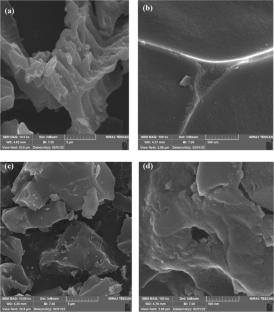
This study presents an efficient method for CO2 capture and separation using low-cost corncob-based activated carbon/metal nanoparticles (MNPs/AC) composites. Initially, the optimization of AC synthesis was conducted by varying activating agent/precursor ratios and activation temperature. Subsequently, the highly porous AC was modified using a polyol method with a single and binary mixture of Cu2+ and Zn2+ metals. The raw AC, Cu/AC, Zn/AC, and Cu–Zn/AC composites were extensively characterized through BET, FESEM-EDX, FT-IR, TGA, and Boehm’s titration analyses. Gas adsorption results revealed that the bimetallic composite sample, Cu–Zn/AC, demonstrated the highest CO2 capture capacity of 5.41 mmol/g compared to the parent AC (3.25 mmol/g) as well as the single metal-doped ACs, Cu/AC (4.19 mmol/g) and Zn/AC (4.38 mmol/g) at 1 bar and 25 °C due to stronger synergistic effects. In addition, the selectivity of CO2/N2 and CO2/CH4 was also studied for samples using the Ideal Adsorption Solution Theory (IAST) at 25 °C and 1 bar. Among all samples, Cu–Zn/AC showed excellent selectivity towards CO2/N2 and CO2/CH4 with values of 65 and 16, respectively. The higher selectivity for metal-doped samples compared to the pristine AC is due to a stronger interaction between the introduced MNPs and CO2 molecules, as indicated by the higher isosteric heat of CO2 adsorption. These results suggest that the bimetallic (Cu–Zn) doped AC is an effective and low-cost adsorbent for natural gas upgrading and flue gas CO2 capture.
期刊介绍:
Environmental Science and Pollution Research (ESPR) serves the international community in all areas of Environmental Science and related subjects with emphasis on chemical compounds. This includes:
- Terrestrial Biology and Ecology
- Aquatic Biology and Ecology
- Atmospheric Chemistry
- Environmental Microbiology/Biobased Energy Sources
- Phytoremediation and Ecosystem Restoration
- Environmental Analyses and Monitoring
- Assessment of Risks and Interactions of Pollutants in the Environment
- Conservation Biology and Sustainable Agriculture
- Impact of Chemicals/Pollutants on Human and Animal Health
It reports from a broad interdisciplinary outlook.



 京公网安备 11010802042870号
京ICP备2023020795号-1
京公网安备 11010802042870号
京ICP备2023020795号-1

 分享
分享
 求助内容:
求助内容: 应助结果提醒方式:
 扫码关注我们
