{"title":"Self-management and its associated factors among people living with diabetes in Blantyre, Malawi: a cross-sectional study.","authors":"Chimwemwe Kwanjo Banda, Belinda T Gombachika, Moffat J Nyirenda, Adamson Sinjani Muula","doi":"10.12688/aasopenres.12992.2","DOIUrl":null,"url":null,"abstract":"<p><p><b>Background:</b> Self-management is key to the control of glycaemia and prevention of complications in people with diabetes. Many people with diabetes in Malawi have poorly controlled glucose and they experience diabetes-related complications. This study aimed to assess diabetes self-management behaviours and to identify factors associated with it among people with diabetes at Queen Elizabeth Central Hospital, Blantyre, Malawi. <b>Methods:</b> This cross-sectional study recruited 510 adults attending a diabetes clinic at a teaching referral hospital in southern Malawi. The social cognitive theory was applied to identify factors associated with following all recommended self-management behaviours. Data on participants' demographics, clinical history, diabetes knowledge, self-efficacy, outcome expectations, social support, environmental barriers and diabetes self-management were collected. Univariate and multivariate logistic regression analyses were conducted to identify factors associated with following all self-management behaviours. <b>Results:</b> The mean age of participants was 53.6 (SD 13.3) years. The majority (82%) were females. Self-reported medication adherence within the last seven days was 88.6%; 77% reported being physically active for at least 30 minutes on more than three days in the previous seven days; 69% reported checking their feet every day and inspecting inside their shoes; 58% reported following a healthy diet regularly. Only 33% reported following all the self-management behaviours regularly. Multiple logistic regression analysis showed that self-efficacy was the only social cognitive factor associated with following all the self-management practices (p < 0.001). <b>Conclusions:</b> Participants in our study were not consistently achieving all self-management practices with dietary practices being the least adhered to behaviour by many. To improve self-management practices of people with diabetes, current health education programs should not only aim at improving diabetes related knowledge but also self-efficacy. Adopting interventions that promote self-efficacy in diabetes patients such as exposure to role models, peer education, providing positive feedback, and counselling is recommended.</p>","PeriodicalId":34179,"journal":{"name":"AAS Open Research","volume":"2 ","pages":"161"},"PeriodicalIF":0.0000,"publicationDate":"2021-12-23","publicationTypes":"Journal Article","fieldsOfStudy":null,"isOpenAccess":false,"openAccessPdf":"https://www.ncbi.nlm.nih.gov/pmc/articles/PMC11273085/pdf/","citationCount":"0","resultStr":null,"platform":"Semanticscholar","paperid":null,"PeriodicalName":"AAS Open Research","FirstCategoryId":"1085","ListUrlMain":"https://doi.org/10.12688/aasopenres.12992.2","RegionNum":0,"RegionCategory":null,"ArticlePicture":[],"TitleCN":null,"AbstractTextCN":null,"PMCID":null,"EPubDate":"2019/1/1 0:00:00","PubModel":"eCollection","JCR":"Q2","JCRName":"Multidisciplinary","Score":null,"Total":0}
引用次数: 0
Abstract
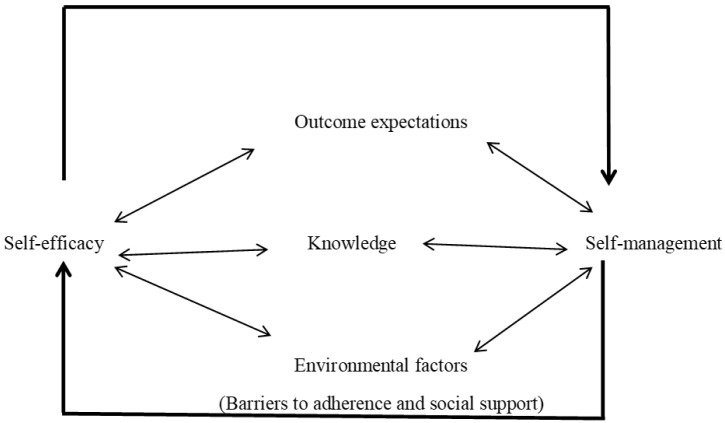
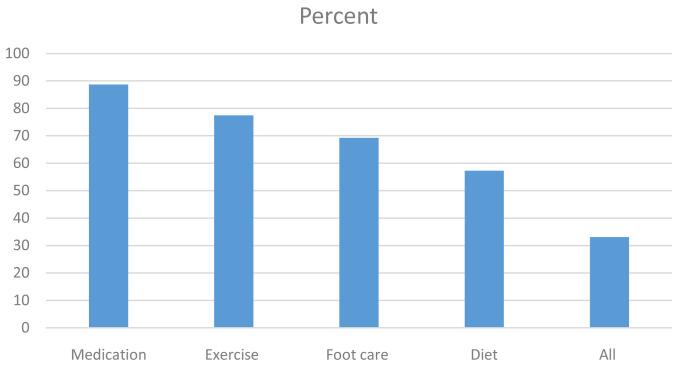
Background: Self-management is key to the control of glycaemia and prevention of complications in people with diabetes. Many people with diabetes in Malawi have poorly controlled glucose and they experience diabetes-related complications. This study aimed to assess diabetes self-management behaviours and to identify factors associated with it among people with diabetes at Queen Elizabeth Central Hospital, Blantyre, Malawi. Methods: This cross-sectional study recruited 510 adults attending a diabetes clinic at a teaching referral hospital in southern Malawi. The social cognitive theory was applied to identify factors associated with following all recommended self-management behaviours. Data on participants' demographics, clinical history, diabetes knowledge, self-efficacy, outcome expectations, social support, environmental barriers and diabetes self-management were collected. Univariate and multivariate logistic regression analyses were conducted to identify factors associated with following all self-management behaviours. Results: The mean age of participants was 53.6 (SD 13.3) years. The majority (82%) were females. Self-reported medication adherence within the last seven days was 88.6%; 77% reported being physically active for at least 30 minutes on more than three days in the previous seven days; 69% reported checking their feet every day and inspecting inside their shoes; 58% reported following a healthy diet regularly. Only 33% reported following all the self-management behaviours regularly. Multiple logistic regression analysis showed that self-efficacy was the only social cognitive factor associated with following all the self-management practices (p < 0.001). Conclusions: Participants in our study were not consistently achieving all self-management practices with dietary practices being the least adhered to behaviour by many. To improve self-management practices of people with diabetes, current health education programs should not only aim at improving diabetes related knowledge but also self-efficacy. Adopting interventions that promote self-efficacy in diabetes patients such as exposure to role models, peer education, providing positive feedback, and counselling is recommended.





 京公网安备 11010802042870号
京ICP备2023020795号-1
京公网安备 11010802042870号
京ICP备2023020795号-1

 分享
分享
 求助内容:
求助内容: 应助结果提醒方式:
 扫码关注我们
