{"title":"Relationship between swimming performance and shoulder muscle strength in elite Chinese water polo players.","authors":"Sikuan Ren, Wenyan Li, Zeyi Zhang, Fengrui Cao","doi":"10.1186/s13102-025-01104-7","DOIUrl":null,"url":null,"abstract":"<p><strong>Background: </strong>The relationship between swimming performance and shoulder muscle strength at different swimming distances is unclear. To provide a theoretical basis for future targeted training as well as better detection and prevention of water polo related injuries.</p><p><strong>Objective: </strong>To analyze the correlation between swimming speed and shoulder joint muscle strength.</p><p><strong>Methods: </strong>Eleven members of the Chinese men's water polo team were included as subjects, and a BIODEX isokinetic muscle strength tester was used to test the isokinetic muscle strength of shoulder flexion, extension, rotation, and abduction-adduction muscles on both sides of the shoulder. And a stopwatch was used to measure swimming speed. Correlation analysis was used to verify the relationship between muscle strength and swimming performance.</p><p><strong>Results: </strong>A significant difference in the peak moment index of the shoulder muscle groups on both sides of the shoulder at 60°/s centripetal movement. Correlation analysis showed that the 25 m swimming performance was significantly correlated with the peak moment index of the right shoulder extensor group (60°/s centripetal), and with the total work of the left and right shoulder flexor groups and the right shoulder extensor group under the 240°/s centripetal contraction; The 50 m swimming performance was significantly correlated with the index of the right shoulder flexor group and the total work of the left and right extensor groups (240°/s centripetal); The 100 m swimming performance was significantly correlated with the index of the left shoulder flexor group and the total work of the right shoulder extensor group (240°/s centripetal); Swimming performance over 200 m was significantly correlated with the peak moment of the right and left shoulder flexor groups and the right extensor group (240°/s centripetal).</p><p><strong>Conclusion: </strong>National male water polo players have balanced muscle strength on their left and right sides, which contributes to improved swimming performance. In addition, the muscle strength characteristics of their shoulder flexion-extension and adduction-abduction muscle groups can be used as predictors of swimming performance. Conducting training is important to improve the swimming ability of water polo players as well as to better prevent the incidence of shoulder injuries.</p>","PeriodicalId":48585,"journal":{"name":"BMC Sports Science Medicine and Rehabilitation","volume":"17 1","pages":"47"},"PeriodicalIF":2.8000,"publicationDate":"2025-03-12","publicationTypes":"Journal Article","fieldsOfStudy":null,"isOpenAccess":false,"openAccessPdf":"https://www.ncbi.nlm.nih.gov/pmc/articles/PMC11900486/pdf/","citationCount":"0","resultStr":null,"platform":"Semanticscholar","paperid":null,"PeriodicalName":"BMC Sports Science Medicine and Rehabilitation","FirstCategoryId":"3","ListUrlMain":"https://doi.org/10.1186/s13102-025-01104-7","RegionNum":3,"RegionCategory":"医学","ArticlePicture":[],"TitleCN":null,"AbstractTextCN":null,"PMCID":null,"EPubDate":"","PubModel":"","JCR":"Q1","JCRName":"REHABILITATION","Score":null,"Total":0}
引用次数: 0
Abstract
Background: The relationship between swimming performance and shoulder muscle strength at different swimming distances is unclear. To provide a theoretical basis for future targeted training as well as better detection and prevention of water polo related injuries.
Objective: To analyze the correlation between swimming speed and shoulder joint muscle strength.
Methods: Eleven members of the Chinese men's water polo team were included as subjects, and a BIODEX isokinetic muscle strength tester was used to test the isokinetic muscle strength of shoulder flexion, extension, rotation, and abduction-adduction muscles on both sides of the shoulder. And a stopwatch was used to measure swimming speed. Correlation analysis was used to verify the relationship between muscle strength and swimming performance.
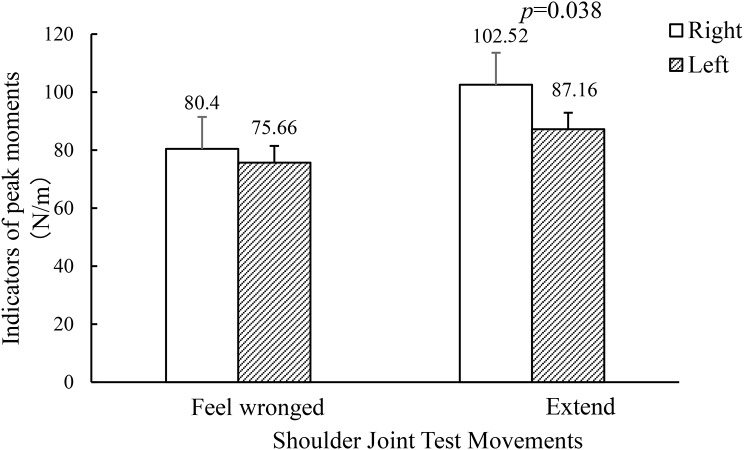
Results: A significant difference in the peak moment index of the shoulder muscle groups on both sides of the shoulder at 60°/s centripetal movement. Correlation analysis showed that the 25 m swimming performance was significantly correlated with the peak moment index of the right shoulder extensor group (60°/s centripetal), and with the total work of the left and right shoulder flexor groups and the right shoulder extensor group under the 240°/s centripetal contraction; The 50 m swimming performance was significantly correlated with the index of the right shoulder flexor group and the total work of the left and right extensor groups (240°/s centripetal); The 100 m swimming performance was significantly correlated with the index of the left shoulder flexor group and the total work of the right shoulder extensor group (240°/s centripetal); Swimming performance over 200 m was significantly correlated with the peak moment of the right and left shoulder flexor groups and the right extensor group (240°/s centripetal).
Conclusion: National male water polo players have balanced muscle strength on their left and right sides, which contributes to improved swimming performance. In addition, the muscle strength characteristics of their shoulder flexion-extension and adduction-abduction muscle groups can be used as predictors of swimming performance. Conducting training is important to improve the swimming ability of water polo players as well as to better prevent the incidence of shoulder injuries.
期刊介绍:
BMC Sports Science, Medicine and Rehabilitation is an open access, peer reviewed journal that considers articles on all aspects of sports medicine and the exercise sciences, including rehabilitation, traumatology, cardiology, physiology, and nutrition.




 京公网安备 11010802042870号
京ICP备2023020795号-1
京公网安备 11010802042870号
京ICP备2023020795号-1

 分享
分享
 求助内容:
求助内容: 应助结果提醒方式:
 扫码关注我们
