Lanhua Ma, Jiwei Zhao, Mengjie Li, Hai Su, Yong Li, Yuansheng Liu, Hang Liu, Ewa Zygadło-Monikowska, Yunhua Xu
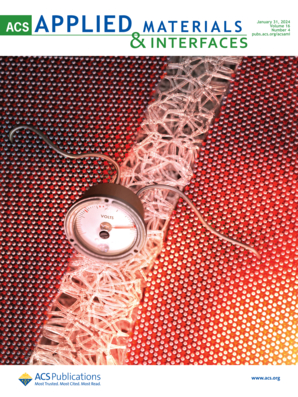
{"title":"Quasi-Solid Electrolytes with Flexible Branches and Rigid Skeletons for High-Temperature Li Metal Batteries","authors":"Lanhua Ma, Jiwei Zhao, Mengjie Li, Hai Su, Yong Li, Yuansheng Liu, Hang Liu, Ewa Zygadło-Monikowska, Yunhua Xu","doi":"10.1021/acsami.4c18835","DOIUrl":null,"url":null,"abstract":"Quasi-solid electrolytes are poised to revolutionize the next generation of high-energy-density lithium metal batteries. However, they face considerable challenges in operating at high temperatures due to severe side reactions, particularly with high-voltage cathodes. Here, we fabricated a nonflammable quasi-solid electrolyte (QSE) using an in situ copolymerization method. This electrolyte features a copolymer host with both flexible branches and a rigid skeleton, along with fire-retardant fluorine- and phosphorus-based plasticizers. The flexible branches reduce crystallinity and facilitate lithium-ion migration, while the rigid skeleton provides excellent high-temperature stability. The optimized fluorine–phosphorus mixed plasticizer provides effective sequestration of highly reactive oxygen/hydroxide radicals, along with a wide electrochemical window (up to 4.7 V vs Li<sup>+</sup>/Li), thereby ensuring excellent interface stability and safety characteristics. Consequently, the resulting quasi-solid electrolyte demonstrates remarkable physicochemical and electrochemical properties, enabling highly reversible lithium plating-stripping processes and good compatibility with cathodes. Using the nonflammable QSE, a high capacity retention of 82.3% is achieved for LiFePO<sub>4</sub> after 1000 cycles at a high current density of 5 C and 80 °C. The good compatibility with high-voltage cathodes was demonstrated by the stable cycling of LiCoO<sub>2</sub> over 400 cycles at a high cutoff voltage of 4.5 V and an elevated temperature of 60 °C.","PeriodicalId":5,"journal":{"name":"ACS Applied Materials & Interfaces","volume":"24 1","pages":""},"PeriodicalIF":8.2000,"publicationDate":"2025-03-14","publicationTypes":"Journal Article","fieldsOfStudy":null,"isOpenAccess":false,"openAccessPdf":"","citationCount":"0","resultStr":null,"platform":"Semanticscholar","paperid":null,"PeriodicalName":"ACS Applied Materials & Interfaces","FirstCategoryId":"88","ListUrlMain":"https://doi.org/10.1021/acsami.4c18835","RegionNum":2,"RegionCategory":"材料科学","ArticlePicture":[],"TitleCN":null,"AbstractTextCN":null,"PMCID":null,"EPubDate":"","PubModel":"","JCR":"Q1","JCRName":"MATERIALS SCIENCE, MULTIDISCIPLINARY","Score":null,"Total":0}
引用次数: 0
Abstract
Quasi-solid electrolytes are poised to revolutionize the next generation of high-energy-density lithium metal batteries. However, they face considerable challenges in operating at high temperatures due to severe side reactions, particularly with high-voltage cathodes. Here, we fabricated a nonflammable quasi-solid electrolyte (QSE) using an in situ copolymerization method. This electrolyte features a copolymer host with both flexible branches and a rigid skeleton, along with fire-retardant fluorine- and phosphorus-based plasticizers. The flexible branches reduce crystallinity and facilitate lithium-ion migration, while the rigid skeleton provides excellent high-temperature stability. The optimized fluorine–phosphorus mixed plasticizer provides effective sequestration of highly reactive oxygen/hydroxide radicals, along with a wide electrochemical window (up to 4.7 V vs Li+/Li), thereby ensuring excellent interface stability and safety characteristics. Consequently, the resulting quasi-solid electrolyte demonstrates remarkable physicochemical and electrochemical properties, enabling highly reversible lithium plating-stripping processes and good compatibility with cathodes. Using the nonflammable QSE, a high capacity retention of 82.3% is achieved for LiFePO4 after 1000 cycles at a high current density of 5 C and 80 °C. The good compatibility with high-voltage cathodes was demonstrated by the stable cycling of LiCoO2 over 400 cycles at a high cutoff voltage of 4.5 V and an elevated temperature of 60 °C.
准固体电解质有望彻底改变下一代高能量密度锂金属电池。然而,由于严重的副反应,特别是高压阴极,它们在高温下的操作面临着相当大的挑战。本文采用原位共聚法制备了一种不易燃的准固体电解质(QSE)。这种电解质的特点是共聚物主体具有柔性分支和刚性骨架,以及阻燃氟基和磷基增塑剂。柔性分支降低了结晶度,促进了锂离子的迁移,而刚性骨架提供了出色的高温稳定性。优化后的氟磷混合增塑剂可以有效地隔离高活性的氧/氢氧自由基,同时具有宽的电化学窗口(高达4.7 V vs Li+/Li),从而确保了优异的界面稳定性和安全性。因此,所得到的准固体电解质表现出显著的物理化学和电化学性能,实现了高度可逆的锂镀剥离过程,并且与阴极具有良好的相容性。使用不可燃的QSE,在5℃和80℃的高电流密度下,LiFePO4在1000次循环后的容量保持率达到82.3%。LiCoO2在4.5 V的高截止电压和60℃的高温下稳定循环400次以上,证明了LiCoO2与高压阴极的良好相容性。
期刊介绍:
ACS Applied Materials & Interfaces is a leading interdisciplinary journal that brings together chemists, engineers, physicists, and biologists to explore the development and utilization of newly-discovered materials and interfacial processes for specific applications. Our journal has experienced remarkable growth since its establishment in 2009, both in terms of the number of articles published and the impact of the research showcased. We are proud to foster a truly global community, with the majority of published articles originating from outside the United States, reflecting the rapid growth of applied research worldwide.




 京公网安备 11010802042870号
京ICP备2023020795号-1
京公网安备 11010802042870号
京ICP备2023020795号-1

 分享
分享
 求助内容:
求助内容: 应助结果提醒方式:
 扫码关注我们
