Peng Huang, Bryan T Piatkowski, Yesesri Cherukuri, Yan W Asmann, Abba C Zubair
{"title":"Impact of spaceflight on gene expression in cultured human mesenchymal stem/stromal cells.","authors":"Peng Huang, Bryan T Piatkowski, Yesesri Cherukuri, Yan W Asmann, Abba C Zubair","doi":"10.1371/journal.pone.0315285","DOIUrl":null,"url":null,"abstract":"<p><p>With technological advancements, human's desire to explore space is growing and more people are staying longer at the international space station (ISS). The impact of microgravity on stem cells (SC) is not fully understood. We explored the impact of microgravity on gene expression profile of cultured mesenchymal stem/stromal cells (MSCs) at the ISS. We also evaluated how the new knowledge gained sheds light on our understanding of human physiology on Earth. Primary cultures of MSCs were expanded at the ISS for 1 or 2 weeks and mRNA was isolated from samples of the cultured cells. Gene expression profiles were determined and compared with samples from real-time ground control cultures. Differential gene expression, gene set enrichment analysis and determination of key genes were performed that revealed for the first time the existence of potential \"master regulators\" coordinating a systemic response to microgravity. Cyclin D1 (CCND1), a protein-coding gene that regulates cell cycle progression and CDK kinases, was identified as the most connected regulator at week 1. Further analysis showed the impacted genes from cultured MSCs significantly correlated with known gene pathways associated with cell division, chromosomal segregation and nuclear division, extracellular matrix structure and organization, muscle apoptosis and differentiation. This study exemplifies the utility of space research to advance our understanding of human physiology both on Earth and in space.</p>","PeriodicalId":20189,"journal":{"name":"PLoS ONE","volume":"20 3","pages":"e0315285"},"PeriodicalIF":2.6000,"publicationDate":"2025-03-13","publicationTypes":"Journal Article","fieldsOfStudy":null,"isOpenAccess":false,"openAccessPdf":"https://www.ncbi.nlm.nih.gov/pmc/articles/PMC11906049/pdf/","citationCount":"0","resultStr":null,"platform":"Semanticscholar","paperid":null,"PeriodicalName":"PLoS ONE","FirstCategoryId":"103","ListUrlMain":"https://doi.org/10.1371/journal.pone.0315285","RegionNum":3,"RegionCategory":"综合性期刊","ArticlePicture":[],"TitleCN":null,"AbstractTextCN":null,"PMCID":null,"EPubDate":"2025/1/1 0:00:00","PubModel":"eCollection","JCR":"Q1","JCRName":"MULTIDISCIPLINARY SCIENCES","Score":null,"Total":0}
引用次数: 0
Abstract
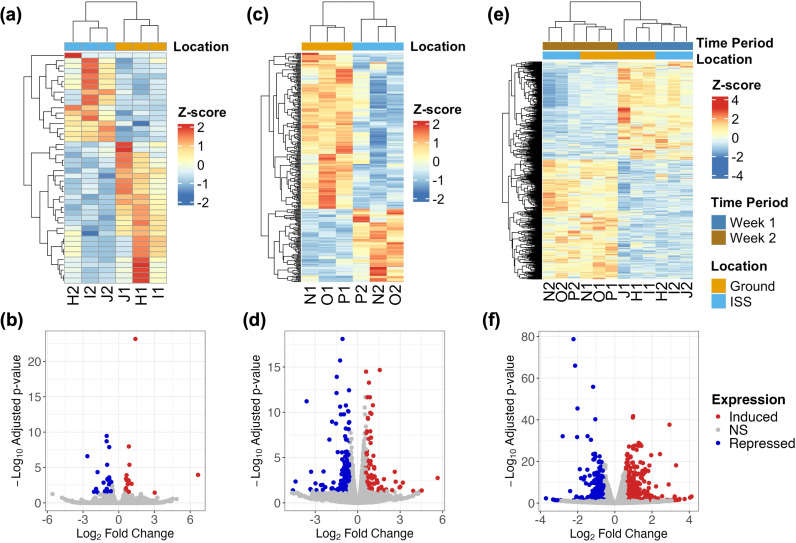
With technological advancements, human's desire to explore space is growing and more people are staying longer at the international space station (ISS). The impact of microgravity on stem cells (SC) is not fully understood. We explored the impact of microgravity on gene expression profile of cultured mesenchymal stem/stromal cells (MSCs) at the ISS. We also evaluated how the new knowledge gained sheds light on our understanding of human physiology on Earth. Primary cultures of MSCs were expanded at the ISS for 1 or 2 weeks and mRNA was isolated from samples of the cultured cells. Gene expression profiles were determined and compared with samples from real-time ground control cultures. Differential gene expression, gene set enrichment analysis and determination of key genes were performed that revealed for the first time the existence of potential "master regulators" coordinating a systemic response to microgravity. Cyclin D1 (CCND1), a protein-coding gene that regulates cell cycle progression and CDK kinases, was identified as the most connected regulator at week 1. Further analysis showed the impacted genes from cultured MSCs significantly correlated with known gene pathways associated with cell division, chromosomal segregation and nuclear division, extracellular matrix structure and organization, muscle apoptosis and differentiation. This study exemplifies the utility of space research to advance our understanding of human physiology both on Earth and in space.
期刊介绍:
PLOS ONE is an international, peer-reviewed, open-access, online publication. PLOS ONE welcomes reports on primary research from any scientific discipline. It provides:
* Open-access—freely accessible online, authors retain copyright
* Fast publication times
* Peer review by expert, practicing researchers
* Post-publication tools to indicate quality and impact
* Community-based dialogue on articles
* Worldwide media coverage





 京公网安备 11010802042870号
京ICP备2023020795号-1
京公网安备 11010802042870号
京ICP备2023020795号-1

 分享
分享
 求助内容:
求助内容: 应助结果提醒方式:
 扫码关注我们
