{"title":"Making Every Penny Count: Kinase Signaling Transduction, Copper Homeostasis, & Nutrient Sensing","authors":"Donita C. Brady","doi":"10.1016/j.jmb.2025.169089","DOIUrl":null,"url":null,"abstract":"<div><div>I am the Harrison McCrea Dickson, MD, and Clifford C. Baker, MD Presidential Associate Professor of Cancer Biology at the University of Pennsylvania Perelman School of Medicine. I earned a BS in Chemistry from Radford University and a PhD in Pharmacology from UNC-Chapel Hill before completing postdoctoral training at Duke University with Dr. Christopher Counter. At Penn, I lead a research program pioneering <em>metalloallostery</em>, where redox-active metals regulate kinase activity. We investigate the intersection of kinase signaling and copper (Cu) homeostasis, identifying Cu-dependent kinases and developing targeted therapies through drug repurposing and novel drug design. Our work has advanced our understanding of metals in nutrient signaling, energy homeostasis, and cancer metabolism. I am a Pew Biomedical Scholar, a V Foundation Scholar, and the recipient of the Perelman School of Medicine’s Michael S. Brown New Investigator Research Award. I am also a dedicated advocate for diversity, equity, inclusion, and accessibility (DEIA), having spent the past decade addressing barriers to representation in STEM. In 2021, I was appointed the inaugural Assistant Dean for Inclusion, Diversity, and Equity (IDE) in Research Training at Penn, leading efforts to foster an inclusive research environment. For these contributions, I was recognized with the 2022 Vanderbilt Basic Science Juneteenth Icon Award and the Penn Biomedical Graduate Studies Cell and Molecular Biology Graduate Group Community Service Award.</div></div>","PeriodicalId":369,"journal":{"name":"Journal of Molecular Biology","volume":"437 11","pages":"Article 169089"},"PeriodicalIF":4.5000,"publicationDate":"2025-06-01","publicationTypes":"Journal Article","fieldsOfStudy":null,"isOpenAccess":false,"openAccessPdf":"","citationCount":"0","resultStr":null,"platform":"Semanticscholar","paperid":null,"PeriodicalName":"Journal of Molecular Biology","FirstCategoryId":"99","ListUrlMain":"https://www.sciencedirect.com/science/article/pii/S002228362500155X","RegionNum":2,"RegionCategory":"生物学","ArticlePicture":[],"TitleCN":null,"AbstractTextCN":null,"PMCID":null,"EPubDate":"2025/3/13 0:00:00","PubModel":"Epub","JCR":"Q1","JCRName":"BIOCHEMISTRY & MOLECULAR BIOLOGY","Score":null,"Total":0}
引用次数: 0
Abstract
I am the Harrison McCrea Dickson, MD, and Clifford C. Baker, MD Presidential Associate Professor of Cancer Biology at the University of Pennsylvania Perelman School of Medicine. I earned a BS in Chemistry from Radford University and a PhD in Pharmacology from UNC-Chapel Hill before completing postdoctoral training at Duke University with Dr. Christopher Counter. At Penn, I lead a research program pioneering metalloallostery, where redox-active metals regulate kinase activity. We investigate the intersection of kinase signaling and copper (Cu) homeostasis, identifying Cu-dependent kinases and developing targeted therapies through drug repurposing and novel drug design. Our work has advanced our understanding of metals in nutrient signaling, energy homeostasis, and cancer metabolism. I am a Pew Biomedical Scholar, a V Foundation Scholar, and the recipient of the Perelman School of Medicine’s Michael S. Brown New Investigator Research Award. I am also a dedicated advocate for diversity, equity, inclusion, and accessibility (DEIA), having spent the past decade addressing barriers to representation in STEM. In 2021, I was appointed the inaugural Assistant Dean for Inclusion, Diversity, and Equity (IDE) in Research Training at Penn, leading efforts to foster an inclusive research environment. For these contributions, I was recognized with the 2022 Vanderbilt Basic Science Juneteenth Icon Award and the Penn Biomedical Graduate Studies Cell and Molecular Biology Graduate Group Community Service Award.
Donita C. Brady博士是宾夕法尼亚大学佩雷尔曼医学院的Harrison McCrea Dickson医学博士和Clifford C. Baker医学博士癌症生物学主席副教授。她在拉德福德大学获得化学学士学位,在北卡罗来纳大学教堂山分校获得药理学博士学位,之后在杜克大学与克里斯托弗·Counter博士一起完成博士后培训。在宾夕法尼亚大学,Brady博士领导的一个研究项目是金属变构学的先驱,其中氧化还原活性金属调节激酶活性。她的实验室研究激酶信号传导和铜(Cu)稳态的交集,识别铜依赖性激酶,并通过药物再利用和新型药物设计开发靶向治疗。她的工作促进了我们对金属在营养信号、能量稳态和癌症代谢中的理解。Brady博士获得了许多荣誉,包括皮乌生物医学学者、V基金会学者和佩雷尔曼医学院的Michael S. Brown新研究者研究奖的获得者。作为一名致力于多元化、公平、包容和无障碍(DEIA)的倡导者,她在过去十年中一直致力于解决STEM中代表性的障碍。2021年,她被任命为宾大研究培训包容性、多样性和公平性(IDE)的首任副院长,领导培养包容性研究环境的努力。由于这些贡献,她获得了2022年范德比尔特基础科学六月节图标奖和宾夕法尼亚大学生物医学研究生研究细胞和分子生物学研究生团体社区服务奖。
期刊介绍:
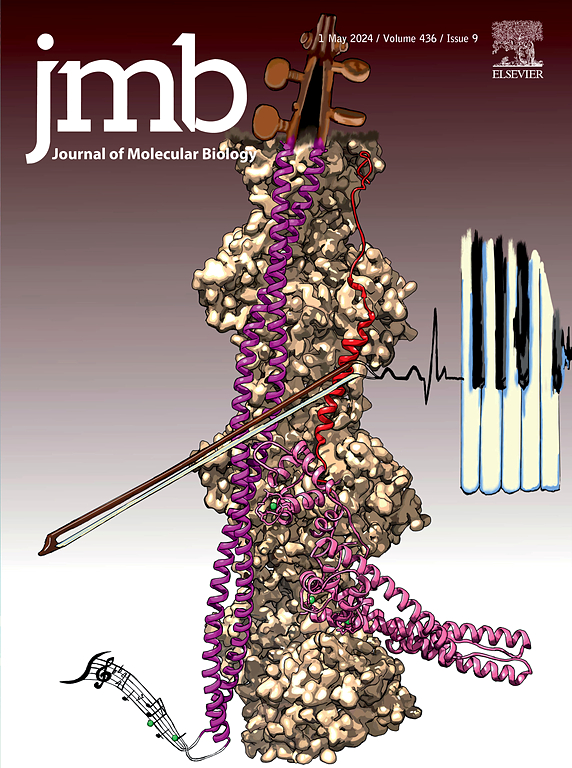
Journal of Molecular Biology (JMB) provides high quality, comprehensive and broad coverage in all areas of molecular biology. The journal publishes original scientific research papers that provide mechanistic and functional insights and report a significant advance to the field. The journal encourages the submission of multidisciplinary studies that use complementary experimental and computational approaches to address challenging biological questions.
Research areas include but are not limited to: Biomolecular interactions, signaling networks, systems biology; Cell cycle, cell growth, cell differentiation; Cell death, autophagy; Cell signaling and regulation; Chemical biology; Computational biology, in combination with experimental studies; DNA replication, repair, and recombination; Development, regenerative biology, mechanistic and functional studies of stem cells; Epigenetics, chromatin structure and function; Gene expression; Membrane processes, cell surface proteins and cell-cell interactions; Methodological advances, both experimental and theoretical, including databases; Microbiology, virology, and interactions with the host or environment; Microbiota mechanistic and functional studies; Nuclear organization; Post-translational modifications, proteomics; Processing and function of biologically important macromolecules and complexes; Molecular basis of disease; RNA processing, structure and functions of non-coding RNAs, transcription; Sorting, spatiotemporal organization, trafficking; Structural biology; Synthetic biology; Translation, protein folding, chaperones, protein degradation and quality control.




 京公网安备 11010802042870号
京ICP备2023020795号-1
京公网安备 11010802042870号
京ICP备2023020795号-1

 分享
分享
 求助内容:
求助内容: 应助结果提醒方式:
 扫码关注我们
