Investigating the pharmacological mechanisms of clopidogrel for carotid stenosis treatment based on network pharmacology and molecular docking techniques.
{"title":"Investigating the pharmacological mechanisms of clopidogrel for carotid stenosis treatment based on network pharmacology and molecular docking techniques.","authors":"Xu Wang, Haibin Lu, Jing Xie, Chenglei Zhang","doi":"10.1007/s10238-025-01602-5","DOIUrl":null,"url":null,"abstract":"<p><p>Carotid artery stenosis is a manifestation of atherosclerosis and is associated with an increased risk of various cardiovascular diseases. Clopidogrel is an antiplatelet drug widely used for the prevention and treatment of atherosclerosis-related diseases. This study explores the potential molecular mechanisms of clopidogrel in the treatment of carotid artery stenosis through network pharmacology and molecular docking techniques. First, network pharmacology methods were used to construct a clopidogrel target network and identify its possible 127 action targets. Secondly, the gene ontology enrichment analysis indicated that clopidogrel for treating carotid stenosis is closely related to inflammatory responses, platelet activation, and angiogenesis. The Kyoto Encyclopedia of Genes and Genomes analysis revealed associations with lipid metabolism and atherosclerosis. Subsequently, molecular docking technology was employed to screen the binding affinity of clopidogrel to these targets. The results revealed that clopidogrel exhibited binding energies less than - 4.20 kcal/mol with multiple targets, including TNF, MMP9, PTGS2, CCL2, TLR4, and IL-10. This indicates that clopidogrel has high binding affinity and stable binding modes with these targets, thereby exerting anti-inflammatory effects. This study reveals the potential molecular mechanisms of clopidogrel in the treatment of carotid artery stenosis through network pharmacology and molecular docking techniques. The experimental results provide a theoretical basis for the application of clopidogrel in the treatment of carotid artery stenosis and offer new ideas for further drug development and personalized treatment.</p>","PeriodicalId":10337,"journal":{"name":"Clinical and Experimental Medicine","volume":"25 1","pages":"84"},"PeriodicalIF":3.5000,"publicationDate":"2025-03-14","publicationTypes":"Journal Article","fieldsOfStudy":null,"isOpenAccess":false,"openAccessPdf":"https://www.ncbi.nlm.nih.gov/pmc/articles/PMC11909017/pdf/","citationCount":"0","resultStr":null,"platform":"Semanticscholar","paperid":null,"PeriodicalName":"Clinical and Experimental Medicine","FirstCategoryId":"3","ListUrlMain":"https://doi.org/10.1007/s10238-025-01602-5","RegionNum":4,"RegionCategory":"医学","ArticlePicture":[],"TitleCN":null,"AbstractTextCN":null,"PMCID":null,"EPubDate":"","PubModel":"","JCR":"Q2","JCRName":"MEDICINE, RESEARCH & EXPERIMENTAL","Score":null,"Total":0}
引用次数: 0
Abstract
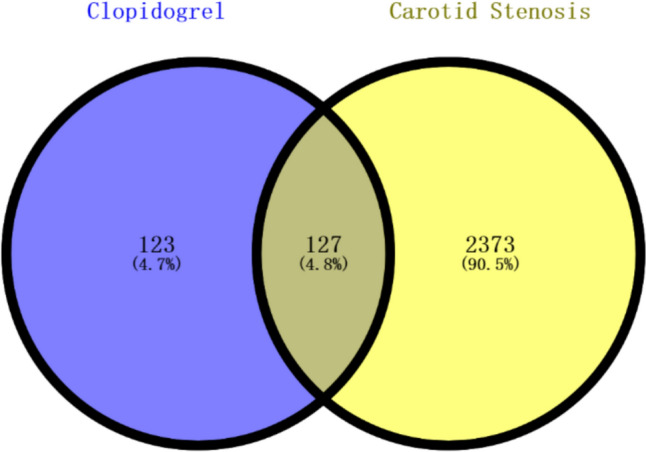
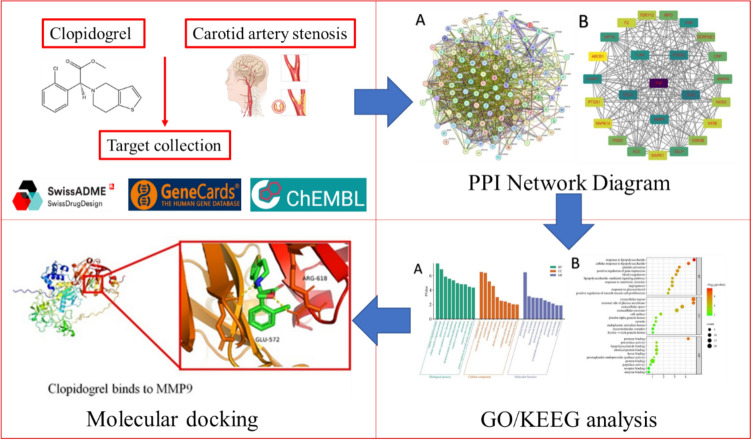
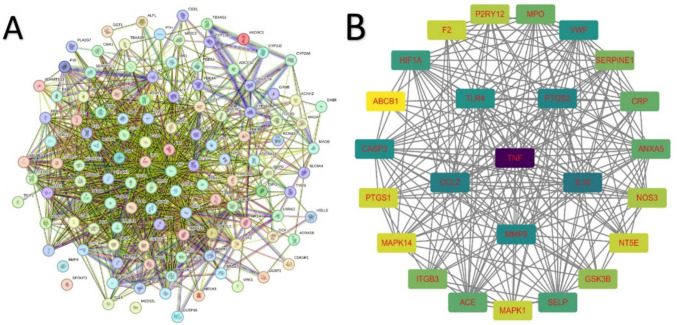
Carotid artery stenosis is a manifestation of atherosclerosis and is associated with an increased risk of various cardiovascular diseases. Clopidogrel is an antiplatelet drug widely used for the prevention and treatment of atherosclerosis-related diseases. This study explores the potential molecular mechanisms of clopidogrel in the treatment of carotid artery stenosis through network pharmacology and molecular docking techniques. First, network pharmacology methods were used to construct a clopidogrel target network and identify its possible 127 action targets. Secondly, the gene ontology enrichment analysis indicated that clopidogrel for treating carotid stenosis is closely related to inflammatory responses, platelet activation, and angiogenesis. The Kyoto Encyclopedia of Genes and Genomes analysis revealed associations with lipid metabolism and atherosclerosis. Subsequently, molecular docking technology was employed to screen the binding affinity of clopidogrel to these targets. The results revealed that clopidogrel exhibited binding energies less than - 4.20 kcal/mol with multiple targets, including TNF, MMP9, PTGS2, CCL2, TLR4, and IL-10. This indicates that clopidogrel has high binding affinity and stable binding modes with these targets, thereby exerting anti-inflammatory effects. This study reveals the potential molecular mechanisms of clopidogrel in the treatment of carotid artery stenosis through network pharmacology and molecular docking techniques. The experimental results provide a theoretical basis for the application of clopidogrel in the treatment of carotid artery stenosis and offer new ideas for further drug development and personalized treatment.
期刊介绍:
Clinical and Experimental Medicine (CEM) is a multidisciplinary journal that aims to be a forum of scientific excellence and information exchange in relation to the basic and clinical features of the following fields: hematology, onco-hematology, oncology, virology, immunology, and rheumatology. The journal publishes reviews and editorials, experimental and preclinical studies, translational research, prospectively designed clinical trials, and epidemiological studies. Papers containing new clinical or experimental data that are likely to contribute to changes in clinical practice or the way in which a disease is thought about will be given priority due to their immediate importance. Case reports will be accepted on an exceptional basis only, and their submission is discouraged. The major criteria for publication are clarity, scientific soundness, and advances in knowledge. In compliance with the overwhelmingly prevailing request by the international scientific community, and with respect for eco-compatibility issues, CEM is now published exclusively online.



 京公网安备 11010802042870号
京ICP备2023020795号-1
京公网安备 11010802042870号
京ICP备2023020795号-1

 分享
分享
 求助内容:
求助内容: 应助结果提醒方式:
 扫码关注我们
