{"title":"The early origins of bone-tool manufacturing traditions by hominins 1.5 million years ago","authors":"Marta Mirazón Lahr","doi":"10.1038/d41586-025-00545-x","DOIUrl":null,"url":null,"abstract":"Excavations at Olduvai Gorge, Tanzania, reveal evidence of the systematic use of animal bones as a raw material for prehistoric tools. Excavations at Olduvai Gorge, Tanzania, reveal evidence of the systematic use of animal bones as a raw material for prehistoric tools.","PeriodicalId":18787,"journal":{"name":"Nature","volume":"640 8057","pages":"40-42"},"PeriodicalIF":48.5000,"publicationDate":"2025-03-17","publicationTypes":"Journal Article","fieldsOfStudy":null,"isOpenAccess":false,"openAccessPdf":"","citationCount":"0","resultStr":null,"platform":"Semanticscholar","paperid":null,"PeriodicalName":"Nature","FirstCategoryId":"103","ListUrlMain":"https://www.nature.com/articles/d41586-025-00545-x","RegionNum":1,"RegionCategory":"综合性期刊","ArticlePicture":[],"TitleCN":null,"AbstractTextCN":null,"PMCID":null,"EPubDate":"","PubModel":"","JCR":"Q1","JCRName":"MULTIDISCIPLINARY SCIENCES","Score":null,"Total":0}
引用次数: 0
Abstract
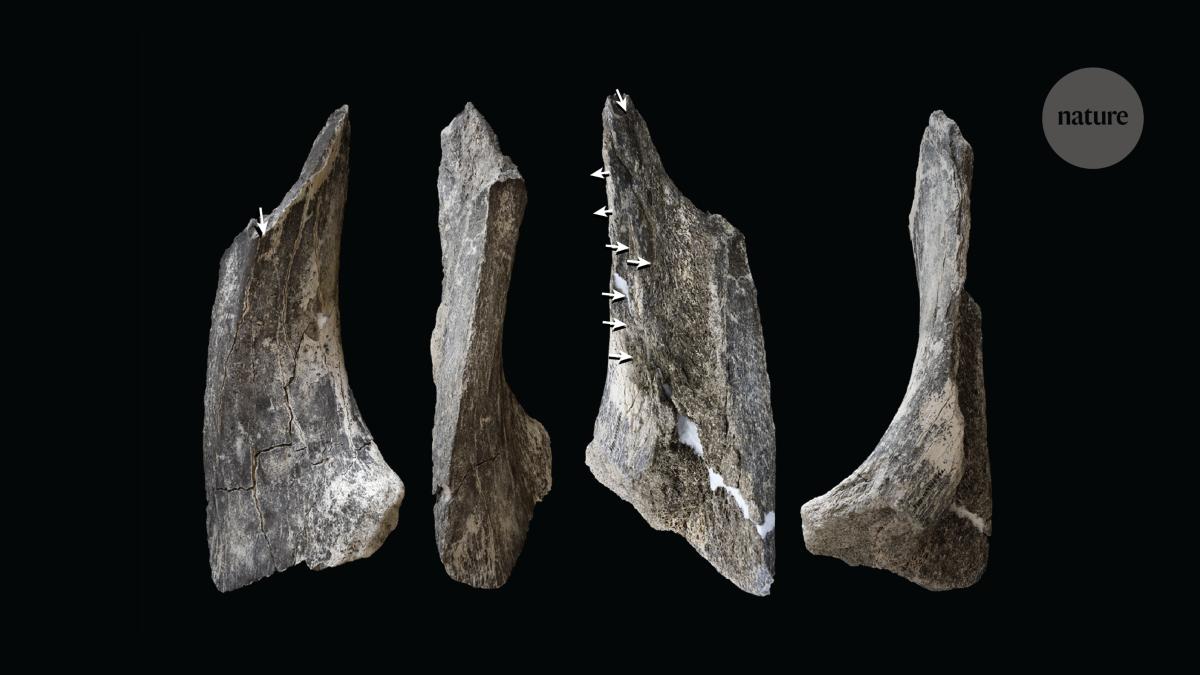
Excavations at Olduvai Gorge, Tanzania, reveal evidence of the systematic use of animal bones as a raw material for prehistoric tools. Excavations at Olduvai Gorge, Tanzania, reveal evidence of the systematic use of animal bones as a raw material for prehistoric tools.
期刊介绍:
Nature is a prestigious international journal that publishes peer-reviewed research in various scientific and technological fields. The selection of articles is based on criteria such as originality, importance, interdisciplinary relevance, timeliness, accessibility, elegance, and surprising conclusions. In addition to showcasing significant scientific advances, Nature delivers rapid, authoritative, insightful news, and interpretation of current and upcoming trends impacting science, scientists, and the broader public. The journal serves a dual purpose: firstly, to promptly share noteworthy scientific advances and foster discussions among scientists, and secondly, to ensure the swift dissemination of scientific results globally, emphasizing their significance for knowledge, culture, and daily life.




 京公网安备 11010802042870号
京ICP备2023020795号-1
京公网安备 11010802042870号
京ICP备2023020795号-1

 分享
分享
 求助内容:
求助内容: 应助结果提醒方式:
 扫码关注我们
