Asef Raj , Sabrina Sharmin , Safrin Jannat , Saika Ahmed , Abu Bin Ihsan
{"title":"Innovative approaches in bioadhesive design: A comprehensive review of crosslinking methods and mechanical performance","authors":"Asef Raj , Sabrina Sharmin , Safrin Jannat , Saika Ahmed , Abu Bin Ihsan","doi":"10.1016/j.bioadv.2025.214287","DOIUrl":null,"url":null,"abstract":"<div><div>In biomedical applications, bioadhesives have become a game-changer, offering novel approaches to tissue engineering, surgical adhesion, and wound healing. This comprehensive review paper provides a thorough analysis of bioadhesives and their categorization according to application site and crosslinking process, bonding efficacy, and mechanical characteristics. The use of bioadhesives to stop bleeding and seal leaks is also covered in the review. The article delves into the various crosslinking techniques used in bioadhesives, including chemical, physical, and hybrid approaches. It emphasizes on how these mechanisms control the adhesive's elasticity, durability, and structural integrity. In addition, the review looks at the mechanical strength of bioadhesives, taking important characteristics like shear strength, toughness, elasticity, and tensile strength into account. It is highlighted how important bioadhesives are to the life sciences because they drive innovation and interdisciplinary cooperation, address present healthcare issues, and create new avenues for therapeutic development. The paper also explores some vital characteristics of bioadhesives that, when strategically combined with one another, improve their efficacy and usefulness in a variety of surgical and medical applications. The analysis concludes by examining nature-inspired adhesives, including those based on geckos, mussels, and tannic acid, and their unique bonding mechanisms and potential for use in advanced biomedical applications.</div></div>","PeriodicalId":51111,"journal":{"name":"Materials Science & Engineering C-Materials for Biological Applications","volume":"173 ","pages":"Article 214287"},"PeriodicalIF":6.0000,"publicationDate":"2025-08-01","publicationTypes":"Journal Article","fieldsOfStudy":null,"isOpenAccess":false,"openAccessPdf":"","citationCount":"0","resultStr":null,"platform":"Semanticscholar","paperid":null,"PeriodicalName":"Materials Science & Engineering C-Materials for Biological Applications","FirstCategoryId":"1085","ListUrlMain":"https://www.sciencedirect.com/science/article/pii/S2772950825001141","RegionNum":2,"RegionCategory":"医学","ArticlePicture":[],"TitleCN":null,"AbstractTextCN":null,"PMCID":null,"EPubDate":"2025/3/14 0:00:00","PubModel":"Epub","JCR":"Q2","JCRName":"MATERIALS SCIENCE, BIOMATERIALS","Score":null,"Total":0}
引用次数: 0
Abstract
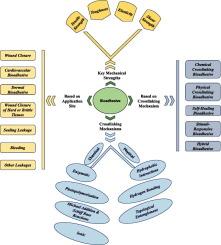
In biomedical applications, bioadhesives have become a game-changer, offering novel approaches to tissue engineering, surgical adhesion, and wound healing. This comprehensive review paper provides a thorough analysis of bioadhesives and their categorization according to application site and crosslinking process, bonding efficacy, and mechanical characteristics. The use of bioadhesives to stop bleeding and seal leaks is also covered in the review. The article delves into the various crosslinking techniques used in bioadhesives, including chemical, physical, and hybrid approaches. It emphasizes on how these mechanisms control the adhesive's elasticity, durability, and structural integrity. In addition, the review looks at the mechanical strength of bioadhesives, taking important characteristics like shear strength, toughness, elasticity, and tensile strength into account. It is highlighted how important bioadhesives are to the life sciences because they drive innovation and interdisciplinary cooperation, address present healthcare issues, and create new avenues for therapeutic development. The paper also explores some vital characteristics of bioadhesives that, when strategically combined with one another, improve their efficacy and usefulness in a variety of surgical and medical applications. The analysis concludes by examining nature-inspired adhesives, including those based on geckos, mussels, and tannic acid, and their unique bonding mechanisms and potential for use in advanced biomedical applications.
期刊介绍:
Biomaterials Advances, previously known as Materials Science and Engineering: C-Materials for Biological Applications (P-ISSN: 0928-4931, E-ISSN: 1873-0191). Includes topics at the interface of the biomedical sciences and materials engineering. These topics include:
• Bioinspired and biomimetic materials for medical applications
• Materials of biological origin for medical applications
• Materials for "active" medical applications
• Self-assembling and self-healing materials for medical applications
• "Smart" (i.e., stimulus-response) materials for medical applications
• Ceramic, metallic, polymeric, and composite materials for medical applications
• Materials for in vivo sensing
• Materials for in vivo imaging
• Materials for delivery of pharmacologic agents and vaccines
• Novel approaches for characterizing and modeling materials for medical applications
Manuscripts on biological topics without a materials science component, or manuscripts on materials science without biological applications, will not be considered for publication in Materials Science and Engineering C. New submissions are first assessed for language, scope and originality (plagiarism check) and can be desk rejected before review if they need English language improvements, are out of scope or present excessive duplication with published sources.
Biomaterials Advances sits within Elsevier''s biomaterials science portfolio alongside Biomaterials, Materials Today Bio and Biomaterials and Biosystems. As part of the broader Materials Today family, Biomaterials Advances offers authors rigorous peer review, rapid decisions, and high visibility. We look forward to receiving your submissions!



 京公网安备 11010802042870号
京ICP备2023020795号-1
京公网安备 11010802042870号
京ICP备2023020795号-1

 分享
分享
 求助内容:
求助内容: 应助结果提醒方式:
 扫码关注我们
