{"title":"Temperature and spinosad-induced modulation of antioxidant enzyme activity and gene expression of adaptive stress-related genes in <i>Ceratitis capitata</i>.","authors":"Maged Fouda, Amira Negm, Mousa Germoush, Shaymaa Mahmoud","doi":"10.5455/OVJ.2025.v15.i1.10","DOIUrl":null,"url":null,"abstract":"<p><strong>Background: </strong>Environmental changes and rising temperatures have intensified the emergence of insect species as significant agricultural pests. Understanding the physiological and molecular responses of these pests to heat stress is essential for developing effective pest management strategies.</p><p><strong>Aim: </strong>To investigate the antioxidant enzyme activities and gene expression profiles of <i>Ceratitis capitata</i> under heat stress, spinosad exposure, and their combination to understand adaptive mechanisms and potential pathways for pest control.</p><p><strong>Methods: </strong>In this study, adult <i>C. capitata</i> were collected from grapes (<i>Vitis mustangensis</i>), mangoes (<i>Mangifera indica</i>), and yellow guava (<i>Psidium guajava</i>) cultivated in Egypt during June, July, and August 2023. Laboratory experiments assessed antioxidant enzyme activities (superoxide dismutase, catalase, peroxidase, malondialdehyde, and glutathione-S-transferases) and gene expression levels of heat-shock protein 70, cytochrome P450, CYP6a9, and metallothionein. Adults were exposed to three conditions; high temperature (40°C); spinosad at its LC<sub>50</sub> (3.2 µg/ml) at 25°C, and combined spinosad exposure and high temperature.</p><p><strong>Results: </strong>Heat stress significantly increased the activity of antioxidant enzymes and the expression of stress-response genes in <i>C.</i> <i>capitata</i>. Spinosad exposure induced moderate increases in these activities, suggesting a detoxification response. The combined treatment of spinosad and heat stress amplified these effects, indicating a synergistic stress response.</p><p><strong>Conclusion: </strong>These findings provide insight into the molecular mechanisms underlying <i>C</i> <i>. capitata</i>’s heat tolerance and suggest potential pathways for pest control interventions under climate change.</p>","PeriodicalId":19531,"journal":{"name":"Open Veterinary Journal","volume":"15 1","pages":"108-117"},"PeriodicalIF":1.0000,"publicationDate":"2025-01-01","publicationTypes":"Journal Article","fieldsOfStudy":null,"isOpenAccess":false,"openAccessPdf":"https://www.ncbi.nlm.nih.gov/pmc/articles/PMC11910302/pdf/","citationCount":"0","resultStr":null,"platform":"Semanticscholar","paperid":null,"PeriodicalName":"Open Veterinary Journal","FirstCategoryId":"1085","ListUrlMain":"https://doi.org/10.5455/OVJ.2025.v15.i1.10","RegionNum":0,"RegionCategory":null,"ArticlePicture":[],"TitleCN":null,"AbstractTextCN":null,"PMCID":null,"EPubDate":"2025/1/31 0:00:00","PubModel":"Epub","JCR":"Q3","JCRName":"VETERINARY SCIENCES","Score":null,"Total":0}
引用次数: 0
Abstract
Background: Environmental changes and rising temperatures have intensified the emergence of insect species as significant agricultural pests. Understanding the physiological and molecular responses of these pests to heat stress is essential for developing effective pest management strategies.
Aim: To investigate the antioxidant enzyme activities and gene expression profiles of Ceratitis capitata under heat stress, spinosad exposure, and their combination to understand adaptive mechanisms and potential pathways for pest control.
Methods: In this study, adult C. capitata were collected from grapes (Vitis mustangensis), mangoes (Mangifera indica), and yellow guava (Psidium guajava) cultivated in Egypt during June, July, and August 2023. Laboratory experiments assessed antioxidant enzyme activities (superoxide dismutase, catalase, peroxidase, malondialdehyde, and glutathione-S-transferases) and gene expression levels of heat-shock protein 70, cytochrome P450, CYP6a9, and metallothionein. Adults were exposed to three conditions; high temperature (40°C); spinosad at its LC50 (3.2 µg/ml) at 25°C, and combined spinosad exposure and high temperature.
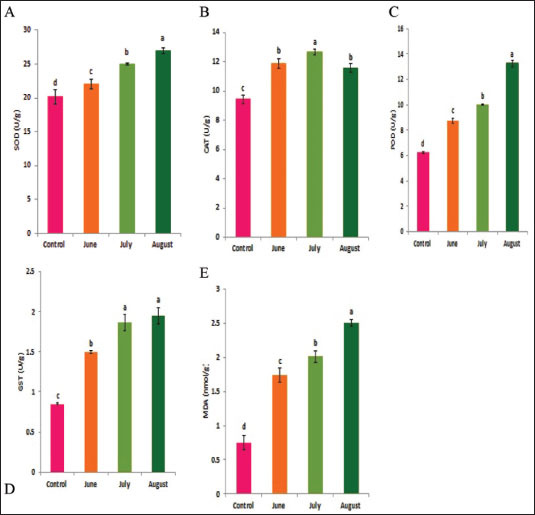
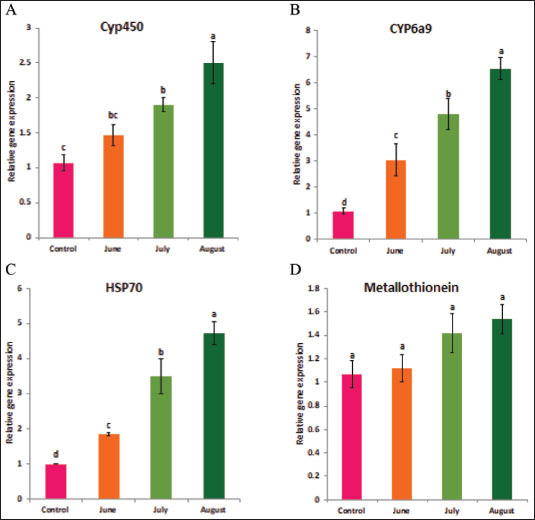
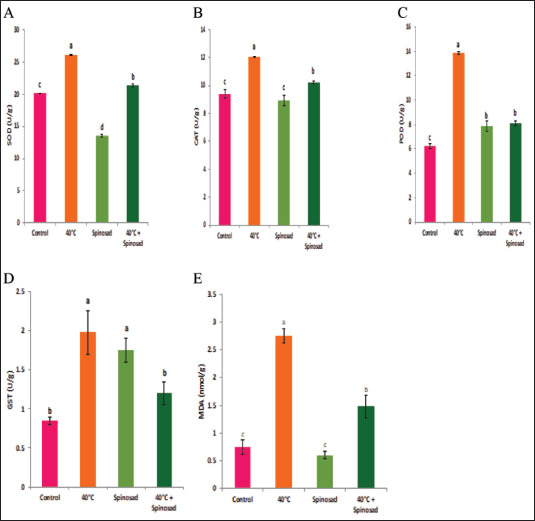
Results: Heat stress significantly increased the activity of antioxidant enzymes and the expression of stress-response genes in C.capitata. Spinosad exposure induced moderate increases in these activities, suggesting a detoxification response. The combined treatment of spinosad and heat stress amplified these effects, indicating a synergistic stress response.
Conclusion: These findings provide insight into the molecular mechanisms underlying C. capitata’s heat tolerance and suggest potential pathways for pest control interventions under climate change.
期刊介绍:
Open Veterinary Journal is a peer-reviewed international open access online and printed journal that publishes high-quality original research articles. reviews, short communications and case reports dedicated to all aspects of veterinary sciences and its related subjects. Research areas include the following: Infectious diseases of zoonotic/food-borne importance, applied biochemistry, parasitology, endocrinology, microbiology, immunology, pathology, pharmacology, physiology, epidemiology, molecular biology, immunogenetics, surgery, ophthalmology, dermatology, oncology and animal reproduction. All papers are peer-reviewed. Moreover, with the presence of well-qualified group of international referees, the process of publication will be done meticulously and to the highest standards.




 京公网安备 11010802042870号
京ICP备2023020795号-1
京公网安备 11010802042870号
京ICP备2023020795号-1

 分享
分享
 求助内容:
求助内容: 应助结果提醒方式:
 扫码关注我们
