Isobavachalcone confers protection against Cryptococcus neoformans-induced ferroptosis in Caenorhabditis elegans via lifespan extension and GSH-GPX-1 axis modulation
Weidong Qian , Jiaxing Lu , Ting Wang , Qiming Liu , Na Liu , Si Chen , Yongdong Li
{"title":"Isobavachalcone confers protection against Cryptococcus neoformans-induced ferroptosis in Caenorhabditis elegans via lifespan extension and GSH-GPX-1 axis modulation","authors":"Weidong Qian , Jiaxing Lu , Ting Wang , Qiming Liu , Na Liu , Si Chen , Yongdong Li","doi":"10.1016/j.jhazmat.2025.137969","DOIUrl":null,"url":null,"abstract":"<div><div>The recent designation of <em>Cryptococcus neoformans</em> as a critical-priority fungal pathogen by the World Health Organization highlights the imperative need for novel antifungal agents with distinct mechanisms of action. This study elucidates the novel ferroptotic pathway underlying <em>C. neoformans</em>-induced cell death in <em>Caenorhabditis elegans</em> and investigates the therapeutic potential of isobavachalcone (IBC) through comprehensive evaluation of core biochemical markers: total glutathione (GSH), malondialdehyde, ferrous iron content, and lipid reactive oxygen species (ROS). Integrated transcriptomic analysis via RNA-seq and subsequent RT-qPCR validation revealed critical gene expression patterns associated with antiferroptotic regulation. Our findings demonstrate that <em>C. neoformans</em> infection initiates ferroptosis in <em>C. elegans</em> through iron-dependent lipid peroxidation cascades. Remarkably, IBC administration conferred significant protection against fungal-induced ferroptosis by restoring redox homeostasis-evidenced by elevated GSH levels, attenuated ROS accumulation, and decreased ferrous iron content. Mechanistic investigations identified IBC-mediated upregulation of SKN-1 and GSH biosynthesis genes, coupled with suppression of GPX-1 activity. These coordinated effects disrupted the iron-ROS amplification loop through modulation of the GSH-GPX-1 axis, ultimately extending host lifespan in <em>C. neoformans</em>-challenged models. Our results position IBC as a ferroptosis inhibitor with dual antioxidant and iron-chelating properties, offering a therapeutic strategy against cryptococcal infections through targeting of evolutionary conserved cell death pathways.</div></div>","PeriodicalId":361,"journal":{"name":"Journal of Hazardous Materials","volume":"492 ","pages":"Article 137969"},"PeriodicalIF":11.3000,"publicationDate":"2025-03-18","publicationTypes":"Journal Article","fieldsOfStudy":null,"isOpenAccess":false,"openAccessPdf":"","citationCount":"0","resultStr":null,"platform":"Semanticscholar","paperid":null,"PeriodicalName":"Journal of Hazardous Materials","FirstCategoryId":"93","ListUrlMain":"https://www.sciencedirect.com/science/article/pii/S0304389425008854","RegionNum":1,"RegionCategory":"环境科学与生态学","ArticlePicture":[],"TitleCN":null,"AbstractTextCN":null,"PMCID":null,"EPubDate":"","PubModel":"","JCR":"Q1","JCRName":"ENGINEERING, ENVIRONMENTAL","Score":null,"Total":0}
引用次数: 0
Abstract
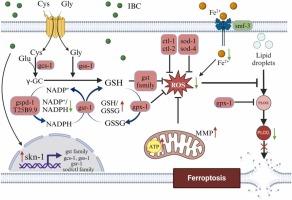
The recent designation of Cryptococcus neoformans as a critical-priority fungal pathogen by the World Health Organization highlights the imperative need for novel antifungal agents with distinct mechanisms of action. This study elucidates the novel ferroptotic pathway underlying C. neoformans-induced cell death in Caenorhabditis elegans and investigates the therapeutic potential of isobavachalcone (IBC) through comprehensive evaluation of core biochemical markers: total glutathione (GSH), malondialdehyde, ferrous iron content, and lipid reactive oxygen species (ROS). Integrated transcriptomic analysis via RNA-seq and subsequent RT-qPCR validation revealed critical gene expression patterns associated with antiferroptotic regulation. Our findings demonstrate that C. neoformans infection initiates ferroptosis in C. elegans through iron-dependent lipid peroxidation cascades. Remarkably, IBC administration conferred significant protection against fungal-induced ferroptosis by restoring redox homeostasis-evidenced by elevated GSH levels, attenuated ROS accumulation, and decreased ferrous iron content. Mechanistic investigations identified IBC-mediated upregulation of SKN-1 and GSH biosynthesis genes, coupled with suppression of GPX-1 activity. These coordinated effects disrupted the iron-ROS amplification loop through modulation of the GSH-GPX-1 axis, ultimately extending host lifespan in C. neoformans-challenged models. Our results position IBC as a ferroptosis inhibitor with dual antioxidant and iron-chelating properties, offering a therapeutic strategy against cryptococcal infections through targeting of evolutionary conserved cell death pathways.
期刊介绍:
The Journal of Hazardous Materials serves as a global platform for promoting cutting-edge research in the field of Environmental Science and Engineering. Our publication features a wide range of articles, including full-length research papers, review articles, and perspectives, with the aim of enhancing our understanding of the dangers and risks associated with various materials concerning public health and the environment. It is important to note that the term "environmental contaminants" refers specifically to substances that pose hazardous effects through contamination, while excluding those that do not have such impacts on the environment or human health. Moreover, we emphasize the distinction between wastes and hazardous materials in order to provide further clarity on the scope of the journal. We have a keen interest in exploring specific compounds and microbial agents that have adverse effects on the environment.



 京公网安备 11010802042870号
京ICP备2023020795号-1
京公网安备 11010802042870号
京ICP备2023020795号-1

 分享
分享
 求助内容:
求助内容: 应助结果提醒方式:
 扫码关注我们
