Wenjing Zhang, Qian Si, Zhongtian Guan, Lei Cao, Mengyue Wang, Cui Zhao, Liwei Sun, Xu Zhang, Zhixi Zhang, Chunlin Li, Weiqun Song
{"title":"Improved whole-brain reconfiguration efficiency reveals mechanisms of speech rehabilitation in cleft lip and palate patients: an fMRI study.","authors":"Wenjing Zhang, Qian Si, Zhongtian Guan, Lei Cao, Mengyue Wang, Cui Zhao, Liwei Sun, Xu Zhang, Zhixi Zhang, Chunlin Li, Weiqun Song","doi":"10.3389/fnagi.2025.1536658","DOIUrl":null,"url":null,"abstract":"<p><strong>Introduction: </strong>Cleft lip and/or palate (CLP) patients still have severe speech disorder requiring speech rehabilitation after surgical repair. The clarity of language rehabilitation is evaluated clinically by the Language Rehabilitation Scale. However, the pattern and underlying mechanisms of functional changes in the brain are not yet clear. Recent studies suggest that the brain's reconfiguration efficiency appears to be a key feature of its network dynamics and general cognitive abilities. In this study, we compared the association between rehabilitation effects and reconfiguration efficiency.</p><p><strong>Methods: </strong>We evaluated CLP patients with speech rehabilitation (<i>n</i> = 23) and without speech rehabilitation (<i>n</i> = 23) and normal controls (<i>n</i> = 25). Assessed CLP patients on the Chinese Speech Intelligibility Test Word Lists and collected fMRI data and behavioral data for all participants. We compared behavioral data and task activation levels between participants for between-group differences and calculated reconfiguration efficiencies for each task based on each participant. In patients, we correlated reconfiguration efficiency with task performance and measured the correlation between them.</p><p><strong>Results: </strong>Behaviorally, CLP patients with rehabilitation scored significantly higher than those without rehabilitation on the Chinese Speech Intelligibility Test Word Lists. Rehabilitation caused local brain activation levels of CLP patients to converge toward those of controls, indicating rehabilitative effects on brain function. Analysis of reconfiguration efficiency across tasks at the local and whole-brain levels identified underlying recovery mechanisms. Whole-brain reconfiguration efficiency was significantly and positively correlated with task performance.</p><p><strong>Conclusion: </strong>Our results suggest that speech rehabilitation can improve the level of language-related brain activity in CLP patients, and that reconfiguration efficiency can be used as an assessment index of language clarity to evaluate the effectiveness of brain rehabilitation in CLP patients, a finding that can provide a better understanding of the degree of brain function recovery in patients.</p>","PeriodicalId":12450,"journal":{"name":"Frontiers in Aging Neuroscience","volume":"17 ","pages":"1536658"},"PeriodicalIF":4.5000,"publicationDate":"2025-03-04","publicationTypes":"Journal Article","fieldsOfStudy":null,"isOpenAccess":false,"openAccessPdf":"https://www.ncbi.nlm.nih.gov/pmc/articles/PMC11913808/pdf/","citationCount":"0","resultStr":null,"platform":"Semanticscholar","paperid":null,"PeriodicalName":"Frontiers in Aging Neuroscience","FirstCategoryId":"3","ListUrlMain":"https://doi.org/10.3389/fnagi.2025.1536658","RegionNum":2,"RegionCategory":"医学","ArticlePicture":[],"TitleCN":null,"AbstractTextCN":null,"PMCID":null,"EPubDate":"2025/1/1 0:00:00","PubModel":"eCollection","JCR":"Q2","JCRName":"GERIATRICS & GERONTOLOGY","Score":null,"Total":0}
引用次数: 0
Abstract
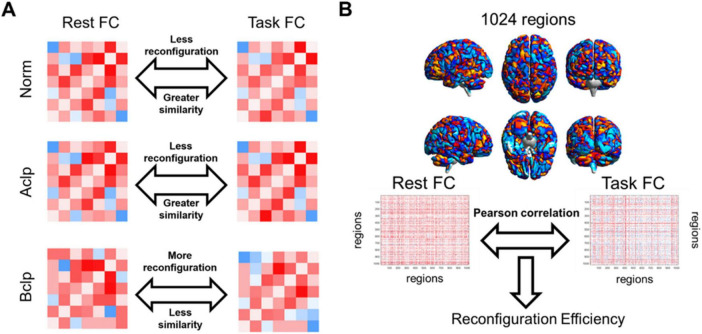
Introduction: Cleft lip and/or palate (CLP) patients still have severe speech disorder requiring speech rehabilitation after surgical repair. The clarity of language rehabilitation is evaluated clinically by the Language Rehabilitation Scale. However, the pattern and underlying mechanisms of functional changes in the brain are not yet clear. Recent studies suggest that the brain's reconfiguration efficiency appears to be a key feature of its network dynamics and general cognitive abilities. In this study, we compared the association between rehabilitation effects and reconfiguration efficiency.
Methods: We evaluated CLP patients with speech rehabilitation (n = 23) and without speech rehabilitation (n = 23) and normal controls (n = 25). Assessed CLP patients on the Chinese Speech Intelligibility Test Word Lists and collected fMRI data and behavioral data for all participants. We compared behavioral data and task activation levels between participants for between-group differences and calculated reconfiguration efficiencies for each task based on each participant. In patients, we correlated reconfiguration efficiency with task performance and measured the correlation between them.
Results: Behaviorally, CLP patients with rehabilitation scored significantly higher than those without rehabilitation on the Chinese Speech Intelligibility Test Word Lists. Rehabilitation caused local brain activation levels of CLP patients to converge toward those of controls, indicating rehabilitative effects on brain function. Analysis of reconfiguration efficiency across tasks at the local and whole-brain levels identified underlying recovery mechanisms. Whole-brain reconfiguration efficiency was significantly and positively correlated with task performance.
Conclusion: Our results suggest that speech rehabilitation can improve the level of language-related brain activity in CLP patients, and that reconfiguration efficiency can be used as an assessment index of language clarity to evaluate the effectiveness of brain rehabilitation in CLP patients, a finding that can provide a better understanding of the degree of brain function recovery in patients.
期刊介绍:
Frontiers in Aging Neuroscience is a leading journal in its field, publishing rigorously peer-reviewed research that advances our understanding of the mechanisms of Central Nervous System aging and age-related neural diseases. Specialty Chief Editor Thomas Wisniewski at the New York University School of Medicine is supported by an outstanding Editorial Board of international researchers. This multidisciplinary open-access journal is at the forefront of disseminating and communicating scientific knowledge and impactful discoveries to researchers, academics, clinicians and the public worldwide.





 京公网安备 11010802042870号
京ICP备2023020795号-1
京公网安备 11010802042870号
京ICP备2023020795号-1

 分享
分享
 求助内容:
求助内容: 应助结果提醒方式:
 扫码关注我们
