B E Speranza, M Do, A T Hill, P H Donaldson, P G Enticott, M Kirkovski
{"title":"Facial emotion processing hemispheric bias is weakly associated with handedness, autistic traits and biological sex, but not age.","authors":"B E Speranza, M Do, A T Hill, P H Donaldson, P G Enticott, M Kirkovski","doi":"10.1186/s40359-024-02218-2","DOIUrl":null,"url":null,"abstract":"<p><strong>Background: </strong>Right-hemisphere brain regions are strongly implicated in facial emotion processing (FEP), a phenomenon termed right-hemispheric bias. Variability in FEP hemispheric bias is thought to underpin differences in facial emotion recognition ability and has been associated with age, handedness, biological sex, and autistic traits. However, findings from research to date investigating factors associated with FEP hemispheric bias have been inconsistent.</p><p><strong>Objective: </strong>To examine if FEP hemispheric bias can be predicted by individual factors such as age, biological sex, handedness, and autistic traits.</p><p><strong>Methods: </strong>427 adults recruited from the general population aged 18-67 years completed the Autism-spectrum Quotient. We also assessed covariates previously linked with FEP hemispheric bias including age, handedness, and biological sex. FEP hemispheric bias was indexed using laterality quotients calculated from a Chimeric Faces Task, where participants indicated which of two identical (but mirrored) half-emotional half-neutral (no emotion) chimeric faces were more emotive.</p><p><strong>Results: </strong>Linear regression models revealed that (1) handedness predicted FEP hemispheric choice bias, (2) the attention switching Autism-spectrum Quotient subscale predicted FEP hemispheric reaction time bias, and (3) the imagination Autism-spectrum Quotient subscale predicted FEP hemispheric reaction time bias for males, but not females.</p><p><strong>Conclusions: </strong>These findings indicate that the relationship between autistic traits and FEP hemispheric bias is nuanced. Additionally, handedness influences hemispheric bias effects during FEP. Future research should endeavour to investigate if FEP hemispheric bias is dependent on the emotion being observed and consider using more direct measures of hemispheric bias.</p>","PeriodicalId":37867,"journal":{"name":"BMC Psychology","volume":"13 1","pages":"271"},"PeriodicalIF":3.0000,"publicationDate":"2025-03-18","publicationTypes":"Journal Article","fieldsOfStudy":null,"isOpenAccess":false,"openAccessPdf":"https://www.ncbi.nlm.nih.gov/pmc/articles/PMC11921578/pdf/","citationCount":"0","resultStr":null,"platform":"Semanticscholar","paperid":null,"PeriodicalName":"BMC Psychology","FirstCategoryId":"102","ListUrlMain":"https://doi.org/10.1186/s40359-024-02218-2","RegionNum":3,"RegionCategory":"心理学","ArticlePicture":[],"TitleCN":null,"AbstractTextCN":null,"PMCID":null,"EPubDate":"","PubModel":"","JCR":"Q1","JCRName":"PSYCHOLOGY, MULTIDISCIPLINARY","Score":null,"Total":0}
引用次数: 0
Abstract
Background: Right-hemisphere brain regions are strongly implicated in facial emotion processing (FEP), a phenomenon termed right-hemispheric bias. Variability in FEP hemispheric bias is thought to underpin differences in facial emotion recognition ability and has been associated with age, handedness, biological sex, and autistic traits. However, findings from research to date investigating factors associated with FEP hemispheric bias have been inconsistent.
Objective: To examine if FEP hemispheric bias can be predicted by individual factors such as age, biological sex, handedness, and autistic traits.
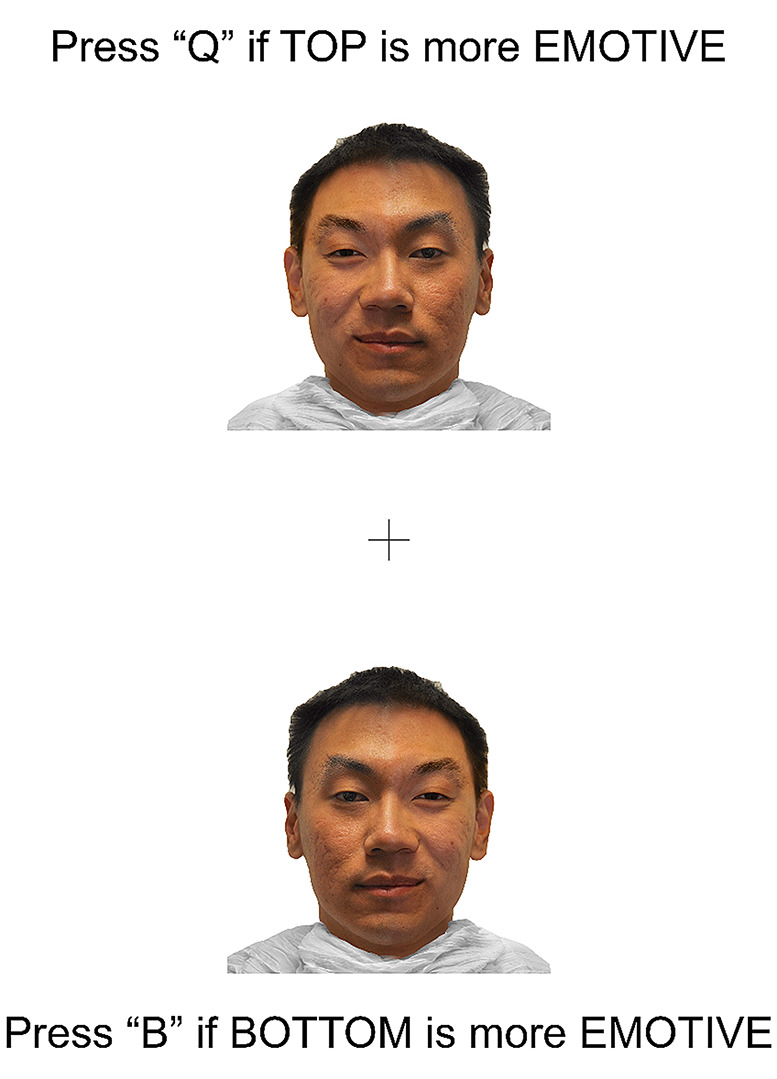
Methods: 427 adults recruited from the general population aged 18-67 years completed the Autism-spectrum Quotient. We also assessed covariates previously linked with FEP hemispheric bias including age, handedness, and biological sex. FEP hemispheric bias was indexed using laterality quotients calculated from a Chimeric Faces Task, where participants indicated which of two identical (but mirrored) half-emotional half-neutral (no emotion) chimeric faces were more emotive.
Results: Linear regression models revealed that (1) handedness predicted FEP hemispheric choice bias, (2) the attention switching Autism-spectrum Quotient subscale predicted FEP hemispheric reaction time bias, and (3) the imagination Autism-spectrum Quotient subscale predicted FEP hemispheric reaction time bias for males, but not females.
Conclusions: These findings indicate that the relationship between autistic traits and FEP hemispheric bias is nuanced. Additionally, handedness influences hemispheric bias effects during FEP. Future research should endeavour to investigate if FEP hemispheric bias is dependent on the emotion being observed and consider using more direct measures of hemispheric bias.
期刊介绍:
BMC Psychology is an open access, peer-reviewed journal that considers manuscripts on all aspects of psychology, human behavior and the mind, including developmental, clinical, cognitive, experimental, health and social psychology, as well as personality and individual differences. The journal welcomes quantitative and qualitative research methods, including animal studies.






 京公网安备 11010802042870号
京ICP备2023020795号-1
京公网安备 11010802042870号
京ICP备2023020795号-1

 分享
分享
 求助内容:
求助内容: 应助结果提醒方式:
 扫码关注我们
