Hao Tian, Wentong Lu, Caiyan Wang, Runhua Wang, Peilong Zhou, Fan Fei, Mengyang Xu and Jincheng Wang
{"title":"Development of highly robust polyurethane elastomers possessing self-healing capabilities for flexible sensors†","authors":"Hao Tian, Wentong Lu, Caiyan Wang, Runhua Wang, Peilong Zhou, Fan Fei, Mengyang Xu and Jincheng Wang","doi":"10.1039/D5MH00022J","DOIUrl":null,"url":null,"abstract":"<p >Traditional flexible electronic sensing materials have fallen short in meeting the diverse application needs and environments of modern times. Hence, we require a multi-functional elastomer material to improve the overall performance and expand the functionality of flexible electronic sensors. In this study, we fabricated a multi-block polyurethane (PU) elastomer based on semi-crystalline polycaprolactone (PCL) chain segments and highly flexible polydimethylsiloxane (PDMS) chain segments, which showcases outstanding mechanical properties, self-healing capabilities, and recyclability. By adjusting the ratio parameters of the chain segments, we were able to modulate the thermodynamic behavior, hydrophobicity, mechanical behavior, and self-healing properties of the designed PU elastomers. The optimized ratios exhibited good tensile strength (16.26 MPa), high elongation at break (3300.84%), good toughness (278.82 MJ m<small><sup>−3</sup></small>, fracture energy ≈ 234.96 KJ m<small><sup>−2</sup></small>), high self-repairing (≈100%, at room temperature for 12 h), efficient recyclability, and puncture resistance. Self-healing is accomplished through the interactions between dynamic disulfide bonds, dynamic boron–oxygen bonds, and hydrogen bonds. The conductive ink (PEDOT:PSS) was encapsulated within this elastomer to construct a flexible electronic sensor, attaining excellent sensing performance (stable output for 1000 cycles). This multi-functional polyurethane elastomer acts as an ideal matrix material for flexible electronic sensors, offering novel concepts and perspectives for the next generation of green electronic flexible materials, electronic flexible robots, and other stimulus-responsive materials.</p>","PeriodicalId":87,"journal":{"name":"Materials Horizons","volume":" 11","pages":" 3949-3964"},"PeriodicalIF":10.7000,"publicationDate":"2025-03-20","publicationTypes":"Journal Article","fieldsOfStudy":null,"isOpenAccess":false,"openAccessPdf":"","citationCount":"0","resultStr":null,"platform":"Semanticscholar","paperid":null,"PeriodicalName":"Materials Horizons","FirstCategoryId":"88","ListUrlMain":"https://pubs.rsc.org/en/content/articlelanding/2025/mh/d5mh00022j","RegionNum":2,"RegionCategory":"材料科学","ArticlePicture":[],"TitleCN":null,"AbstractTextCN":null,"PMCID":null,"EPubDate":"","PubModel":"","JCR":"Q1","JCRName":"CHEMISTRY, MULTIDISCIPLINARY","Score":null,"Total":0}
引用次数: 0
Abstract
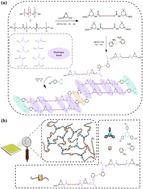
Traditional flexible electronic sensing materials have fallen short in meeting the diverse application needs and environments of modern times. Hence, we require a multi-functional elastomer material to improve the overall performance and expand the functionality of flexible electronic sensors. In this study, we fabricated a multi-block polyurethane (PU) elastomer based on semi-crystalline polycaprolactone (PCL) chain segments and highly flexible polydimethylsiloxane (PDMS) chain segments, which showcases outstanding mechanical properties, self-healing capabilities, and recyclability. By adjusting the ratio parameters of the chain segments, we were able to modulate the thermodynamic behavior, hydrophobicity, mechanical behavior, and self-healing properties of the designed PU elastomers. The optimized ratios exhibited good tensile strength (16.26 MPa), high elongation at break (3300.84%), good toughness (278.82 MJ m−3, fracture energy ≈ 234.96 KJ m−2), high self-repairing (≈100%, at room temperature for 12 h), efficient recyclability, and puncture resistance. Self-healing is accomplished through the interactions between dynamic disulfide bonds, dynamic boron–oxygen bonds, and hydrogen bonds. The conductive ink (PEDOT:PSS) was encapsulated within this elastomer to construct a flexible electronic sensor, attaining excellent sensing performance (stable output for 1000 cycles). This multi-functional polyurethane elastomer acts as an ideal matrix material for flexible electronic sensors, offering novel concepts and perspectives for the next generation of green electronic flexible materials, electronic flexible robots, and other stimulus-responsive materials.




 京公网安备 11010802042870号
京ICP备2023020795号-1
京公网安备 11010802042870号
京ICP备2023020795号-1

 分享
分享
 求助内容:
求助内容: 应助结果提醒方式:
 扫码关注我们
