{"title":"Antiphospholipid syndrome presenting as isolated renal vein thrombosis: a case report and review of the literature.","authors":"Khemchand N Moorani, Saima Kashif","doi":"10.1186/s13256-025-05117-1","DOIUrl":null,"url":null,"abstract":"<p><strong>Background: </strong>Pediatric antiphospholipid syndrome is a rare systemic autoimmune disorder characterized by recurrent thrombotic events in the presence of antiphospholipid antibodies. Isolated right renal vein thrombosis resulting in a nonfunctional kidney is an uncommon manifestation of antiphospholipid syndrome. Here, we present our experience with antiphospholipid syndrome secondary to systemic lupus erythematosus.</p><p><strong>Case presentation: </strong>A 10 year-old girl from a Hindu family in Sindh, Pakistan, who had previously been healthy, presented in 2020 with a 1-week history of abdominal pain, gross hematuria, vomiting, and fever. On examination, she was anxious, febrile, hypertensive, and had an enlarged, tender right kidney. Other systemic examinations, including skin, locomotor, respiratory, cardiovascular, and nervous systems, were unremarkable. Initial investigations for ureteric colic and acute pyelonephritis were negative, but revealed thrombocytopenia on complete blood count, mild proteinuria, hematuria on urinalysis, and normal kidney and liver function tests, along with normal prothrombin and activated partial thromboplastin times. An abdominal ultrasound showed a diffusely enlarged, echogenic right kidney with a loss of corticomedullary distinction and cortical hypoechoic areas, while the left kidney appeared normal. Color Doppler ultrasound identified a large thrombus in the right renal vein, completely obstructing its lumen and showing no blood flow. The thrombus extended into the inferior vena cava. Computed tomography angiography confirmed an organized thrombus completely blocking the right renal vein and extending into the infrahepatic portion of the inferior vena cava. No prothrombotic risk factors were identified during clinical evaluation, and thrombophilia screening was negative. However, lupus serology and antiphospholipid antibodies were positive, confirming a diagnosis of secondary antiphospholipid syndrome.</p><p><strong>Management and outcome: </strong>The patient was treated with enoxaparin anticoagulation, later transitioned to warfarin sodium, and her hypertension was managed with captopril and amlodipine. She showed gradual improvement over 10-12 days and was discharged on anticoagulants, antihypertensive medications, antiplatelet agents, and hydroxychloroquine. A follow-up Doppler ultrasound revealed persistent blockage of the right renal vein by the thrombus, with no thrombus in the inferior vena cava. A dimercaptosuccinic acid scan indicated a nonfunctioning right kidney. While nephrectomy was recommended, her parents declined the procedure. Anticoagulation therapy was switched to rivaroxaban to avoid frequent international normalized ratio monitoring. Her captopril was replaced after control of blood pressure with losartan. Over the next 4 years, her follow-up was uneventful. She demonstrated normal growth, stable blood pressure (off antihypertensive), and normal kidney function without proteinuria. There were no lupus flares or thrombotic recurrences. Her most recent urinalysis was normal, with a serum creatinine level of 0.6 mg/dL and an estimated glomerular filtration rate > 170 mL/min/1.73 m<sup>2</sup>.</p><p><strong>Conclusion: </strong>Isolated renal vein thrombosis is a rare presentation of antiphospholipid syndrome and poses a diagnostic challenge in the absence of preexisting prothrombotic risk factors. Early diagnosis and timely management are crucial to prevent organ damage. In this case, the patient retained a solitary functioning kidney. Long-term follow-up is essential to monitor for lupus flares, thrombus recurrence, hypertension, proteinuria, and progression to chronic kidney disease, as well as to ensure continued thromboprophylaxis.</p>","PeriodicalId":16236,"journal":{"name":"Journal of Medical Case Reports","volume":"19 1","pages":"123"},"PeriodicalIF":0.8000,"publicationDate":"2025-03-19","publicationTypes":"Journal Article","fieldsOfStudy":null,"isOpenAccess":false,"openAccessPdf":"https://www.ncbi.nlm.nih.gov/pmc/articles/PMC11921502/pdf/","citationCount":"0","resultStr":null,"platform":"Semanticscholar","paperid":null,"PeriodicalName":"Journal of Medical Case Reports","FirstCategoryId":"1085","ListUrlMain":"https://doi.org/10.1186/s13256-025-05117-1","RegionNum":0,"RegionCategory":null,"ArticlePicture":[],"TitleCN":null,"AbstractTextCN":null,"PMCID":null,"EPubDate":"","PubModel":"","JCR":"Q3","JCRName":"MEDICINE, GENERAL & INTERNAL","Score":null,"Total":0}
引用次数: 0
Abstract
Background: Pediatric antiphospholipid syndrome is a rare systemic autoimmune disorder characterized by recurrent thrombotic events in the presence of antiphospholipid antibodies. Isolated right renal vein thrombosis resulting in a nonfunctional kidney is an uncommon manifestation of antiphospholipid syndrome. Here, we present our experience with antiphospholipid syndrome secondary to systemic lupus erythematosus.
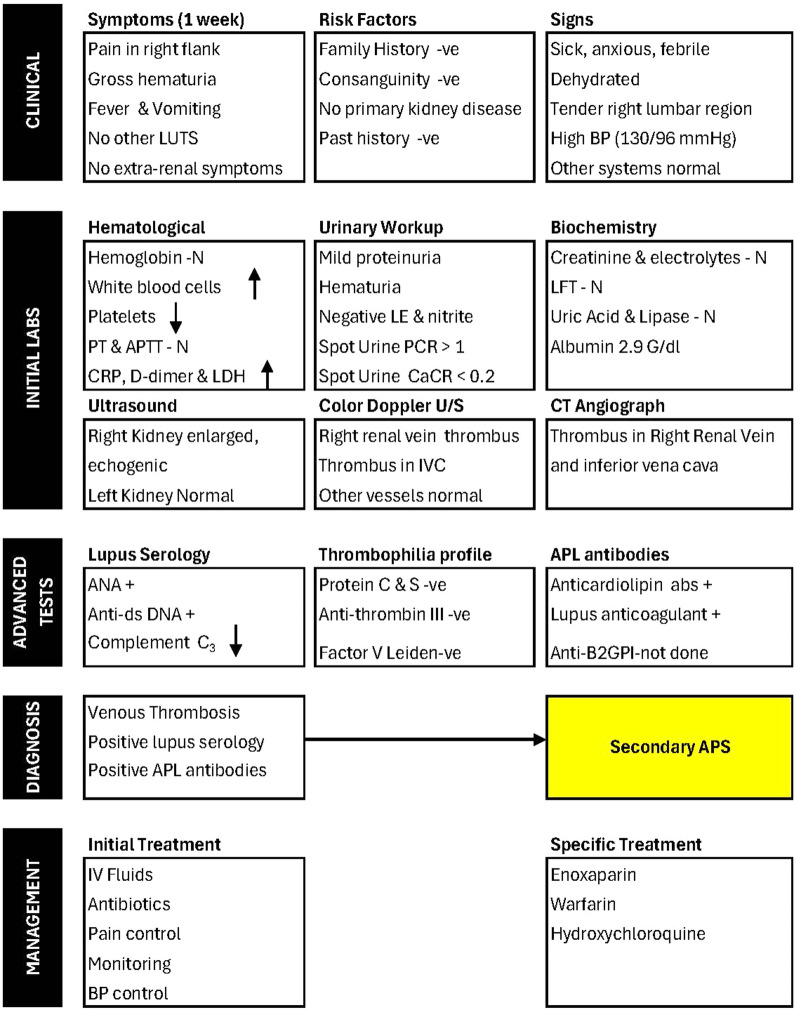
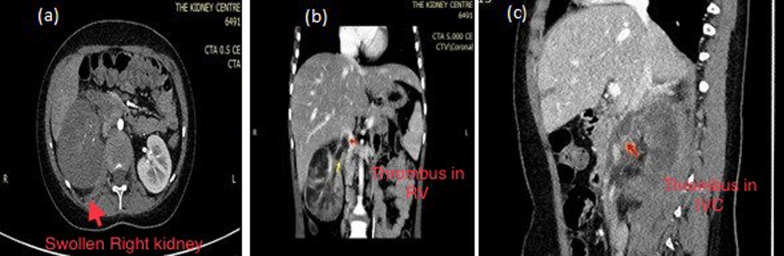
Case presentation: A 10 year-old girl from a Hindu family in Sindh, Pakistan, who had previously been healthy, presented in 2020 with a 1-week history of abdominal pain, gross hematuria, vomiting, and fever. On examination, she was anxious, febrile, hypertensive, and had an enlarged, tender right kidney. Other systemic examinations, including skin, locomotor, respiratory, cardiovascular, and nervous systems, were unremarkable. Initial investigations for ureteric colic and acute pyelonephritis were negative, but revealed thrombocytopenia on complete blood count, mild proteinuria, hematuria on urinalysis, and normal kidney and liver function tests, along with normal prothrombin and activated partial thromboplastin times. An abdominal ultrasound showed a diffusely enlarged, echogenic right kidney with a loss of corticomedullary distinction and cortical hypoechoic areas, while the left kidney appeared normal. Color Doppler ultrasound identified a large thrombus in the right renal vein, completely obstructing its lumen and showing no blood flow. The thrombus extended into the inferior vena cava. Computed tomography angiography confirmed an organized thrombus completely blocking the right renal vein and extending into the infrahepatic portion of the inferior vena cava. No prothrombotic risk factors were identified during clinical evaluation, and thrombophilia screening was negative. However, lupus serology and antiphospholipid antibodies were positive, confirming a diagnosis of secondary antiphospholipid syndrome.
Management and outcome: The patient was treated with enoxaparin anticoagulation, later transitioned to warfarin sodium, and her hypertension was managed with captopril and amlodipine. She showed gradual improvement over 10-12 days and was discharged on anticoagulants, antihypertensive medications, antiplatelet agents, and hydroxychloroquine. A follow-up Doppler ultrasound revealed persistent blockage of the right renal vein by the thrombus, with no thrombus in the inferior vena cava. A dimercaptosuccinic acid scan indicated a nonfunctioning right kidney. While nephrectomy was recommended, her parents declined the procedure. Anticoagulation therapy was switched to rivaroxaban to avoid frequent international normalized ratio monitoring. Her captopril was replaced after control of blood pressure with losartan. Over the next 4 years, her follow-up was uneventful. She demonstrated normal growth, stable blood pressure (off antihypertensive), and normal kidney function without proteinuria. There were no lupus flares or thrombotic recurrences. Her most recent urinalysis was normal, with a serum creatinine level of 0.6 mg/dL and an estimated glomerular filtration rate > 170 mL/min/1.73 m2.
Conclusion: Isolated renal vein thrombosis is a rare presentation of antiphospholipid syndrome and poses a diagnostic challenge in the absence of preexisting prothrombotic risk factors. Early diagnosis and timely management are crucial to prevent organ damage. In this case, the patient retained a solitary functioning kidney. Long-term follow-up is essential to monitor for lupus flares, thrombus recurrence, hypertension, proteinuria, and progression to chronic kidney disease, as well as to ensure continued thromboprophylaxis.
期刊介绍:
JMCR is an open access, peer-reviewed online journal that will consider any original case report that expands the field of general medical knowledge. Reports should show one of the following: 1. Unreported or unusual side effects or adverse interactions involving medications 2. Unexpected or unusual presentations of a disease 3. New associations or variations in disease processes 4. Presentations, diagnoses and/or management of new and emerging diseases 5. An unexpected association between diseases or symptoms 6. An unexpected event in the course of observing or treating a patient 7. Findings that shed new light on the possible pathogenesis of a disease or an adverse effect





 京公网安备 11010802042870号
京ICP备2023020795号-1
京公网安备 11010802042870号
京ICP备2023020795号-1

 分享
分享
 求助内容:
求助内容: 应助结果提醒方式:
 扫码关注我们
