Asvitha Babu, Ar Senthil Eagappan, Daya Srinivasan, Lavanya Mangala Valli
{"title":"A Comparative Study of the CARD™ System and Tell-show-do Technique in the Behavior Management of 6-10-year-old Children.","authors":"Asvitha Babu, Ar Senthil Eagappan, Daya Srinivasan, Lavanya Mangala Valli","doi":"10.5005/jp-journals-10005-3023","DOIUrl":null,"url":null,"abstract":"<p><strong>Background: </strong>Dental fear and anxiety are common issues affecting pediatric dental care, leading to challenges in treatment delivery and patient compliance. Nonpharmacological techniques such as the tell-show-do (TSD) method and CARD™ system have emerged as effective strategies for managing child dental anxiety.</p><p><strong>Aim: </strong>This study aims to compare the effectiveness of the CARD™ system and TSD technique in managing the behavior of 6-10-year-old children during dental procedures.</p><p><strong>Methods: </strong>Forty children requiring invasive dental treatments were randomly assigned to either the TSD technique (group 1, <i>n</i> = 20) or CARD™ system (group 2, <i>n</i> = 20) groups. Physiological parameters (oxygen saturation and pulse rate) and behavioral responses (evaluated using the Facial Image Scale) were assessed before and after procedures. Data were analyzed using <i>t</i>-tests and Mann-Whitney <i>U</i> tests as appropriate.</p><p><strong>Results: </strong>No statistically significant differences were found between the techniques regarding physiological parameters or behavioral responses. Both groups exhibited comparable oxygen saturation levels (CARD™: 98.00 ± 1.02; TSD: 98.00 ± 1.12) and pulse rates (CARD™: 87.45 ± 7.28 bpm; TSD: 90.30 ± 10.26 bpm) before procedures, with minimal changes observed postprocedure. Similarly, there were no significant differences in emotional responses assessed by the Facial Image Scale before (CARD™: 1.90 ± 0.85; TSD: 1.80 ± 0.76) or after procedures (CARD™: 2.80 ± 1.60; TSD: 2.95 ± 1.50).</p><p><strong>Conclusion: </strong>This study suggests that the CARD™ system and TSD technique are equally effective in managing child dental anxiety. Both methods offer viable options for reducing anxiety and enhancing cooperation during dental procedures.</p><p><strong>How to cite this article: </strong>Babu A, Eagappan SAR, Srinivasan D, <i>et al</i>. A Comparative Study of the CARD™ System and Tell-show-do Technique in the Behavior Management of 6-10-year-old Children. Int J Clin Pediatr Dent 2025;18(1):53-57.</p>","PeriodicalId":36045,"journal":{"name":"International Journal of Clinical Pediatric Dentistry","volume":"18 1","pages":"53-57"},"PeriodicalIF":0.0000,"publicationDate":"2025-01-01","publicationTypes":"Journal Article","fieldsOfStudy":null,"isOpenAccess":false,"openAccessPdf":"https://www.ncbi.nlm.nih.gov/pmc/articles/PMC11915411/pdf/","citationCount":"0","resultStr":null,"platform":"Semanticscholar","paperid":null,"PeriodicalName":"International Journal of Clinical Pediatric Dentistry","FirstCategoryId":"1085","ListUrlMain":"https://doi.org/10.5005/jp-journals-10005-3023","RegionNum":0,"RegionCategory":null,"ArticlePicture":[],"TitleCN":null,"AbstractTextCN":null,"PMCID":null,"EPubDate":"2025/2/14 0:00:00","PubModel":"Epub","JCR":"Q3","JCRName":"Dentistry","Score":null,"Total":0}
引用次数: 0
Abstract
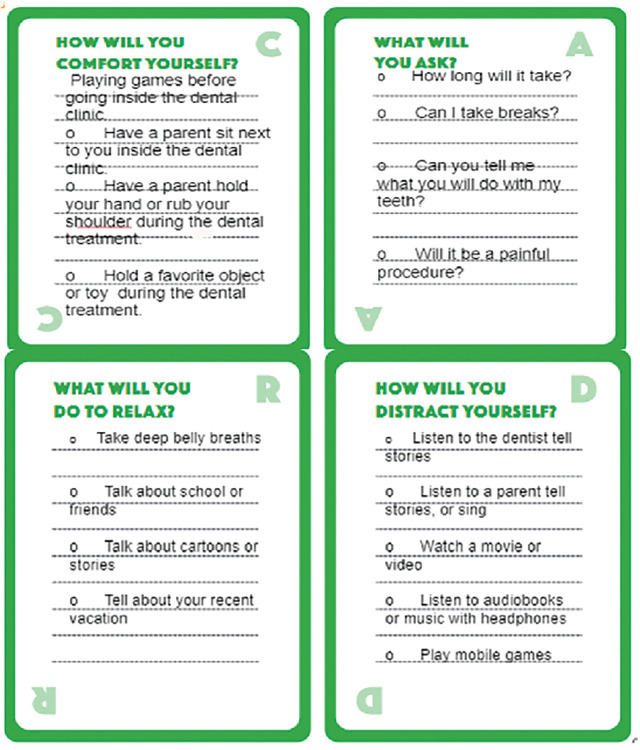
Background: Dental fear and anxiety are common issues affecting pediatric dental care, leading to challenges in treatment delivery and patient compliance. Nonpharmacological techniques such as the tell-show-do (TSD) method and CARD™ system have emerged as effective strategies for managing child dental anxiety.
Aim: This study aims to compare the effectiveness of the CARD™ system and TSD technique in managing the behavior of 6-10-year-old children during dental procedures.
Methods: Forty children requiring invasive dental treatments were randomly assigned to either the TSD technique (group 1, n = 20) or CARD™ system (group 2, n = 20) groups. Physiological parameters (oxygen saturation and pulse rate) and behavioral responses (evaluated using the Facial Image Scale) were assessed before and after procedures. Data were analyzed using t-tests and Mann-Whitney U tests as appropriate.
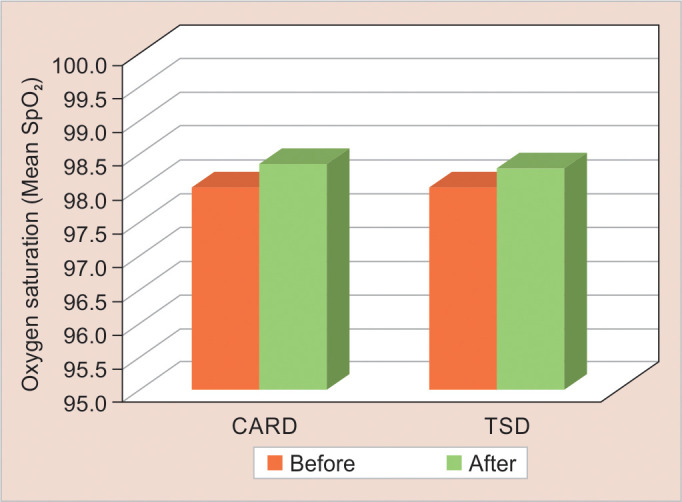
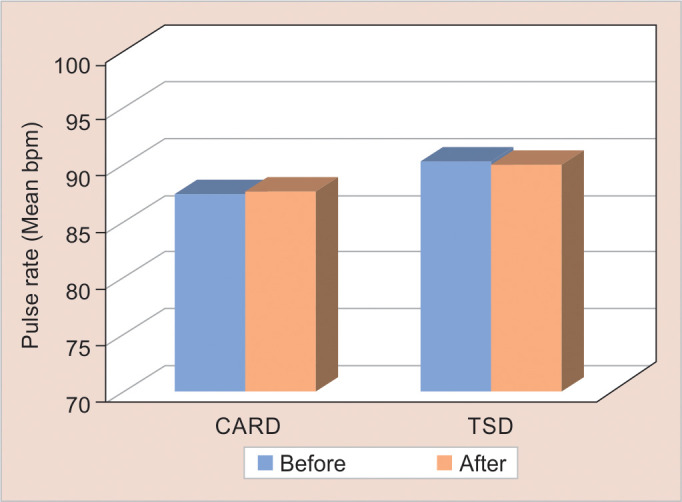
Results: No statistically significant differences were found between the techniques regarding physiological parameters or behavioral responses. Both groups exhibited comparable oxygen saturation levels (CARD™: 98.00 ± 1.02; TSD: 98.00 ± 1.12) and pulse rates (CARD™: 87.45 ± 7.28 bpm; TSD: 90.30 ± 10.26 bpm) before procedures, with minimal changes observed postprocedure. Similarly, there were no significant differences in emotional responses assessed by the Facial Image Scale before (CARD™: 1.90 ± 0.85; TSD: 1.80 ± 0.76) or after procedures (CARD™: 2.80 ± 1.60; TSD: 2.95 ± 1.50).
Conclusion: This study suggests that the CARD™ system and TSD technique are equally effective in managing child dental anxiety. Both methods offer viable options for reducing anxiety and enhancing cooperation during dental procedures.
How to cite this article: Babu A, Eagappan SAR, Srinivasan D, et al. A Comparative Study of the CARD™ System and Tell-show-do Technique in the Behavior Management of 6-10-year-old Children. Int J Clin Pediatr Dent 2025;18(1):53-57.




 京公网安备 11010802042870号
京ICP备2023020795号-1
京公网安备 11010802042870号
京ICP备2023020795号-1

 分享
分享
 求助内容:
求助内容: 应助结果提醒方式:
 扫码关注我们
