Lenin Riascos-Flores , Long Ho , Wout Van Echelpoel , Marie Anne Eurie Forio , Stijn Bruneel , Niels De Troyer , Nancy de Saeyer , Rafael Bermudez , Wim Vanden Berghe , Luis Dominguez-Granda , Pascal Boeckx , Christine Van der heyden , Peter Goethals
{"title":"Chemical and microbiological analysis of urban and associated natural water systems of inhabited volcanic islands of the Galapagos (Ecuador)","authors":"Lenin Riascos-Flores , Long Ho , Wout Van Echelpoel , Marie Anne Eurie Forio , Stijn Bruneel , Niels De Troyer , Nancy de Saeyer , Rafael Bermudez , Wim Vanden Berghe , Luis Dominguez-Granda , Pascal Boeckx , Christine Van der heyden , Peter Goethals","doi":"10.1016/j.watres.2025.123516","DOIUrl":null,"url":null,"abstract":"<div><div>The Galapagos Islands, known for their unique ecology, are confronted with significant challenges in water management and freshwater scarcity. These challenges are further exacerbated by a lack of comprehensive monitoring, assessment and understanding of the quality of water systems on inhabited islands. This study examines the urban and associated natural water systems of the remote volcanic islands of Floreana, Isabela and Santa Cruz in the Pacific Ocean through an unprecedented combination of comprehensive physicochemical analysis, including nutrient measurements, microbiological analyses and isotope-based source detection of nitrate (NO<sub>3</sub><sup>−</sup>) contamination. A systematic monitoring campaign across 66 sites revealed critical anthropogenic impacts on water quality. This includes contamination by sewage and the presence of coliforms and/or <em>Escherichia coli</em> in groundwater, reservoirs, tap water and the receiving water bodies of the three evaluated islands. Major impacts are present in the most densely populated island (Santa Cruz), where about 39 % of the monitoring sites are classified as polluted according to the Basic Prati Index, with the presence of <em>E. coli</em> in 57 % (4/7) of the evaluated sites and NO<sub>3</sub><sup>−</sup> contribution from sewage accounting for up to 57 % of the NO<sub>3</sub><sup>−</sup> in the receiving water body. In Isabela, treated wastewater is discharged about 300 meters from a recreational site, while it contains high ammonium concentrations (41.5 mg N L<sup>−1</sup>), <em>E. coli</em> and very low oxygen levels (< 0.5 mg O<sub>2</sub> L<sup>−1</sup>). In Floreana, the groundwater (aquifer) closest to the urban area shows a NO<sub>3</sub><sup>−</sup> contribution of up to 94 % from sewage, while this figure is only 11 % in the other islands. On top of this, water analyses in the drinking water reservoirs and tap water in the three islands indicate quality issues in the urban water provision system that could lead to human health impacts. The role of tourism, agriculture, urbanization and population growth exacerbates these issues, presenting urgent public health concerns and highlight the need for sustainable practices by stopping and treating the critical sources of pollution and contamination. These findings on the Galapagos emphasize the need for better water treatment and distribution, as well as sewage and agricultural management in islands to improve and protect the islands' highly vulnerable ecosystems and related water provisioning services.</div></div>","PeriodicalId":443,"journal":{"name":"Water Research","volume":"281 ","pages":"Article 123516"},"PeriodicalIF":12.4000,"publicationDate":"2025-03-20","publicationTypes":"Journal Article","fieldsOfStudy":null,"isOpenAccess":false,"openAccessPdf":"","citationCount":"0","resultStr":null,"platform":"Semanticscholar","paperid":null,"PeriodicalName":"Water Research","FirstCategoryId":"93","ListUrlMain":"https://www.sciencedirect.com/science/article/pii/S0043135425004294","RegionNum":1,"RegionCategory":"环境科学与生态学","ArticlePicture":[],"TitleCN":null,"AbstractTextCN":null,"PMCID":null,"EPubDate":"","PubModel":"","JCR":"Q1","JCRName":"ENGINEERING, ENVIRONMENTAL","Score":null,"Total":0}
引用次数: 0
Abstract
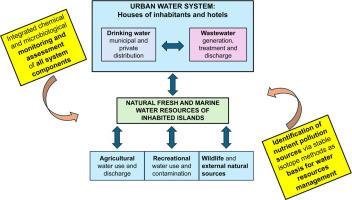
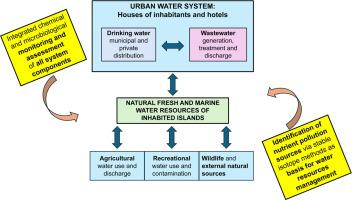
The Galapagos Islands, known for their unique ecology, are confronted with significant challenges in water management and freshwater scarcity. These challenges are further exacerbated by a lack of comprehensive monitoring, assessment and understanding of the quality of water systems on inhabited islands. This study examines the urban and associated natural water systems of the remote volcanic islands of Floreana, Isabela and Santa Cruz in the Pacific Ocean through an unprecedented combination of comprehensive physicochemical analysis, including nutrient measurements, microbiological analyses and isotope-based source detection of nitrate (NO3−) contamination. A systematic monitoring campaign across 66 sites revealed critical anthropogenic impacts on water quality. This includes contamination by sewage and the presence of coliforms and/or Escherichia coli in groundwater, reservoirs, tap water and the receiving water bodies of the three evaluated islands. Major impacts are present in the most densely populated island (Santa Cruz), where about 39 % of the monitoring sites are classified as polluted according to the Basic Prati Index, with the presence of E. coli in 57 % (4/7) of the evaluated sites and NO3− contribution from sewage accounting for up to 57 % of the NO3− in the receiving water body. In Isabela, treated wastewater is discharged about 300 meters from a recreational site, while it contains high ammonium concentrations (41.5 mg N L−1), E. coli and very low oxygen levels (< 0.5 mg O2 L−1). In Floreana, the groundwater (aquifer) closest to the urban area shows a NO3− contribution of up to 94 % from sewage, while this figure is only 11 % in the other islands. On top of this, water analyses in the drinking water reservoirs and tap water in the three islands indicate quality issues in the urban water provision system that could lead to human health impacts. The role of tourism, agriculture, urbanization and population growth exacerbates these issues, presenting urgent public health concerns and highlight the need for sustainable practices by stopping and treating the critical sources of pollution and contamination. These findings on the Galapagos emphasize the need for better water treatment and distribution, as well as sewage and agricultural management in islands to improve and protect the islands' highly vulnerable ecosystems and related water provisioning services.
期刊介绍:
Water Research, along with its open access companion journal Water Research X, serves as a platform for publishing original research papers covering various aspects of the science and technology related to the anthropogenic water cycle, water quality, and its management worldwide. The audience targeted by the journal comprises biologists, chemical engineers, chemists, civil engineers, environmental engineers, limnologists, and microbiologists. The scope of the journal include:
•Treatment processes for water and wastewaters (municipal, agricultural, industrial, and on-site treatment), including resource recovery and residuals management;
•Urban hydrology including sewer systems, stormwater management, and green infrastructure;
•Drinking water treatment and distribution;
•Potable and non-potable water reuse;
•Sanitation, public health, and risk assessment;
•Anaerobic digestion, solid and hazardous waste management, including source characterization and the effects and control of leachates and gaseous emissions;
•Contaminants (chemical, microbial, anthropogenic particles such as nanoparticles or microplastics) and related water quality sensing, monitoring, fate, and assessment;
•Anthropogenic impacts on inland, tidal, coastal and urban waters, focusing on surface and ground waters, and point and non-point sources of pollution;
•Environmental restoration, linked to surface water, groundwater and groundwater remediation;
•Analysis of the interfaces between sediments and water, and between water and atmosphere, focusing specifically on anthropogenic impacts;
•Mathematical modelling, systems analysis, machine learning, and beneficial use of big data related to the anthropogenic water cycle;
•Socio-economic, policy, and regulations studies.



 京公网安备 11010802042870号
京ICP备2023020795号-1
京公网安备 11010802042870号
京ICP备2023020795号-1

 分享
分享
 求助内容:
求助内容: 应助结果提醒方式:
 扫码关注我们
