The impact of enriching heat-stressed rabbit diets with flaxseed oil with/ without allicin, lycopene, or Punicalagin on antioxidative status, physiological response and meat omega-3.
{"title":"The impact of enriching heat-stressed rabbit diets with flaxseed oil with/ without allicin, lycopene, or Punicalagin on antioxidative status, physiological response and meat omega-3.","authors":"Yassmine M El-Gindy","doi":"10.1186/s12917-025-04615-0","DOIUrl":null,"url":null,"abstract":"<p><p>To improve the health and lifespan of customers, modern nutritionists have focused on improving meat quality and nutritional value. To enhance the unsaturation lipids of rabbit meat, different oil sources used in rabbit diets. Flaxseed oil (FSO) is one way to raise the polyunsaturated omega-3 fatty acid (ω3) in animal meats. On the other hand, FSO can cause high rates of oxidation in rabbit meat under heat stress. Therefore, the use of natural antioxidants may be a good strategy to produce functional meat under stress. The study investigated the beneficial impact of enriching heat stressed rabbit diets with FSO supplemented with/without allicin (ALC), lycopene (LCO) or punicalagin (PCA) during the last 3 weeks before slaughter at a ban temperature ranging from 30 to 35 C, humidity 70 to 82% and temperature humidity index of 27.9 to 31.2 on growth performance, antioxidative status, physiological response, liver and kidney function and ω3 & ω6. In total, 120 male V-line growing rabbits (5 weeks old) were divided into 5 groups, 24 rabbits each. CON rabbits fed a standard diet without supplementation, FO rabbits fed a diet with 1.5% FSO, FOA rabbits fed a diet with 1.5% FSO and 100 mg / kg of ALC diet, FOL rabbits fed a diet with 1.5% FSO with 100 mg LCO / kg of diet, FOP rabbits fed a diet with 1.5% FSO with 100 mg PCA / kg of diet. All treatments with flaxseed oil supplemented with antioxidants significantly elevated ω3 content and ratio between ω3/ω6 of rabbit meat (P ≤ 0.01) while concomitantly reducing total cholesterol without any significant change in physiological response (rectum temperature and respiration rate). Furthermore, these treatments markedly improved antioxidant status, as evidenced by increased total antioxidant capacity and decreased lipid peroxidation. Additionally, serum immunoglobulin G (IgG) significantly (P ≤ 0.01) elevated in FOA, FOL and FOP rabbits compared to the CON group. Supplementation with ALC, LCO and PCA could be recommended to restrain the results of oxidative stress results of enriched diets with ω3 and heat stress to provide healthier and functional rabbit meat (rich in ω3).</p>","PeriodicalId":9041,"journal":{"name":"BMC Veterinary Research","volume":"21 1","pages":"187"},"PeriodicalIF":2.6000,"publicationDate":"2025-03-20","publicationTypes":"Journal Article","fieldsOfStudy":null,"isOpenAccess":false,"openAccessPdf":"https://www.ncbi.nlm.nih.gov/pmc/articles/PMC11924766/pdf/","citationCount":"0","resultStr":null,"platform":"Semanticscholar","paperid":null,"PeriodicalName":"BMC Veterinary Research","FirstCategoryId":"97","ListUrlMain":"https://doi.org/10.1186/s12917-025-04615-0","RegionNum":2,"RegionCategory":"农林科学","ArticlePicture":[],"TitleCN":null,"AbstractTextCN":null,"PMCID":null,"EPubDate":"","PubModel":"","JCR":"Q1","JCRName":"VETERINARY SCIENCES","Score":null,"Total":0}
引用次数: 0
Abstract
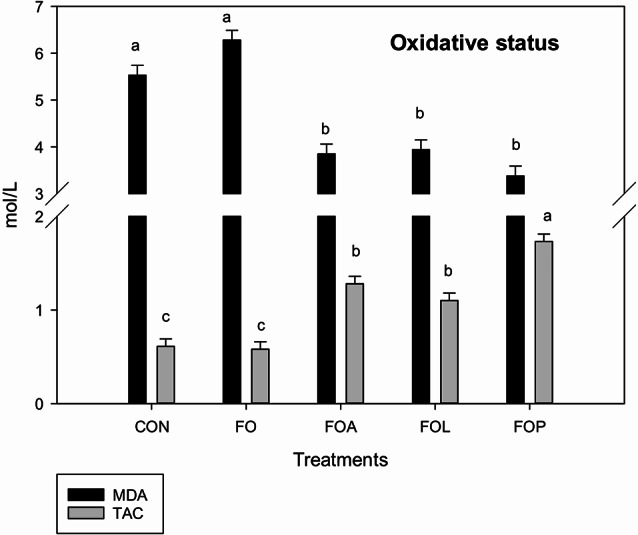
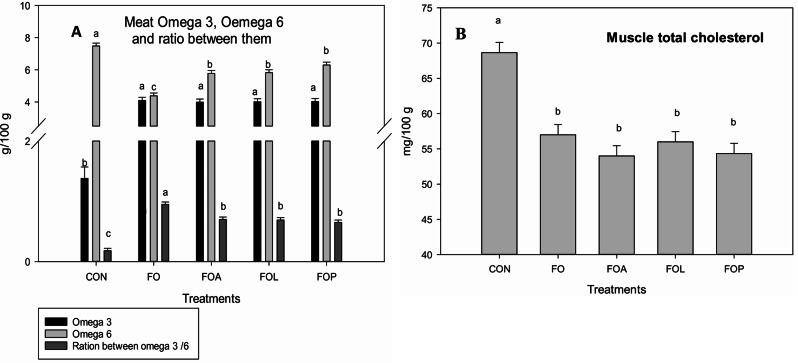
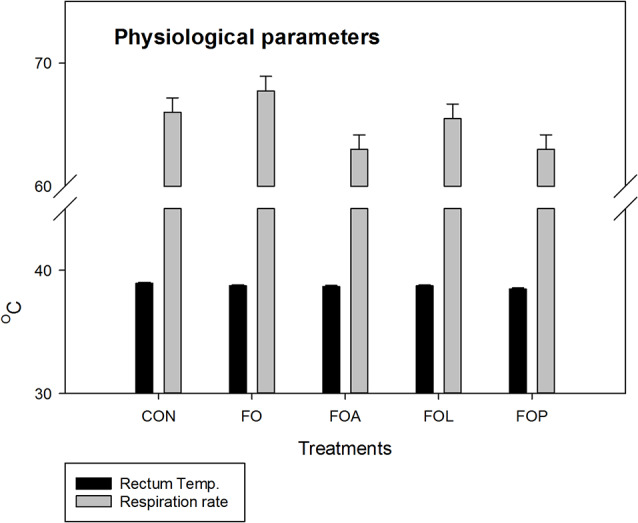
To improve the health and lifespan of customers, modern nutritionists have focused on improving meat quality and nutritional value. To enhance the unsaturation lipids of rabbit meat, different oil sources used in rabbit diets. Flaxseed oil (FSO) is one way to raise the polyunsaturated omega-3 fatty acid (ω3) in animal meats. On the other hand, FSO can cause high rates of oxidation in rabbit meat under heat stress. Therefore, the use of natural antioxidants may be a good strategy to produce functional meat under stress. The study investigated the beneficial impact of enriching heat stressed rabbit diets with FSO supplemented with/without allicin (ALC), lycopene (LCO) or punicalagin (PCA) during the last 3 weeks before slaughter at a ban temperature ranging from 30 to 35 C, humidity 70 to 82% and temperature humidity index of 27.9 to 31.2 on growth performance, antioxidative status, physiological response, liver and kidney function and ω3 & ω6. In total, 120 male V-line growing rabbits (5 weeks old) were divided into 5 groups, 24 rabbits each. CON rabbits fed a standard diet without supplementation, FO rabbits fed a diet with 1.5% FSO, FOA rabbits fed a diet with 1.5% FSO and 100 mg / kg of ALC diet, FOL rabbits fed a diet with 1.5% FSO with 100 mg LCO / kg of diet, FOP rabbits fed a diet with 1.5% FSO with 100 mg PCA / kg of diet. All treatments with flaxseed oil supplemented with antioxidants significantly elevated ω3 content and ratio between ω3/ω6 of rabbit meat (P ≤ 0.01) while concomitantly reducing total cholesterol without any significant change in physiological response (rectum temperature and respiration rate). Furthermore, these treatments markedly improved antioxidant status, as evidenced by increased total antioxidant capacity and decreased lipid peroxidation. Additionally, serum immunoglobulin G (IgG) significantly (P ≤ 0.01) elevated in FOA, FOL and FOP rabbits compared to the CON group. Supplementation with ALC, LCO and PCA could be recommended to restrain the results of oxidative stress results of enriched diets with ω3 and heat stress to provide healthier and functional rabbit meat (rich in ω3).
期刊介绍:
BMC Veterinary Research is an open access, peer-reviewed journal that considers articles on all aspects of veterinary science and medicine, including the epidemiology, diagnosis, prevention and treatment of medical conditions of domestic, companion, farm and wild animals, as well as the biomedical processes that underlie their health.



 京公网安备 11010802042870号
京ICP备2023020795号-1
京公网安备 11010802042870号
京ICP备2023020795号-1

 分享
分享
 求助内容:
求助内容: 应助结果提醒方式:
 扫码关注我们
