Ryan Hubbard;David Choi;Tejaswi Worlikar;Ulrich Scheven;Hanna Kim;Jonathan R. Sukovich;Timothy L. Hall;Zhen Xu
{"title":"MRI Coregistered Rodent Histotripsy Array for Orthotopic Liver Models","authors":"Ryan Hubbard;David Choi;Tejaswi Worlikar;Ulrich Scheven;Hanna Kim;Jonathan R. Sukovich;Timothy L. Hall;Zhen Xu","doi":"10.1109/TUFFC.2025.3553083","DOIUrl":null,"url":null,"abstract":"Histotripsy has emerged as a promising therapeutic option for liver tumors, recently gaining food and drug administration (FDA) approval for clinical use in October 2023. Preclinical in vivo histotripsy experiments primarily utilize subcutaneous ectopic murine tumor models, which fail to accurately replicate the complex immunosuppressive tumor microenvironment (TME) of liver tumors. In order to address this gap, we present the design, development, and in vivo demonstration of a miniature, electronically steerable magnetic resonance imaging (MRI)-guided histotripsy array tailored for orthotopic murine liver tumor models. This novel system integrates an 89-element phased array within a 7.0-T small animal MRI scanner, enabling precise targeting through enhanced soft tissue contrast and 3-D visualization. The targeting accuracy of the array was validated in tissue-mimicking red blood cell (RBC) phantoms, exhibiting targeting precision of <inline-formula> <tex-math>$0.24~\\pm ~0.1$ </tex-math></inline-formula> mm. Subsequent in vivo experiments in naïve mice demonstrated successful liver ablations, confirmed by gross morphology and histological analysis. However, the presence of grating lobes led to undesired collateral damage, highlighted by lung hemorrhages, necessitating future adjustments in the array’s design. This study illustrates the foundational steps necessary for translating histotripsy experiments from subcutaneous to orthotopic models.","PeriodicalId":13322,"journal":{"name":"IEEE transactions on ultrasonics, ferroelectrics, and frequency control","volume":"72 5","pages":"581-590"},"PeriodicalIF":3.7000,"publicationDate":"2025-03-20","publicationTypes":"Journal Article","fieldsOfStudy":null,"isOpenAccess":false,"openAccessPdf":"","citationCount":"0","resultStr":null,"platform":"Semanticscholar","paperid":null,"PeriodicalName":"IEEE transactions on ultrasonics, ferroelectrics, and frequency control","FirstCategoryId":"5","ListUrlMain":"https://ieeexplore.ieee.org/document/10935735/","RegionNum":2,"RegionCategory":"工程技术","ArticlePicture":[],"TitleCN":null,"AbstractTextCN":null,"PMCID":null,"EPubDate":"","PubModel":"","JCR":"Q1","JCRName":"ACOUSTICS","Score":null,"Total":0}
引用次数: 0
Abstract
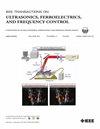
Histotripsy has emerged as a promising therapeutic option for liver tumors, recently gaining food and drug administration (FDA) approval for clinical use in October 2023. Preclinical in vivo histotripsy experiments primarily utilize subcutaneous ectopic murine tumor models, which fail to accurately replicate the complex immunosuppressive tumor microenvironment (TME) of liver tumors. In order to address this gap, we present the design, development, and in vivo demonstration of a miniature, electronically steerable magnetic resonance imaging (MRI)-guided histotripsy array tailored for orthotopic murine liver tumor models. This novel system integrates an 89-element phased array within a 7.0-T small animal MRI scanner, enabling precise targeting through enhanced soft tissue contrast and 3-D visualization. The targeting accuracy of the array was validated in tissue-mimicking red blood cell (RBC) phantoms, exhibiting targeting precision of $0.24~\pm ~0.1$ mm. Subsequent in vivo experiments in naïve mice demonstrated successful liver ablations, confirmed by gross morphology and histological analysis. However, the presence of grating lobes led to undesired collateral damage, highlighted by lung hemorrhages, necessitating future adjustments in the array’s design. This study illustrates the foundational steps necessary for translating histotripsy experiments from subcutaneous to orthotopic models.
期刊介绍:
IEEE Transactions on Ultrasonics, Ferroelectrics and Frequency Control includes the theory, technology, materials, and applications relating to: (1) the generation, transmission, and detection of ultrasonic waves and related phenomena; (2) medical ultrasound, including hyperthermia, bioeffects, tissue characterization and imaging; (3) ferroelectric, piezoelectric, and piezomagnetic materials, including crystals, polycrystalline solids, films, polymers, and composites; (4) frequency control, timing and time distribution, including crystal oscillators and other means of classical frequency control, and atomic, molecular and laser frequency control standards. Areas of interest range from fundamental studies to the design and/or applications of devices and systems.



 京公网安备 11010802042870号
京ICP备2023020795号-1
京公网安备 11010802042870号
京ICP备2023020795号-1

 分享
分享
 求助内容:
求助内容: 应助结果提醒方式:
 扫码关注我们
