Christian Garde, Michail A Pavlidis, Pablo Garces, Emma J Lange, Sri H Ramarathinam, Mateo Sokač, Kirti Pandey, Pouya Faridi, Johanne Ahrenfeldt, Shanzou Chung, Stine Friis, Daniela Kleine-Kohlbrecher, Nicolai J Birkbak, Jens V Kringelum, Birgitte Rønø, Anthony W Purcell, Thomas Trolle
{"title":"Endogenous viral elements constitute a complementary source of antigens for personalized cancer vaccines.","authors":"Christian Garde, Michail A Pavlidis, Pablo Garces, Emma J Lange, Sri H Ramarathinam, Mateo Sokač, Kirti Pandey, Pouya Faridi, Johanne Ahrenfeldt, Shanzou Chung, Stine Friis, Daniela Kleine-Kohlbrecher, Nicolai J Birkbak, Jens V Kringelum, Birgitte Rønø, Anthony W Purcell, Thomas Trolle","doi":"10.1038/s41541-025-01107-y","DOIUrl":null,"url":null,"abstract":"<p><p>Personalized cancer vaccines (PCVs) largely leverage neoantigens arising from somatic mutations, limiting their application to patients with relatively high tumor mutational burden (TMB). This underscores the need for alternative antigens to design PCVs for low TMB cancers. To this end, we substantiate endogenous retroviral elements (EVEs) as tumor antigens through large-scale genomic analyses of healthy tissues and solid cancers. These analyses revealed that the breadth of EVE expression in tumors stratify checkpoint inhibitor-treated melanoma patients into groups with differential overall and progression-free survival. To enable the design of PCVs containing EVE-derived epitopes with therapeutic potential, we developed a computational pipeline, ObsERV. We show that EVE-derived peptides are presented as epitopes on tumors and can be predicted by ObsERV. Preclinical testing of ObsERV demonstrates induction of sustained poly-functional CD4+ and CD8+ T-cell responses as well as long-term tumor protection. As such, EVEs may facilitate and improve PCVs, especially for low-TMB patients.</p>","PeriodicalId":19335,"journal":{"name":"NPJ Vaccines","volume":"10 1","pages":"54"},"PeriodicalIF":6.5000,"publicationDate":"2025-03-20","publicationTypes":"Journal Article","fieldsOfStudy":null,"isOpenAccess":false,"openAccessPdf":"https://www.ncbi.nlm.nih.gov/pmc/articles/PMC11926357/pdf/","citationCount":"0","resultStr":null,"platform":"Semanticscholar","paperid":null,"PeriodicalName":"NPJ Vaccines","FirstCategoryId":"3","ListUrlMain":"https://doi.org/10.1038/s41541-025-01107-y","RegionNum":1,"RegionCategory":"医学","ArticlePicture":[],"TitleCN":null,"AbstractTextCN":null,"PMCID":null,"EPubDate":"","PubModel":"","JCR":"Q1","JCRName":"IMMUNOLOGY","Score":null,"Total":0}
引用次数: 0
Abstract
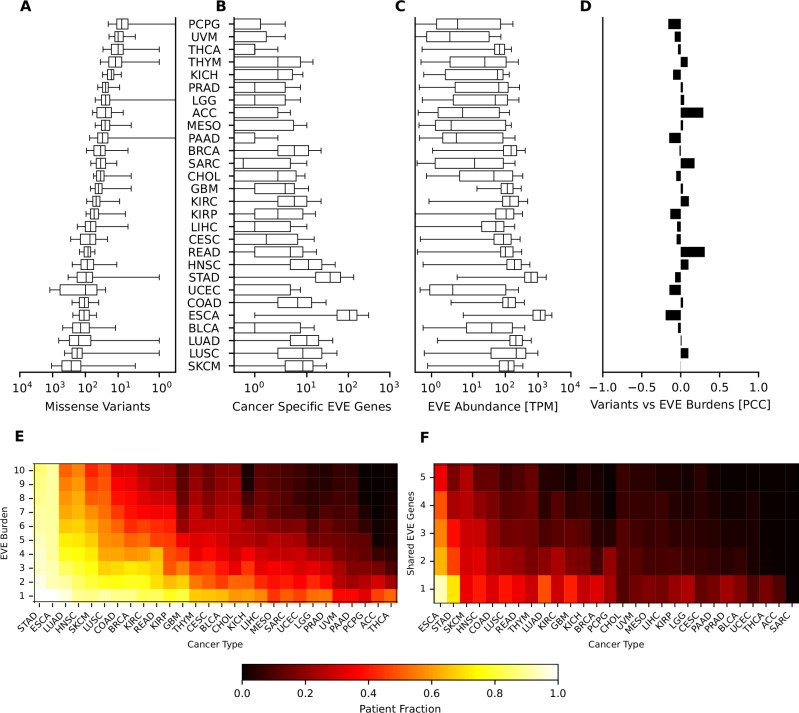
Personalized cancer vaccines (PCVs) largely leverage neoantigens arising from somatic mutations, limiting their application to patients with relatively high tumor mutational burden (TMB). This underscores the need for alternative antigens to design PCVs for low TMB cancers. To this end, we substantiate endogenous retroviral elements (EVEs) as tumor antigens through large-scale genomic analyses of healthy tissues and solid cancers. These analyses revealed that the breadth of EVE expression in tumors stratify checkpoint inhibitor-treated melanoma patients into groups with differential overall and progression-free survival. To enable the design of PCVs containing EVE-derived epitopes with therapeutic potential, we developed a computational pipeline, ObsERV. We show that EVE-derived peptides are presented as epitopes on tumors and can be predicted by ObsERV. Preclinical testing of ObsERV demonstrates induction of sustained poly-functional CD4+ and CD8+ T-cell responses as well as long-term tumor protection. As such, EVEs may facilitate and improve PCVs, especially for low-TMB patients.
NPJ VaccinesImmunology and Microbiology-Immunology
CiteScore
11.90
自引率
4.30%
发文量
146
审稿时长
11 weeks
期刊介绍:
Online-only and open access, npj Vaccines is dedicated to highlighting the most important scientific advances in vaccine research and development.






 京公网安备 11010802042870号
京ICP备2023020795号-1
京公网安备 11010802042870号
京ICP备2023020795号-1

 分享
分享
 求助内容:
求助内容: 应助结果提醒方式:
 扫码关注我们
