Bharathan Balaji, Fahimeh Ebrahimi, Nina Gabrielle G Domingo, Venkata Sai Gargeya Vunnava, Abu-Zaher Faridee, Soma Ramalingam, Shikha Gupta, Anran Wang, Harsh Gupta, Domenic Belcastro, Kellen Axten, Jeremie Hakian, Jared Kramer, Aravind Srinivasan, Qingshi Tu
{"title":"Emission Factor Recommendation for Life Cycle Assessments with Generative AI","authors":"Bharathan Balaji, Fahimeh Ebrahimi, Nina Gabrielle G Domingo, Venkata Sai Gargeya Vunnava, Abu-Zaher Faridee, Soma Ramalingam, Shikha Gupta, Anran Wang, Harsh Gupta, Domenic Belcastro, Kellen Axten, Jeremie Hakian, Jared Kramer, Aravind Srinivasan, Qingshi Tu","doi":"10.1021/acs.est.4c12667","DOIUrl":null,"url":null,"abstract":"Accurately quantifying greenhouse gas (GHG) emissions is crucial for organizations to measure and mitigate their environmental impact. Life cycle assessment (LCA) estimates the environmental impacts throughout a product’s entire lifecycle, from raw material extraction to end-of-life. Measuring the emissions outside a product owner’s control is challenging, and practitioners rely on emission factors (EFs)─estimations of GHG emissions per unit of activity─to model and estimate indirect impacts. However, the current practice of manually selecting appropriate EFs from databases is time-consuming and error-prone and requires expertise. We present an AI-assisted method leveraging natural language processing and machine learning to automatically recommend EFs with human-interpretable justifications. Our algorithm can assist experts by providing a ranked list of EFs or operating in a fully automated manner, where the top recommendation is selected as final. Benchmarks across multiple real-world data sets show our method recommends the correct EF with an average precision of 86.9% in the fully automated case and shows the correct EF in the top 10 recommendations with an average precision of 93.1%. By streamlining EF selection, our approach enables scalable and accurate quantification of GHG emissions, supporting organizations’ sustainability initiatives and progress toward net-zero emissions targets across industries.","PeriodicalId":36,"journal":{"name":"环境科学与技术","volume":"24 1","pages":""},"PeriodicalIF":11.3000,"publicationDate":"2025-03-21","publicationTypes":"Journal Article","fieldsOfStudy":null,"isOpenAccess":false,"openAccessPdf":"","citationCount":"0","resultStr":null,"platform":"Semanticscholar","paperid":null,"PeriodicalName":"环境科学与技术","FirstCategoryId":"1","ListUrlMain":"https://doi.org/10.1021/acs.est.4c12667","RegionNum":1,"RegionCategory":"环境科学与生态学","ArticlePicture":[],"TitleCN":null,"AbstractTextCN":null,"PMCID":null,"EPubDate":"","PubModel":"","JCR":"Q1","JCRName":"ENGINEERING, ENVIRONMENTAL","Score":null,"Total":0}
引用次数: 0
Abstract
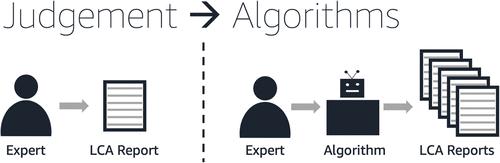
Accurately quantifying greenhouse gas (GHG) emissions is crucial for organizations to measure and mitigate their environmental impact. Life cycle assessment (LCA) estimates the environmental impacts throughout a product’s entire lifecycle, from raw material extraction to end-of-life. Measuring the emissions outside a product owner’s control is challenging, and practitioners rely on emission factors (EFs)─estimations of GHG emissions per unit of activity─to model and estimate indirect impacts. However, the current practice of manually selecting appropriate EFs from databases is time-consuming and error-prone and requires expertise. We present an AI-assisted method leveraging natural language processing and machine learning to automatically recommend EFs with human-interpretable justifications. Our algorithm can assist experts by providing a ranked list of EFs or operating in a fully automated manner, where the top recommendation is selected as final. Benchmarks across multiple real-world data sets show our method recommends the correct EF with an average precision of 86.9% in the fully automated case and shows the correct EF in the top 10 recommendations with an average precision of 93.1%. By streamlining EF selection, our approach enables scalable and accurate quantification of GHG emissions, supporting organizations’ sustainability initiatives and progress toward net-zero emissions targets across industries.
期刊介绍:
Environmental Science & Technology (ES&T) is a co-sponsored academic and technical magazine by the Hubei Provincial Environmental Protection Bureau and the Hubei Provincial Academy of Environmental Sciences.
Environmental Science & Technology (ES&T) holds the status of Chinese core journals, scientific papers source journals of China, Chinese Science Citation Database source journals, and Chinese Academic Journal Comprehensive Evaluation Database source journals. This publication focuses on the academic field of environmental protection, featuring articles related to environmental protection and technical advancements.



 京公网安备 11010802042870号
京ICP备2023020795号-1
京公网安备 11010802042870号
京ICP备2023020795号-1

 分享
分享
 求助内容:
求助内容: 应助结果提醒方式:
 扫码关注我们
