A Technology System to Help People With Multiple Disabilities Increase Contact With Objects and Control Environmental Stimulation: Single-Case Research Design.
Giulio E Lancioni, Gloria Alberti, Chiara Filippini, Nirbhay N Singh, Mark F O'Reilly, Jeff Sigafoos, Valeria Chiariello, Oriana Troccoli
{"title":"A Technology System to Help People With Multiple Disabilities Increase Contact With Objects and Control Environmental Stimulation: Single-Case Research Design.","authors":"Giulio E Lancioni, Gloria Alberti, Chiara Filippini, Nirbhay N Singh, Mark F O'Reilly, Jeff Sigafoos, Valeria Chiariello, Oriana Troccoli","doi":"10.2196/70378","DOIUrl":null,"url":null,"abstract":"<p><strong>Background: </strong>People with severe-to-profound intellectual disability and sensory-motor impairment tend to be passive and detached from their immediate context.</p><p><strong>Objective: </strong>This study assessed a new technology system using a webcam to detect participants' responses (ie, hand contact with objects) and to trigger computer delivery of preferred environmental stimulation, such as music, contingent on (immediately after) the occurrence of those responses.</p><p><strong>Methods: </strong>In total, 8 adults with severe to profound intellectual disability and extensive motor and visual impairments participated in the study. Each participant was exposed to an ABACB design. The technology system did not provide stimulation during the A (baseline) phases, provided stimulation contingent on the responses during the B (intervention) phases, and provided stimulation throughout the sessions during the C (control) phase. Sessions lasted 5 minutes.</p><p><strong>Results: </strong>During the first baseline phase, the participants' mean frequency of responses per session was between about 3 and 6.5. During the first intervention phase, it increased to between about 10 and 18. It showed a clear decline during the second baseline phase, remained low during the control phase, and increased again during the second intervention phase. During this phase, it ranged from about 13 to 19.5.</p><p><strong>Conclusions: </strong>The new technology system might be a useful tool to help people with intellectual and sensory-motor disabilities increase object contact and stimulation control.</p>","PeriodicalId":36224,"journal":{"name":"JMIR Rehabilitation and Assistive Technologies","volume":"12 ","pages":"e70378"},"PeriodicalIF":0.0000,"publicationDate":"2025-03-21","publicationTypes":"Journal Article","fieldsOfStudy":null,"isOpenAccess":false,"openAccessPdf":"https://www.ncbi.nlm.nih.gov/pmc/articles/PMC11971577/pdf/","citationCount":"0","resultStr":null,"platform":"Semanticscholar","paperid":null,"PeriodicalName":"JMIR Rehabilitation and Assistive Technologies","FirstCategoryId":"1085","ListUrlMain":"https://doi.org/10.2196/70378","RegionNum":0,"RegionCategory":null,"ArticlePicture":[],"TitleCN":null,"AbstractTextCN":null,"PMCID":null,"EPubDate":"","PubModel":"","JCR":"Q2","JCRName":"Medicine","Score":null,"Total":0}
引用次数: 0
Abstract
Background: People with severe-to-profound intellectual disability and sensory-motor impairment tend to be passive and detached from their immediate context.
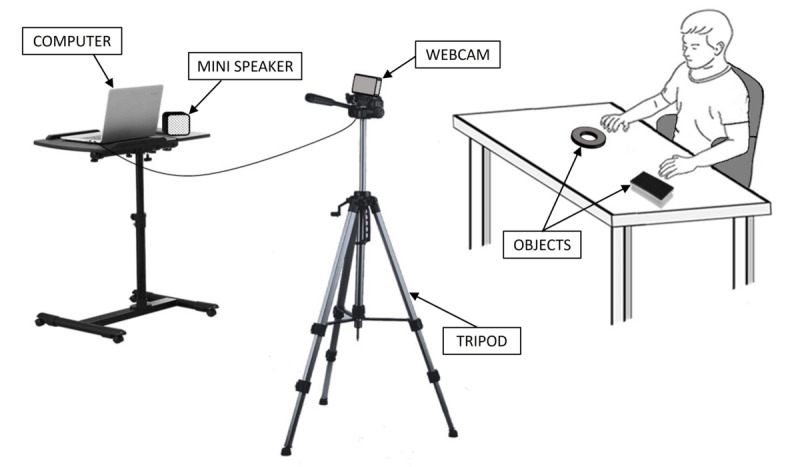
Objective: This study assessed a new technology system using a webcam to detect participants' responses (ie, hand contact with objects) and to trigger computer delivery of preferred environmental stimulation, such as music, contingent on (immediately after) the occurrence of those responses.
Methods: In total, 8 adults with severe to profound intellectual disability and extensive motor and visual impairments participated in the study. Each participant was exposed to an ABACB design. The technology system did not provide stimulation during the A (baseline) phases, provided stimulation contingent on the responses during the B (intervention) phases, and provided stimulation throughout the sessions during the C (control) phase. Sessions lasted 5 minutes.
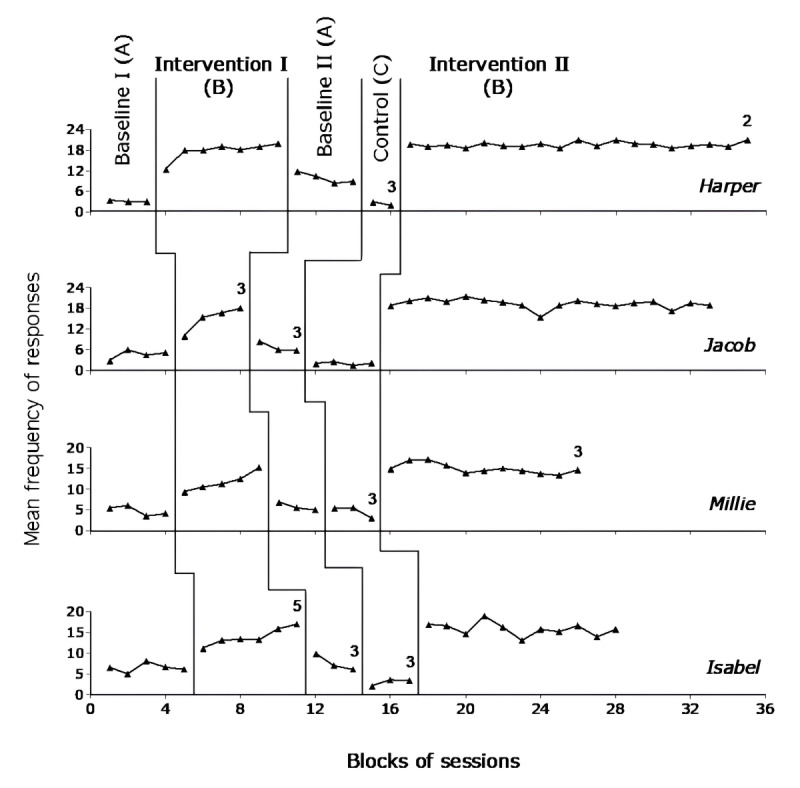
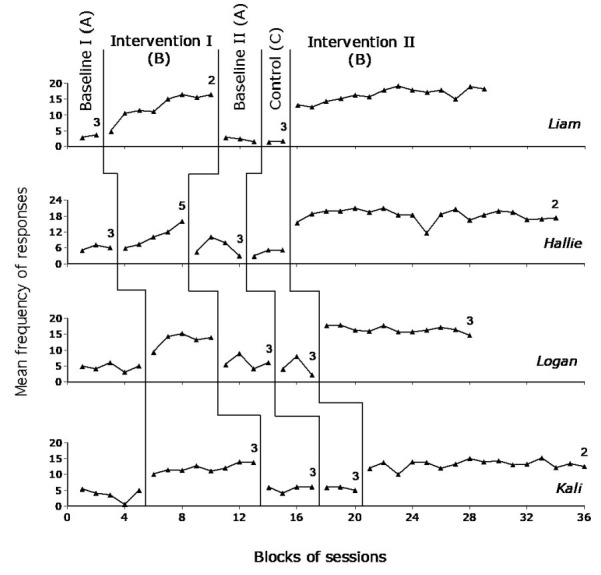
Results: During the first baseline phase, the participants' mean frequency of responses per session was between about 3 and 6.5. During the first intervention phase, it increased to between about 10 and 18. It showed a clear decline during the second baseline phase, remained low during the control phase, and increased again during the second intervention phase. During this phase, it ranged from about 13 to 19.5.
Conclusions: The new technology system might be a useful tool to help people with intellectual and sensory-motor disabilities increase object contact and stimulation control.




 京公网安备 11010802042870号
京ICP备2023020795号-1
京公网安备 11010802042870号
京ICP备2023020795号-1

 分享
分享
 求助内容:
求助内容: 应助结果提醒方式:
 扫码关注我们
