Sakshi Metkar, Bhagyashree Thakur, Dian Agustin Wahjuningrum, Ali A Assiry, Khalid Alshamrani, Sudhir Rama Varma, Ajinkya M Pawar, Mohmed Isaqali Karobari
{"title":"Conventional vs. 3D printed band and loop space maintainers: a fracture strength analysis.","authors":"Sakshi Metkar, Bhagyashree Thakur, Dian Agustin Wahjuningrum, Ali A Assiry, Khalid Alshamrani, Sudhir Rama Varma, Ajinkya M Pawar, Mohmed Isaqali Karobari","doi":"10.1186/s41205-025-00262-1","DOIUrl":null,"url":null,"abstract":"<p><p>Premature loss of primary teeth is a common occurrence in pediatric dentistry and often necessitates the use of space maintainers to prevent complications. Traditional space maintainers, such as band and loop space maintainers (BLSM), have been widely used, but are fabricated using conventional methods. With advancements in technology, three-dimensional (3D) printing has emerged as a promising alternative for fabricating dental appliances including space maintainers. This study aimed to evaluate and compare the fracture strengths of conventional band and loop space maintainers (C-BLSMs) fabricated using stainless steel with that of 3D printed BLSMs manufactured using additive manufacturing techniques. Fifteen C-BLSM and fifteen 3D printed BLSMs were fabricated and subjected to fracture-strength testing using a universal testing machine. The maximum occlusal bite force in the mixed dentition was determined based on established literature. Statistical analysis was performed to compare the mean fracture resistance between the two groups. The mean fracture resistance of the 3D printed BLSMs was significantly higher (308.53 N) than that of C-BLSMs (130.85 N). This difference was statistically significant (p < 0.05), highlighting the superior mechanical properties of 3D printed BLSMs. Three-dimensional printing technology offers significant advantages in terms of fracture strength compared with conventional fabrication methods for BLSMs.</p>","PeriodicalId":72036,"journal":{"name":"3D printing in medicine","volume":"11 1","pages":"14"},"PeriodicalIF":3.1000,"publicationDate":"2025-03-21","publicationTypes":"Journal Article","fieldsOfStudy":null,"isOpenAccess":false,"openAccessPdf":"https://www.ncbi.nlm.nih.gov/pmc/articles/PMC11927368/pdf/","citationCount":"0","resultStr":null,"platform":"Semanticscholar","paperid":null,"PeriodicalName":"3D printing in medicine","FirstCategoryId":"1085","ListUrlMain":"https://doi.org/10.1186/s41205-025-00262-1","RegionNum":0,"RegionCategory":null,"ArticlePicture":[],"TitleCN":null,"AbstractTextCN":null,"PMCID":null,"EPubDate":"","PubModel":"","JCR":"Q1","JCRName":"RADIOLOGY, NUCLEAR MEDICINE & MEDICAL IMAGING","Score":null,"Total":0}
引用次数: 0
Abstract
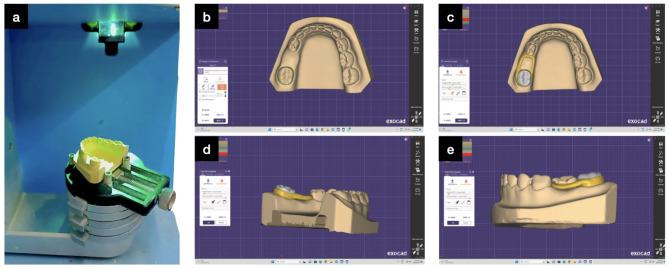
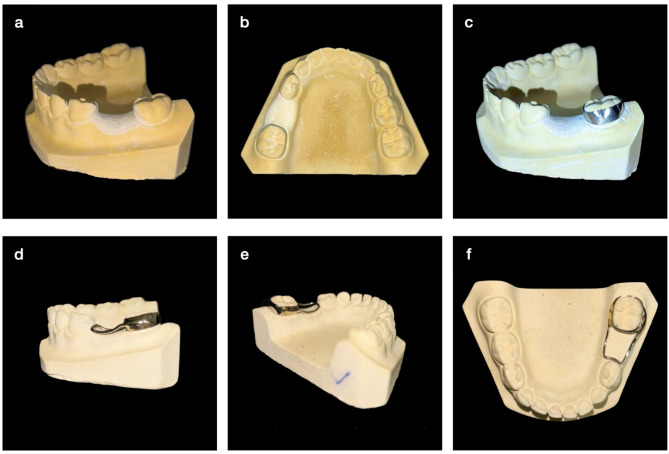
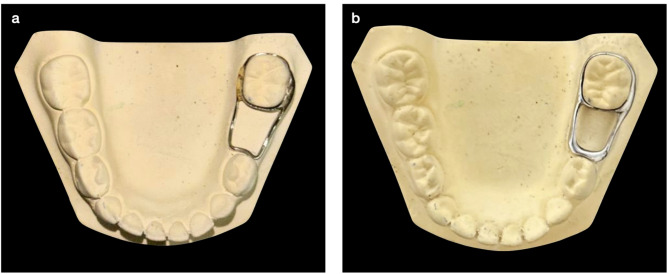
Premature loss of primary teeth is a common occurrence in pediatric dentistry and often necessitates the use of space maintainers to prevent complications. Traditional space maintainers, such as band and loop space maintainers (BLSM), have been widely used, but are fabricated using conventional methods. With advancements in technology, three-dimensional (3D) printing has emerged as a promising alternative for fabricating dental appliances including space maintainers. This study aimed to evaluate and compare the fracture strengths of conventional band and loop space maintainers (C-BLSMs) fabricated using stainless steel with that of 3D printed BLSMs manufactured using additive manufacturing techniques. Fifteen C-BLSM and fifteen 3D printed BLSMs were fabricated and subjected to fracture-strength testing using a universal testing machine. The maximum occlusal bite force in the mixed dentition was determined based on established literature. Statistical analysis was performed to compare the mean fracture resistance between the two groups. The mean fracture resistance of the 3D printed BLSMs was significantly higher (308.53 N) than that of C-BLSMs (130.85 N). This difference was statistically significant (p < 0.05), highlighting the superior mechanical properties of 3D printed BLSMs. Three-dimensional printing technology offers significant advantages in terms of fracture strength compared with conventional fabrication methods for BLSMs.




 京公网安备 11010802042870号
京ICP备2023020795号-1
京公网安备 11010802042870号
京ICP备2023020795号-1

 分享
分享

 求助内容:
求助内容: 应助结果提醒方式:
 扫码关注我们
