{"title":"Co-conversion of CO2 and refractory organics into bioplastics through a stable biocarrier","authors":"Muhammad Ahmad, Maryam Yousaf","doi":"10.1016/j.watres.2025.123519","DOIUrl":null,"url":null,"abstract":"<div><div>An attractive solution to traditional plastics is scaling up the microbial system to produce bioplastics like polyhydroxyalkanoates (PHAs). Herein, we developed a dynamic microbial ecosystem on porous biocarrier for conversion of refractory organics to bioplastics. biocarriers of 25 mm sized were packed in a 5 L bioreactor and operated for 200 days, to achieve stable performance for commercial applications. Reaching to bioreactor stability, microbial ecosystem utilized quinoline (5.2 kg/m<sup>3</sup>/day) for carbon & nitrogen metabolism, phenol (4.5 kg/m<sup>3</sup>/day) to trigger synthesis of PHAs, pyridines (4.2 kg/m<sup>3</sup>/day) to manufacture hydroxy fatty acid polyesters, NH<sub>4</sub><sup>+</sup>(7.2 kg/m<sup>3</sup>/day) to regulate symbiosis, NO<sub>3</sub>/NO<sub>2</sub> (1.2 kg/m<sup>3</sup>/day) to serve as mediators and electron acceptors. On 200th day, bioplastic production reached to 76.8 (kg/m<sup>3</sup>/day) with stable pollutants degradation of 70.3 (kg/m<sup>3</sup>/day). Purity of the bioplastics remained quite high (average 90 %) after 100 days of bioreactor operation. Interestingly, PHAs synthesis was triggered (31–581 g/day) with increased CO<sub>2</sub> fixation from 45 to 594 (mol/h/g protein), due to the growth of CO<sub>2</sub> assimilators. The developed biocarriers could be directly poured into the secondary tank of the existing wastewater treatment plants (WWTPs), which will not only produce bioplastics but also boost treatment efficiency and resource recovery potential of WWTPs.</div></div>","PeriodicalId":443,"journal":{"name":"Water Research","volume":"280 ","pages":"Article 123519"},"PeriodicalIF":12.4000,"publicationDate":"2025-07-15","publicationTypes":"Journal Article","fieldsOfStudy":null,"isOpenAccess":false,"openAccessPdf":"","citationCount":"0","resultStr":null,"platform":"Semanticscholar","paperid":null,"PeriodicalName":"Water Research","FirstCategoryId":"93","ListUrlMain":"https://www.sciencedirect.com/science/article/pii/S0043135425004324","RegionNum":1,"RegionCategory":"环境科学与生态学","ArticlePicture":[],"TitleCN":null,"AbstractTextCN":null,"PMCID":null,"EPubDate":"2025/3/22 0:00:00","PubModel":"Epub","JCR":"Q1","JCRName":"ENGINEERING, ENVIRONMENTAL","Score":null,"Total":0}
引用次数: 0
Abstract
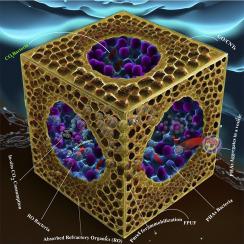
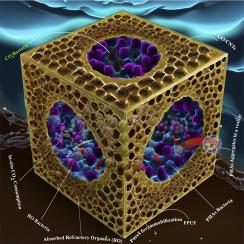
An attractive solution to traditional plastics is scaling up the microbial system to produce bioplastics like polyhydroxyalkanoates (PHAs). Herein, we developed a dynamic microbial ecosystem on porous biocarrier for conversion of refractory organics to bioplastics. biocarriers of 25 mm sized were packed in a 5 L bioreactor and operated for 200 days, to achieve stable performance for commercial applications. Reaching to bioreactor stability, microbial ecosystem utilized quinoline (5.2 kg/m3/day) for carbon & nitrogen metabolism, phenol (4.5 kg/m3/day) to trigger synthesis of PHAs, pyridines (4.2 kg/m3/day) to manufacture hydroxy fatty acid polyesters, NH4+(7.2 kg/m3/day) to regulate symbiosis, NO3/NO2 (1.2 kg/m3/day) to serve as mediators and electron acceptors. On 200th day, bioplastic production reached to 76.8 (kg/m3/day) with stable pollutants degradation of 70.3 (kg/m3/day). Purity of the bioplastics remained quite high (average 90 %) after 100 days of bioreactor operation. Interestingly, PHAs synthesis was triggered (31–581 g/day) with increased CO2 fixation from 45 to 594 (mol/h/g protein), due to the growth of CO2 assimilators. The developed biocarriers could be directly poured into the secondary tank of the existing wastewater treatment plants (WWTPs), which will not only produce bioplastics but also boost treatment efficiency and resource recovery potential of WWTPs.
期刊介绍:
Water Research, along with its open access companion journal Water Research X, serves as a platform for publishing original research papers covering various aspects of the science and technology related to the anthropogenic water cycle, water quality, and its management worldwide. The audience targeted by the journal comprises biologists, chemical engineers, chemists, civil engineers, environmental engineers, limnologists, and microbiologists. The scope of the journal include:
•Treatment processes for water and wastewaters (municipal, agricultural, industrial, and on-site treatment), including resource recovery and residuals management;
•Urban hydrology including sewer systems, stormwater management, and green infrastructure;
•Drinking water treatment and distribution;
•Potable and non-potable water reuse;
•Sanitation, public health, and risk assessment;
•Anaerobic digestion, solid and hazardous waste management, including source characterization and the effects and control of leachates and gaseous emissions;
•Contaminants (chemical, microbial, anthropogenic particles such as nanoparticles or microplastics) and related water quality sensing, monitoring, fate, and assessment;
•Anthropogenic impacts on inland, tidal, coastal and urban waters, focusing on surface and ground waters, and point and non-point sources of pollution;
•Environmental restoration, linked to surface water, groundwater and groundwater remediation;
•Analysis of the interfaces between sediments and water, and between water and atmosphere, focusing specifically on anthropogenic impacts;
•Mathematical modelling, systems analysis, machine learning, and beneficial use of big data related to the anthropogenic water cycle;
•Socio-economic, policy, and regulations studies.



 京公网安备 11010802042870号
京ICP备2023020795号-1
京公网安备 11010802042870号
京ICP备2023020795号-1

 分享
分享
 求助内容:
求助内容: 应助结果提醒方式:
 扫码关注我们
