{"title":"Altered brain-derived neurotrophic factor levels and oxidative stress in REM sleep deprivation: a rat model study.","authors":"Yonca Coluk, Guven Yildirim, Sembol Yildirmak, Emine Gulceri Gulec Peker","doi":"10.1186/s12883-025-04127-2","DOIUrl":null,"url":null,"abstract":"<p><strong>Background: </strong>Brain-derived neurotrophic factor (BDNF) is among the modulators associated with cognition and sleep that play a role in sleep disorders. This study aimed at investigating the effects of chronic sleep deprivation and REM sleep deprivation on BDNF levels and oxidative stress markers.</p><p><strong>Methods: </strong>A total of 24 healthy male Wistar albino rats were separated into 3 groups as REM sleep deprivation group, control sleep deprivation group and control group. To create models of 21-day REM sleep deprivation and control sleep deprivation, we used the platform technique. After 21 days blood BDNF, brain tissue BDNF, brain tissue malondialdehyde, glutathione, ascorbic acid, nitrite and nitrate were evaluated.</p><p><strong>Results: </strong>Compared with the control group, control sleep deprivation group showed a significant increase in brain tissue levels of BDNF (p = 0.038), whereas a significant decrease was observed in the levels of glutathione (GSH) and nitric oxide (NO) (p:0.036). No statistical difference was observed between the blood levels of BDNF in either group (p: 0.795).</p><p><strong>Conclusion: </strong>Our results showed decreases in GSH and NO levels and increases in malondialdehyde levels in the sleep deprivation models, reflecting oxidative stress in the brain. Additionally, we observed increases in brain BDNF levels in the control sleep deprivation model.</p>","PeriodicalId":9170,"journal":{"name":"BMC Neurology","volume":"25 1","pages":"122"},"PeriodicalIF":2.2000,"publicationDate":"2025-03-21","publicationTypes":"Journal Article","fieldsOfStudy":null,"isOpenAccess":false,"openAccessPdf":"https://www.ncbi.nlm.nih.gov/pmc/articles/PMC11927282/pdf/","citationCount":"0","resultStr":null,"platform":"Semanticscholar","paperid":null,"PeriodicalName":"BMC Neurology","FirstCategoryId":"3","ListUrlMain":"https://doi.org/10.1186/s12883-025-04127-2","RegionNum":3,"RegionCategory":"医学","ArticlePicture":[],"TitleCN":null,"AbstractTextCN":null,"PMCID":null,"EPubDate":"","PubModel":"","JCR":"Q3","JCRName":"CLINICAL NEUROLOGY","Score":null,"Total":0}
引用次数: 0
Abstract
Background: Brain-derived neurotrophic factor (BDNF) is among the modulators associated with cognition and sleep that play a role in sleep disorders. This study aimed at investigating the effects of chronic sleep deprivation and REM sleep deprivation on BDNF levels and oxidative stress markers.
Methods: A total of 24 healthy male Wistar albino rats were separated into 3 groups as REM sleep deprivation group, control sleep deprivation group and control group. To create models of 21-day REM sleep deprivation and control sleep deprivation, we used the platform technique. After 21 days blood BDNF, brain tissue BDNF, brain tissue malondialdehyde, glutathione, ascorbic acid, nitrite and nitrate were evaluated.
Results: Compared with the control group, control sleep deprivation group showed a significant increase in brain tissue levels of BDNF (p = 0.038), whereas a significant decrease was observed in the levels of glutathione (GSH) and nitric oxide (NO) (p:0.036). No statistical difference was observed between the blood levels of BDNF in either group (p: 0.795).
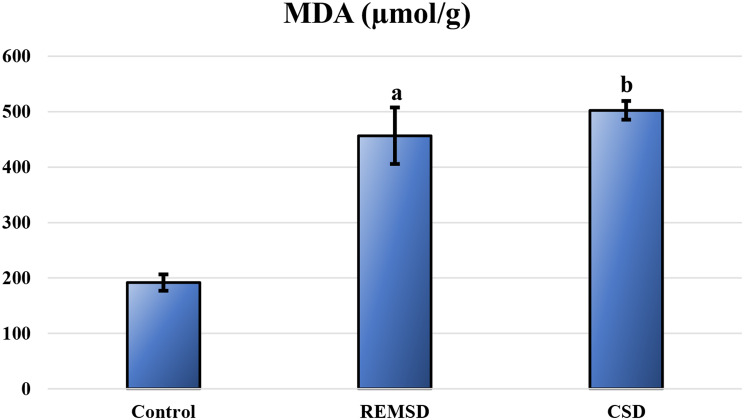
Conclusion: Our results showed decreases in GSH and NO levels and increases in malondialdehyde levels in the sleep deprivation models, reflecting oxidative stress in the brain. Additionally, we observed increases in brain BDNF levels in the control sleep deprivation model.
期刊介绍:
BMC Neurology is an open access, peer-reviewed journal that considers articles on all aspects of the prevention, diagnosis and management of neurological disorders, as well as related molecular genetics, pathophysiology, and epidemiology.





 京公网安备 11010802042870号
京ICP备2023020795号-1
京公网安备 11010802042870号
京ICP备2023020795号-1

 分享
分享
 求助内容:
求助内容: 应助结果提醒方式:
 扫码关注我们
