Haotian Wang , Yu Zhang , Jiqian Wang , Zhaoyu Ma , Jun Gao , Longli Zhang
{"title":"Dielectric relaxation analysis of asphaltene polarity and aggregation behavior","authors":"Haotian Wang , Yu Zhang , Jiqian Wang , Zhaoyu Ma , Jun Gao , Longli Zhang","doi":"10.1016/j.fuel.2025.135099","DOIUrl":null,"url":null,"abstract":"<div><div>The associative behavior of asphaltenes significantly affects the fluidity of petroleum, which influences petroleum production, transport, and refining processes. However, the existing methods for characterizing associative behavior are complicated. Based on dielectric relaxation theory, the relationship between asphaltene polarity and its associative behavior was elucidated through experimental studies, molecular dynamics simulations. And a novel method for characterizing the association behavior was proposed. Initially, asphaltene was separated from crude oil using polar chromatography columns, and their fundamental physical properties were comprehensively analysed using X-ray diffraction, proton nuclear magnetic resonance, and infrared spectroscopy. This served as a benchmark for comprehending their polar and associative behaviour. Additionally, the runflow time of the adsorption effect of the asphaltene-toluene solution was measured by viscosity method, revealing that the association behavior began to increase within the concentration range of 1 to 3 g/L. Consequently, given that the viscosity method is time-consuming, we propose a novel characterization method based on the dielectric relaxation theory, which is characterized by an impedance analyzer. The spectroscopy showed that, as the logarithm of frequency corresponding to the ratio of dielectric loss to dielectric reserves increases from 1.3 to 2.2, the polarization rate and association behavior of asphaltene in toluene solution also increase. Notably, the concentration range determined using this method aligns with the results obtained from the viscosity method. Finally, the experimental results were theoretically confirmed through molecular dynamics simulations. In conclusion, the easily operable dielectric relaxation spectroscopy provides a viable method for characterizing the associative behavior of asphaltene-toluene solutions.</div></div>","PeriodicalId":325,"journal":{"name":"Fuel","volume":"394 ","pages":"Article 135099"},"PeriodicalIF":7.5000,"publicationDate":"2025-03-20","publicationTypes":"Journal Article","fieldsOfStudy":null,"isOpenAccess":false,"openAccessPdf":"","citationCount":"0","resultStr":null,"platform":"Semanticscholar","paperid":null,"PeriodicalName":"Fuel","FirstCategoryId":"5","ListUrlMain":"https://www.sciencedirect.com/science/article/pii/S0016236125008245","RegionNum":1,"RegionCategory":"工程技术","ArticlePicture":[],"TitleCN":null,"AbstractTextCN":null,"PMCID":null,"EPubDate":"","PubModel":"","JCR":"Q2","JCRName":"ENERGY & FUELS","Score":null,"Total":0}
引用次数: 0
Abstract
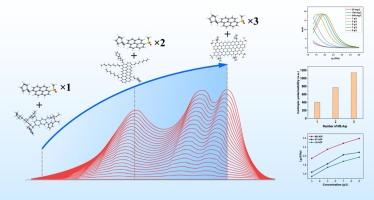
The associative behavior of asphaltenes significantly affects the fluidity of petroleum, which influences petroleum production, transport, and refining processes. However, the existing methods for characterizing associative behavior are complicated. Based on dielectric relaxation theory, the relationship between asphaltene polarity and its associative behavior was elucidated through experimental studies, molecular dynamics simulations. And a novel method for characterizing the association behavior was proposed. Initially, asphaltene was separated from crude oil using polar chromatography columns, and their fundamental physical properties were comprehensively analysed using X-ray diffraction, proton nuclear magnetic resonance, and infrared spectroscopy. This served as a benchmark for comprehending their polar and associative behaviour. Additionally, the runflow time of the adsorption effect of the asphaltene-toluene solution was measured by viscosity method, revealing that the association behavior began to increase within the concentration range of 1 to 3 g/L. Consequently, given that the viscosity method is time-consuming, we propose a novel characterization method based on the dielectric relaxation theory, which is characterized by an impedance analyzer. The spectroscopy showed that, as the logarithm of frequency corresponding to the ratio of dielectric loss to dielectric reserves increases from 1.3 to 2.2, the polarization rate and association behavior of asphaltene in toluene solution also increase. Notably, the concentration range determined using this method aligns with the results obtained from the viscosity method. Finally, the experimental results were theoretically confirmed through molecular dynamics simulations. In conclusion, the easily operable dielectric relaxation spectroscopy provides a viable method for characterizing the associative behavior of asphaltene-toluene solutions.
期刊介绍:
The exploration of energy sources remains a critical matter of study. For the past nine decades, fuel has consistently held the forefront in primary research efforts within the field of energy science. This area of investigation encompasses a wide range of subjects, with a particular emphasis on emerging concerns like environmental factors and pollution.



 京公网安备 11010802042870号
京ICP备2023020795号-1
京公网安备 11010802042870号
京ICP备2023020795号-1

 分享
分享
 求助内容:
求助内容: 应助结果提醒方式:
 扫码关注我们
