An integrated analysis of transcriptome and metabolome reveals aerenchyma-mediated antioxidant defense and energy metabolism conferring high waterlogging tolerance in sea barley
{"title":"An integrated analysis of transcriptome and metabolome reveals aerenchyma-mediated antioxidant defense and energy metabolism conferring high waterlogging tolerance in sea barley","authors":"Zhengyuan Xu , Zheng Wang , Hao Gao , Mingjiong Chen , Yuling Zheng , Qiufang Shen , Guoping Zhang","doi":"10.1016/j.stress.2025.100813","DOIUrl":null,"url":null,"abstract":"<div><div>Waterlogging is a major abiotic stress restricting crop production, and its frequency is increasing due to global climate change. Although some genes related to respiration and carbohydrate metabolism under waterlogging have been identified, the key elements regulating waterlogging tolerance remain unclear. In this study, we found sea barley (<em>Hordeum marinum</em>, accession H559), a wild relative of Triticeae species, exhibited much higher waterlogging tolerance than barley (<em>Hordeum vulgare</em>, cultivar ZU9). This tolerance was directly associated with well-developed aerenchyma, under both normal and waterlogging conditions. After 20-day of waterlogging, 2,348 and 867 differentially expressed genes (DEGs) in roots were detected in sea barley and barley, respectively. Transcriptomic analysis revealed that the key stress-responsive transcription factors (such as <em>bHLH121</em> and <em>MYB2</em>) involved in aerenchyma formation were significantly up-regulated in sea barley, while remained little change in barley. Metabolomic analysis further showed that superior waterlogging tolerance of sea barley was due to its ability to mitigate oxidative stress and energy deficit by maintaining higher sugar content and an active tricarboxylic acid (TCA) cycle, both of which depended on well-developed aerenchyma. This study enhances our understanding of waterlogging tolerance mechanisms at both transcriptomic and metabolic levels, providing valuable insights for genetic breeding for waterlogging-tolerant cultivars.</div></div>","PeriodicalId":34736,"journal":{"name":"Plant Stress","volume":"16 ","pages":"Article 100813"},"PeriodicalIF":6.8000,"publicationDate":"2025-06-01","publicationTypes":"Journal Article","fieldsOfStudy":null,"isOpenAccess":false,"openAccessPdf":"","citationCount":"0","resultStr":null,"platform":"Semanticscholar","paperid":null,"PeriodicalName":"Plant Stress","FirstCategoryId":"1085","ListUrlMain":"https://www.sciencedirect.com/science/article/pii/S2667064X25000788","RegionNum":0,"RegionCategory":null,"ArticlePicture":[],"TitleCN":null,"AbstractTextCN":null,"PMCID":null,"EPubDate":"2025/3/17 0:00:00","PubModel":"Epub","JCR":"Q1","JCRName":"PLANT SCIENCES","Score":null,"Total":0}
引用次数: 0
Abstract
Waterlogging is a major abiotic stress restricting crop production, and its frequency is increasing due to global climate change. Although some genes related to respiration and carbohydrate metabolism under waterlogging have been identified, the key elements regulating waterlogging tolerance remain unclear. In this study, we found sea barley (Hordeum marinum, accession H559), a wild relative of Triticeae species, exhibited much higher waterlogging tolerance than barley (Hordeum vulgare, cultivar ZU9). This tolerance was directly associated with well-developed aerenchyma, under both normal and waterlogging conditions. After 20-day of waterlogging, 2,348 and 867 differentially expressed genes (DEGs) in roots were detected in sea barley and barley, respectively. Transcriptomic analysis revealed that the key stress-responsive transcription factors (such as bHLH121 and MYB2) involved in aerenchyma formation were significantly up-regulated in sea barley, while remained little change in barley. Metabolomic analysis further showed that superior waterlogging tolerance of sea barley was due to its ability to mitigate oxidative stress and energy deficit by maintaining higher sugar content and an active tricarboxylic acid (TCA) cycle, both of which depended on well-developed aerenchyma. This study enhances our understanding of waterlogging tolerance mechanisms at both transcriptomic and metabolic levels, providing valuable insights for genetic breeding for waterlogging-tolerant cultivars.
期刊介绍:
The journal Plant Stress deals with plant (or other photoautotrophs, such as algae, cyanobacteria and lichens) responses to abiotic and biotic stress factors that can result in limited growth and productivity. Such responses can be analyzed and described at a physiological, biochemical and molecular level. Experimental approaches/technologies aiming to improve growth and productivity with a potential for downstream validation under stress conditions will also be considered. Both fundamental and applied research manuscripts are welcome, provided that clear mechanistic hypotheses are made and descriptive approaches are avoided. In addition, high-quality review articles will also be considered, provided they follow a critical approach and stimulate thought for future research avenues.
Plant Stress welcomes high-quality manuscripts related (but not limited) to interactions between plants and:
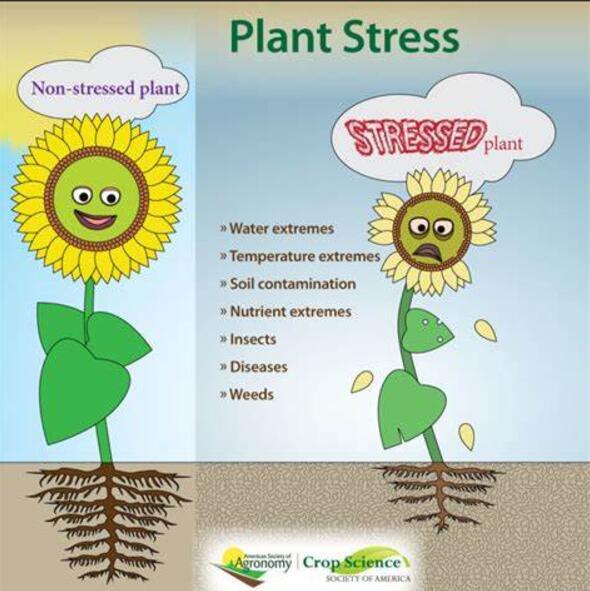
Lack of water (drought) and excess (flooding),
Salinity stress,
Elevated temperature and/or low temperature (chilling and freezing),
Hypoxia and/or anoxia,
Mineral nutrient excess and/or deficiency,
Heavy metals and/or metalloids,
Plant priming (chemical, biological, physiological, nanomaterial, biostimulant) approaches for improved stress protection,
Viral, phytoplasma, bacterial and fungal plant-pathogen interactions.
The journal welcomes basic and applied research articles, as well as review articles and short communications. All submitted manuscripts will be subject to a thorough peer-reviewing process.



 京公网安备 11010802042870号
京ICP备2023020795号-1
京公网安备 11010802042870号
京ICP备2023020795号-1

 分享
分享
 求助内容:
求助内容: 应助结果提醒方式:
 扫码关注我们
