Jinpeng Gao , Chuanjie Zhang , Jiyu Zhao , Qingbo Guo , Dake Wang , Zhenkun Fu , Sen Lin , Xifan Mei , Shurui Chen
{"title":"Exosome coated with Prussian blue mediated microglial polarization for spinal cord injury","authors":"Jinpeng Gao , Chuanjie Zhang , Jiyu Zhao , Qingbo Guo , Dake Wang , Zhenkun Fu , Sen Lin , Xifan Mei , Shurui Chen","doi":"10.1016/j.matdes.2025.113841","DOIUrl":null,"url":null,"abstract":"<div><div>The surge in reactive oxygen species (ROS) and inflammation after acute spinal cord injury (SCI) is a key factor in making this injury irreversible. How to intervene effectively is the basis of therapeutic strategy design. In our study, we explored the potential of Prussian blue nanase, which has catalase and superoxide dismutase-like activity. However, given their high immunogenicity, we chose to leverage the low immunogenicity and biosafety of exosomes to enhance the delivery of these nanase. Recognizing the prevalence of M1 microglia in local inflammation, we used exosomes derived from bone marrow mesenchymal stem cells (BMSCs) as vectors. These exosomes are further modified with hyaluronic acid (HA) to form nanoplatforms (EXO/PB) that specifically target inflammation. HA binding enables EXO/PB to locate on M1 microglia, promoting ROS clearance and facilitating the transition from M1 phenotype to M2 phenotype. Our results show that EXO/PB not only targets M1 microglia, but also leverages the ROS clearance capabilities of Prussian blue nanozymes to influence this phenotypic transition. Finally, EXO/PB provides a new therapeutic strategy for the treatment of acute spinal cord injury.</div></div>","PeriodicalId":383,"journal":{"name":"Materials & Design","volume":"253 ","pages":"Article 113841"},"PeriodicalIF":7.9000,"publicationDate":"2025-05-01","publicationTypes":"Journal Article","fieldsOfStudy":null,"isOpenAccess":false,"openAccessPdf":"","citationCount":"0","resultStr":null,"platform":"Semanticscholar","paperid":null,"PeriodicalName":"Materials & Design","FirstCategoryId":"88","ListUrlMain":"https://www.sciencedirect.com/science/article/pii/S0264127525002618","RegionNum":2,"RegionCategory":"材料科学","ArticlePicture":[],"TitleCN":null,"AbstractTextCN":null,"PMCID":null,"EPubDate":"2025/3/17 0:00:00","PubModel":"Epub","JCR":"Q1","JCRName":"MATERIALS SCIENCE, MULTIDISCIPLINARY","Score":null,"Total":0}
引用次数: 0
Abstract
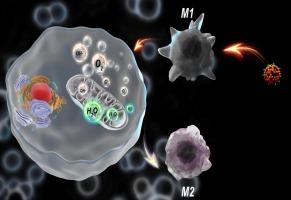
The surge in reactive oxygen species (ROS) and inflammation after acute spinal cord injury (SCI) is a key factor in making this injury irreversible. How to intervene effectively is the basis of therapeutic strategy design. In our study, we explored the potential of Prussian blue nanase, which has catalase and superoxide dismutase-like activity. However, given their high immunogenicity, we chose to leverage the low immunogenicity and biosafety of exosomes to enhance the delivery of these nanase. Recognizing the prevalence of M1 microglia in local inflammation, we used exosomes derived from bone marrow mesenchymal stem cells (BMSCs) as vectors. These exosomes are further modified with hyaluronic acid (HA) to form nanoplatforms (EXO/PB) that specifically target inflammation. HA binding enables EXO/PB to locate on M1 microglia, promoting ROS clearance and facilitating the transition from M1 phenotype to M2 phenotype. Our results show that EXO/PB not only targets M1 microglia, but also leverages the ROS clearance capabilities of Prussian blue nanozymes to influence this phenotypic transition. Finally, EXO/PB provides a new therapeutic strategy for the treatment of acute spinal cord injury.
期刊介绍:
Materials and Design is a multi-disciplinary journal that publishes original research reports, review articles, and express communications. The journal focuses on studying the structure and properties of inorganic and organic materials, advancements in synthesis, processing, characterization, and testing, the design of materials and engineering systems, and their applications in technology. It aims to bring together various aspects of materials science, engineering, physics, and chemistry.
The journal explores themes ranging from materials to design and aims to reveal the connections between natural and artificial materials, as well as experiment and modeling. Manuscripts submitted to Materials and Design should contain elements of discovery and surprise, as they often contribute new insights into the architecture and function of matter.



 京公网安备 11010802042870号
京ICP备2023020795号-1
京公网安备 11010802042870号
京ICP备2023020795号-1

 分享
分享
 求助内容:
求助内容: 应助结果提醒方式:
 扫码关注我们
