Khang Quang Bui, Gabriel D Barbosa, Tran Thi-Bao Le, Dimitrios V Papavassiliou, Sepideh Razavi, Alberto Striolo
{"title":"Structural and dynamical properties of aqueous NaCl brines confined in kaolinite nanopores.","authors":"Khang Quang Bui, Gabriel D Barbosa, Tran Thi-Bao Le, Dimitrios V Papavassiliou, Sepideh Razavi, Alberto Striolo","doi":"10.1063/5.0251946","DOIUrl":null,"url":null,"abstract":"<p><p>Quantifying thermodynamics, structural, and dynamical properties of brine confined in clay pores is critical for a variety of geo-energy applications, including underground hydrogen storage (UHS) and carbon capture and sequestration (CCS). Atomistic molecular dynamics simulations are applied here to study aqueous NaCl brines within 10-Å kaolinite slit pores. NaCl concentrations are chosen at 5, 10, 12.5, and 15 wt. %, all below the solubility limit and high enough to provide statistically relevant information. The distribution of the ions within the nanopores is found not to be homogeneous. Explicitly, Na+ cations, preferentially attracted to the siloxane surface, accumulate in regions with low water density, whereas Cl- anions, attracted to the gibbsite surface of kaolinite, are found within the hydration layers. Confinement affects the properties of ions, with ion pairing being more pronounced within the pore than in bulk aqueous solutions at similar temperatures, pressures, and compositions. Conversely, the ions affect the properties of confined water. For example, the lifetime of water-water hydrogen bonds in confinement is shortened within the hydration shells; increasing salinity from 5 to 12.5 wt. % reduces the likelihood of water density fluctuations near the kaolinite surfaces, although when the NaCl concentration rises from 12.5 to 15 wt. %, Cl- anions enhance the likelihood of density fluctuations for the hydration layer near the gibbsite surface. The simulated molecular trajectories are studied further to extract diffusion coefficients. While confinement in the kaolinite nanopore reduces the mobility of all species, non-monotonic trends are observed as a function of salt concentration. The trends seem associated with the likelihood of ion pairing. Furthermore, the diffusion coefficients for the cations are predicted to be higher than those for the anions, which is contrary to what is typically observed in bulk brines. Because density fluctuations are correlated with properties such as the solubility of gases in confined water, our observations may have important implications for geo-energy applications such as UHS and CCS.</p>","PeriodicalId":15313,"journal":{"name":"Journal of Chemical Physics","volume":"162 12","pages":""},"PeriodicalIF":3.1000,"publicationDate":"2025-03-28","publicationTypes":"Journal Article","fieldsOfStudy":null,"isOpenAccess":false,"openAccessPdf":"","citationCount":"0","resultStr":null,"platform":"Semanticscholar","paperid":null,"PeriodicalName":"Journal of Chemical Physics","FirstCategoryId":"92","ListUrlMain":"https://doi.org/10.1063/5.0251946","RegionNum":2,"RegionCategory":"化学","ArticlePicture":[],"TitleCN":null,"AbstractTextCN":null,"PMCID":null,"EPubDate":"","PubModel":"","JCR":"Q3","JCRName":"CHEMISTRY, PHYSICAL","Score":null,"Total":0}
引用次数: 0
Abstract
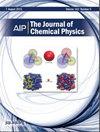
Quantifying thermodynamics, structural, and dynamical properties of brine confined in clay pores is critical for a variety of geo-energy applications, including underground hydrogen storage (UHS) and carbon capture and sequestration (CCS). Atomistic molecular dynamics simulations are applied here to study aqueous NaCl brines within 10-Å kaolinite slit pores. NaCl concentrations are chosen at 5, 10, 12.5, and 15 wt. %, all below the solubility limit and high enough to provide statistically relevant information. The distribution of the ions within the nanopores is found not to be homogeneous. Explicitly, Na+ cations, preferentially attracted to the siloxane surface, accumulate in regions with low water density, whereas Cl- anions, attracted to the gibbsite surface of kaolinite, are found within the hydration layers. Confinement affects the properties of ions, with ion pairing being more pronounced within the pore than in bulk aqueous solutions at similar temperatures, pressures, and compositions. Conversely, the ions affect the properties of confined water. For example, the lifetime of water-water hydrogen bonds in confinement is shortened within the hydration shells; increasing salinity from 5 to 12.5 wt. % reduces the likelihood of water density fluctuations near the kaolinite surfaces, although when the NaCl concentration rises from 12.5 to 15 wt. %, Cl- anions enhance the likelihood of density fluctuations for the hydration layer near the gibbsite surface. The simulated molecular trajectories are studied further to extract diffusion coefficients. While confinement in the kaolinite nanopore reduces the mobility of all species, non-monotonic trends are observed as a function of salt concentration. The trends seem associated with the likelihood of ion pairing. Furthermore, the diffusion coefficients for the cations are predicted to be higher than those for the anions, which is contrary to what is typically observed in bulk brines. Because density fluctuations are correlated with properties such as the solubility of gases in confined water, our observations may have important implications for geo-energy applications such as UHS and CCS.
期刊介绍:
The Journal of Chemical Physics publishes quantitative and rigorous science of long-lasting value in methods and applications of chemical physics. The Journal also publishes brief Communications of significant new findings, Perspectives on the latest advances in the field, and Special Topic issues. The Journal focuses on innovative research in experimental and theoretical areas of chemical physics, including spectroscopy, dynamics, kinetics, statistical mechanics, and quantum mechanics. In addition, topical areas such as polymers, soft matter, materials, surfaces/interfaces, and systems of biological relevance are of increasing importance.
Topical coverage includes:
Theoretical Methods and Algorithms
Advanced Experimental Techniques
Atoms, Molecules, and Clusters
Liquids, Glasses, and Crystals
Surfaces, Interfaces, and Materials
Polymers and Soft Matter
Biological Molecules and Networks.




 京公网安备 11010802042870号
京ICP备2023020795号-1
京公网安备 11010802042870号
京ICP备2023020795号-1

 分享
分享
 求助内容:
求助内容: 应助结果提醒方式:
 扫码关注我们
