Differential intracellular influence of cancer cells and normal cells on magnetothermal properties and magnetic hyperthermal effects of magnetic nanoparticles†
Man Wang, Rui Sun, Huajian Chen, Toru Yoshitomi, Hiroaki Mamiya, Masaki Takeguchi, Naoki Kawazoe, Yingnan Yang and Guoping Chen
{"title":"Differential intracellular influence of cancer cells and normal cells on magnetothermal properties and magnetic hyperthermal effects of magnetic nanoparticles†","authors":"Man Wang, Rui Sun, Huajian Chen, Toru Yoshitomi, Hiroaki Mamiya, Masaki Takeguchi, Naoki Kawazoe, Yingnan Yang and Guoping Chen","doi":"10.1039/D5MH00317B","DOIUrl":null,"url":null,"abstract":"<p >Magnetic hyperthermia using heat locally generated by magnetic nanoparticles (MNPs) under an alternating magnetic field (AMF) to ablate cancer cells has attracted enormous attention. The high accumulation of MNPs and slow heat dissipation generated in tumors are considered the dominant factors involved in magnetic hyperthermia. However, the influence of intracellular microenvironment on magnetic hyperthermia has been ignored. This study unveiled for the first time the critical role of intracellular microenvironment on magnetic hyperthermia. The intracellular microenvironments of cancer cells and normal cells showed different influence on the magnetothermal properties and magnetic hyperthermia effects of MNPs. The MNPs in cancer cells could generate higher temperatures and induce higher rates of apoptosis than those in normal cells. Compared with that of normal cells, the intracellular microenvironment of cancer cells was more conducive to Brownian relaxation and the dynamic magnetic response of internalized MNPs. The cancerous intracellular microenvironment had a discriminative effect on the magnetic hyperthermal effect of MNPs due to the low viscoelasticity of cancer cells, which was verified by the softening or stiffening of cells and simulation models created using viscous liquids or elastic hydrogels. These findings suggest that the intracellular microenvironment should be considered another critical factor of the magnetic hyperthermal effect of MNPs.</p>","PeriodicalId":87,"journal":{"name":"Materials Horizons","volume":" 12","pages":" 4363-4378"},"PeriodicalIF":10.7000,"publicationDate":"2025-03-14","publicationTypes":"Journal Article","fieldsOfStudy":null,"isOpenAccess":false,"openAccessPdf":"https://pubs.rsc.org/en/content/articlepdf/2025/mh/d5mh00317b?page=search","citationCount":"0","resultStr":null,"platform":"Semanticscholar","paperid":null,"PeriodicalName":"Materials Horizons","FirstCategoryId":"88","ListUrlMain":"https://pubs.rsc.org/en/content/articlelanding/2025/mh/d5mh00317b","RegionNum":2,"RegionCategory":"材料科学","ArticlePicture":[],"TitleCN":null,"AbstractTextCN":null,"PMCID":null,"EPubDate":"","PubModel":"","JCR":"Q1","JCRName":"CHEMISTRY, MULTIDISCIPLINARY","Score":null,"Total":0}
引用次数: 0
Abstract
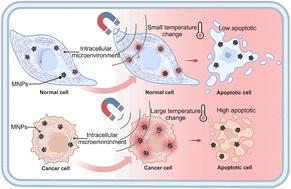
Magnetic hyperthermia using heat locally generated by magnetic nanoparticles (MNPs) under an alternating magnetic field (AMF) to ablate cancer cells has attracted enormous attention. The high accumulation of MNPs and slow heat dissipation generated in tumors are considered the dominant factors involved in magnetic hyperthermia. However, the influence of intracellular microenvironment on magnetic hyperthermia has been ignored. This study unveiled for the first time the critical role of intracellular microenvironment on magnetic hyperthermia. The intracellular microenvironments of cancer cells and normal cells showed different influence on the magnetothermal properties and magnetic hyperthermia effects of MNPs. The MNPs in cancer cells could generate higher temperatures and induce higher rates of apoptosis than those in normal cells. Compared with that of normal cells, the intracellular microenvironment of cancer cells was more conducive to Brownian relaxation and the dynamic magnetic response of internalized MNPs. The cancerous intracellular microenvironment had a discriminative effect on the magnetic hyperthermal effect of MNPs due to the low viscoelasticity of cancer cells, which was verified by the softening or stiffening of cells and simulation models created using viscous liquids or elastic hydrogels. These findings suggest that the intracellular microenvironment should be considered another critical factor of the magnetic hyperthermal effect of MNPs.



 京公网安备 11010802042870号
京ICP备2023020795号-1
京公网安备 11010802042870号
京ICP备2023020795号-1

 分享
分享
 求助内容:
求助内容: 应助结果提醒方式:
 扫码关注我们
