Aysegul Turkkol, Umut Kerem Kolac, Gizem Donmez Yalcin, Mehmet Dincer Bilgin, Abdullah Yalcin, Mehmet Bilgen
{"title":"Enhancing Sonodynamic Therapy in Prostate Cancer: Cavitation-Induced Cytotoxicity and Mitochondrial Unfolded Protein Response Disruption","authors":"Aysegul Turkkol, Umut Kerem Kolac, Gizem Donmez Yalcin, Mehmet Dincer Bilgin, Abdullah Yalcin, Mehmet Bilgen","doi":"10.1007/s12013-025-01717-2","DOIUrl":null,"url":null,"abstract":"<div><p>Prostate cancer remains a significant health challenge, necessitating more effective and targeted treatment strategies. Sonodynamic therapy (SDT) is a promising, non-invasive approach that utilizes ultrasound-activated sensitizers to induce cancer cell death. However, the role of ultrasound cavitation in enhancing SDT efficacy and its effects on mitochondrial stress responses remain unclear. We hypothesized that increasing cavitation density through optimized ultrasound parameters would enhance Ce6-mediated SDT effectiveness by increasing cytotoxicity, reactive oxygen species (ROS) generation, mitochondrial membrane potential (MMP) loss, and disrupting the mitochondrial unfolded protein response (mtUPR). Prostate cancer cells were treated with Ce6 and exposed to ultrasound with varying duty cycles (50% and 100%) and power intensities (0.5 W/cm<sup>2</sup>, 1 W/cm<sup>2</sup>, and 1.5 W/cm<sup>2</sup>). Cavitation density was measured, and its effects on cell viability, ROS levels, MMP disruption, and mtUPR mediator expression, including activating transcription factor 5 (ATF5), heat shock protein 60 (HSP60), and caseinolytic protease proteolytic subunit (CLPP), were analyzed at protein and mRNA levels. Higher duty cycles significantly increased cavitation density, leading to enhanced cytotoxicity, elevated ROS generation, and greater MMP loss in Ce6-mediated SDT. Additionally, SDT reduced mtUPR mediator expression, with cavitation further amplifying these effects. These findings suggest that cavitation-enhanced SDT may contribute to improved therapeutic efficacy in prostate cancer treatment by modulating mitochondrial stress responses and affecting cell viability. Optimizing ultrasound parameters to maximize cavitation effects may contribute to the development of more effective SDT-based cancer therapies.</p></div>","PeriodicalId":510,"journal":{"name":"Cell Biochemistry and Biophysics","volume":"83 3","pages":"3353 - 3367"},"PeriodicalIF":2.5000,"publicationDate":"2025-03-25","publicationTypes":"Journal Article","fieldsOfStudy":null,"isOpenAccess":false,"openAccessPdf":"","citationCount":"0","resultStr":null,"platform":"Semanticscholar","paperid":null,"PeriodicalName":"Cell Biochemistry and Biophysics","FirstCategoryId":"99","ListUrlMain":"https://link.springer.com/article/10.1007/s12013-025-01717-2","RegionNum":4,"RegionCategory":"生物学","ArticlePicture":[],"TitleCN":null,"AbstractTextCN":null,"PMCID":null,"EPubDate":"","PubModel":"","JCR":"Q4","JCRName":"BIOCHEMISTRY & MOLECULAR BIOLOGY","Score":null,"Total":0}
引用次数: 0
Abstract
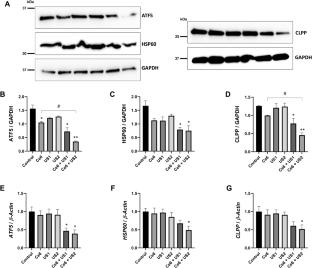
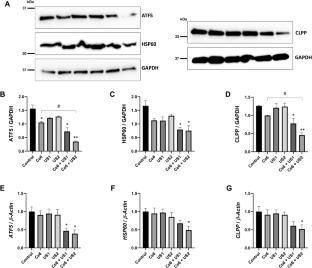
Prostate cancer remains a significant health challenge, necessitating more effective and targeted treatment strategies. Sonodynamic therapy (SDT) is a promising, non-invasive approach that utilizes ultrasound-activated sensitizers to induce cancer cell death. However, the role of ultrasound cavitation in enhancing SDT efficacy and its effects on mitochondrial stress responses remain unclear. We hypothesized that increasing cavitation density through optimized ultrasound parameters would enhance Ce6-mediated SDT effectiveness by increasing cytotoxicity, reactive oxygen species (ROS) generation, mitochondrial membrane potential (MMP) loss, and disrupting the mitochondrial unfolded protein response (mtUPR). Prostate cancer cells were treated with Ce6 and exposed to ultrasound with varying duty cycles (50% and 100%) and power intensities (0.5 W/cm2, 1 W/cm2, and 1.5 W/cm2). Cavitation density was measured, and its effects on cell viability, ROS levels, MMP disruption, and mtUPR mediator expression, including activating transcription factor 5 (ATF5), heat shock protein 60 (HSP60), and caseinolytic protease proteolytic subunit (CLPP), were analyzed at protein and mRNA levels. Higher duty cycles significantly increased cavitation density, leading to enhanced cytotoxicity, elevated ROS generation, and greater MMP loss in Ce6-mediated SDT. Additionally, SDT reduced mtUPR mediator expression, with cavitation further amplifying these effects. These findings suggest that cavitation-enhanced SDT may contribute to improved therapeutic efficacy in prostate cancer treatment by modulating mitochondrial stress responses and affecting cell viability. Optimizing ultrasound parameters to maximize cavitation effects may contribute to the development of more effective SDT-based cancer therapies.
期刊介绍:
Cell Biochemistry and Biophysics (CBB) aims to publish papers on the nature of the biochemical and biophysical mechanisms underlying the structure, control and function of cellular systems
The reports should be within the framework of modern biochemistry and chemistry, biophysics and cell physiology, physics and engineering, molecular and structural biology. The relationship between molecular structure and function under investigation is emphasized.
Examples of subject areas that CBB publishes are:
· biochemical and biophysical aspects of cell structure and function;
· interactions of cells and their molecular/macromolecular constituents;
· innovative developments in genetic and biomolecular engineering;
· computer-based analysis of tissues, cells, cell networks, organelles, and molecular/macromolecular assemblies;
· photometric, spectroscopic, microscopic, mechanical, and electrical methodologies/techniques in analytical cytology, cytometry and innovative instrument design
For articles that focus on computational aspects, authors should be clear about which docking and molecular dynamics algorithms or software packages are being used as well as details on the system parameterization, simulations conditions etc. In addition, docking calculations (virtual screening, QSAR, etc.) should be validated either by experimental studies or one or more reliable theoretical cross-validation methods.



 京公网安备 11010802042870号
京ICP备2023020795号-1
京公网安备 11010802042870号
京ICP备2023020795号-1

 分享
分享
 求助内容:
求助内容: 应助结果提醒方式:
 扫码关注我们
