Management trends and practices in ischial tuberosity avulsion fractures: a cross-sectional study among hip surgeons in the UK, surgical technique and literature review.
N A Shaharudin, H A Al Hussainy, O Shannak, G Mundy
{"title":"Management trends and practices in ischial tuberosity avulsion fractures: a cross-sectional study among hip surgeons in the UK, surgical technique and literature review.","authors":"N A Shaharudin, H A Al Hussainy, O Shannak, G Mundy","doi":"10.1308/rcsann.2025.0008","DOIUrl":null,"url":null,"abstract":"<p><strong>Background: </strong>Ischial tuberosity avulsion fracture (ITAF) is a rare injury affecting predominantly adolescent athletes yet lacks standardised management protocols. This study aims to investigate the diverse management preferences among hip surgeons regarding ITAF and share our preferred surgical technique and management.</p><p><strong>Methods: </strong>In a cross-sectional study, 237 British Hip Society members were surveyed regarding various aspects of ITAF management, including preferences for operative versus non-operative approaches, surgical techniques and postoperative rehabilitation regimens. Sixty-two surgeons responded, yielding a 26% response rate.</p><p><strong>Results: </strong>Thirty-six surgeons (58.1%) favoured conservative treatment, while 26 (41.9%) preferred surgery based on the degree of displacement. Among those advocating for surgery, 16 (61.5%) deemed displacement ≥20mm as significant, with 5 (19.2%) considering ≥15mm significant and another 19.2% regarding any displacement as significant. Prone theatre positioning was overwhelmingly preferred by 96.2%, with a majority (65.4%) favouring the transverse gluteal crease approach. Postoperatively, 11.5% preferred immediate full weight bearing, while 88.5% opted for six weeks of non-weight-bearing following surgery. Among conservative management advocates, 29% allowed unrestricted weight-bearing post-injury, 11.3% preferred weight-bearing until further review and 59.7% opted for partial weight-bearing for at least six weeks.</p><p><strong>Conclusions: </strong>This study highlights the absence of a consensus on ITAF management. We present our preferred approach through a case analysis involving an ITAF patient treated at our department to enhance understanding of this rare injury and potentially improve management strategies.</p>","PeriodicalId":8088,"journal":{"name":"Annals of the Royal College of Surgeons of England","volume":" ","pages":"52-57"},"PeriodicalIF":1.7000,"publicationDate":"2026-01-01","publicationTypes":"Journal Article","fieldsOfStudy":null,"isOpenAccess":false,"openAccessPdf":"https://www.ncbi.nlm.nih.gov/pmc/articles/PMC12718752/pdf/","citationCount":"0","resultStr":null,"platform":"Semanticscholar","paperid":null,"PeriodicalName":"Annals of the Royal College of Surgeons of England","FirstCategoryId":"3","ListUrlMain":"https://doi.org/10.1308/rcsann.2025.0008","RegionNum":4,"RegionCategory":"医学","ArticlePicture":[],"TitleCN":null,"AbstractTextCN":null,"PMCID":null,"EPubDate":"2025/3/25 0:00:00","PubModel":"Epub","JCR":"Q3","JCRName":"SURGERY","Score":null,"Total":0}
引用次数: 0
Abstract
Background: Ischial tuberosity avulsion fracture (ITAF) is a rare injury affecting predominantly adolescent athletes yet lacks standardised management protocols. This study aims to investigate the diverse management preferences among hip surgeons regarding ITAF and share our preferred surgical technique and management.
Methods: In a cross-sectional study, 237 British Hip Society members were surveyed regarding various aspects of ITAF management, including preferences for operative versus non-operative approaches, surgical techniques and postoperative rehabilitation regimens. Sixty-two surgeons responded, yielding a 26% response rate.
Results: Thirty-six surgeons (58.1%) favoured conservative treatment, while 26 (41.9%) preferred surgery based on the degree of displacement. Among those advocating for surgery, 16 (61.5%) deemed displacement ≥20mm as significant, with 5 (19.2%) considering ≥15mm significant and another 19.2% regarding any displacement as significant. Prone theatre positioning was overwhelmingly preferred by 96.2%, with a majority (65.4%) favouring the transverse gluteal crease approach. Postoperatively, 11.5% preferred immediate full weight bearing, while 88.5% opted for six weeks of non-weight-bearing following surgery. Among conservative management advocates, 29% allowed unrestricted weight-bearing post-injury, 11.3% preferred weight-bearing until further review and 59.7% opted for partial weight-bearing for at least six weeks.
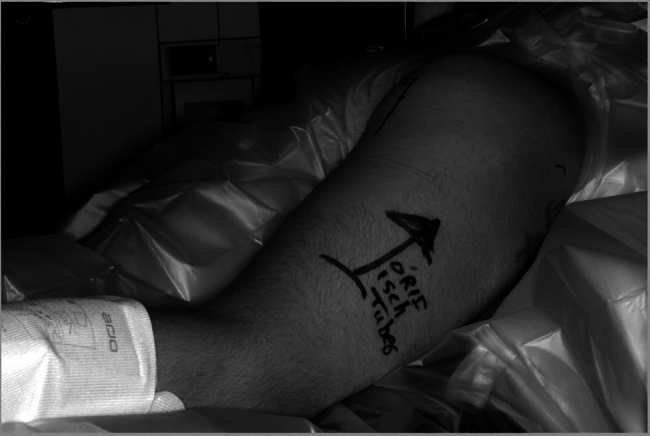
Conclusions: This study highlights the absence of a consensus on ITAF management. We present our preferred approach through a case analysis involving an ITAF patient treated at our department to enhance understanding of this rare injury and potentially improve management strategies.
期刊介绍:
The Annals of The Royal College of Surgeons of England is the official scholarly research journal of the Royal College of Surgeons and is published eight times a year in January, February, March, April, May, July, September and November.
The main aim of the journal is to publish high-quality, peer-reviewed papers that relate to all branches of surgery. The Annals also includes letters and comments, a regular technical section, controversial topics, CORESS feedback and book reviews. The editorial board is composed of experts from all the surgical specialties.





 京公网安备 11010802042870号
京ICP备2023020795号-1
京公网安备 11010802042870号
京ICP备2023020795号-1

 分享
分享
 求助内容:
求助内容: 应助结果提醒方式:
 扫码关注我们
