Pyruvate Kinase M1/2 Proteoformics for Accurate Insights into Energy Metabolism Abnormity to Promote the Overall Management of Ovarian Cancer Towards Predictive, Preventive, and Personalized Medicine Approaches.
Yan Wang, Nuo Xu, Marie Louise Ndzie Noah, Liang Chen, Xianquan Zhan
{"title":"Pyruvate Kinase M1/2 Proteoformics for Accurate Insights into Energy Metabolism Abnormity to Promote the Overall Management of Ovarian Cancer Towards Predictive, Preventive, and Personalized Medicine Approaches.","authors":"Yan Wang, Nuo Xu, Marie Louise Ndzie Noah, Liang Chen, Xianquan Zhan","doi":"10.3390/metabo15030203","DOIUrl":null,"url":null,"abstract":"<p><p>Ovarian cancer (OC) is a global health problem that frequently presents at advanced stages, is predisposed to recurrence, readily develops resistance to platinum-based drugs, and has a low survival rate. Predictive, preventive, and personalized medicine (PPPM/3PM) offers an integrated solution with the use of genetic, proteomic, and metabolic biomarkers to identify high-risk individuals for early detection. Metabolic reprogramming is one of the key strategies employed by tumor cells to adapt to the microenvironment and support unlimited proliferation. Pyruvate kinases M1 and M2 (PKM1/2) are encoded by the <i>PKM</i> gene, a pivotal enzyme in the last step of the glycolytic pathway, which is at the crossroads of aerobic oxidation and the Warburg effect to serve as a potential regulator of glucose metabolism and influence cellular energy production and metabolic reprogramming. Commonly, the ratio of PKM1-to-PKM2 is changed in tumors compared to normal controls, and PKM2 is highly expressed in OC to induce a high glycolysis rate and participate in the malignant invasion and metastatic characteristics of cancer cells with epithelial/mesenchymal transition (EMT). PKM2 inhibitors suppress the migration and growth of OC cells by interfering with the Warburg effect. Proteoforms are the final structural and functional forms of a gene/protein, and the canonical protein PKM contains all proteoforms encoded by the same <i>PKM</i> gene. The complexity of PKM can be elucidated by proteoformics. The OC-specific PKM proteoform might represent a specific target for therapeutic interventions against OC. In the framework of PPPM/3PM, the OC-specific PKM proteoform might be the early warning and prognosis biomarker. It is important to clarify the molecular mechanisms of PKM proteoforms in cancer metabolism. This review analyzes the expression, function, and molecular mechanisms of PKM proteoforms in OC, which help identify specific biomarkers for OC.</p>","PeriodicalId":18496,"journal":{"name":"Metabolites","volume":"15 3","pages":""},"PeriodicalIF":3.7000,"publicationDate":"2025-03-16","publicationTypes":"Journal Article","fieldsOfStudy":null,"isOpenAccess":false,"openAccessPdf":"https://www.ncbi.nlm.nih.gov/pmc/articles/PMC11944880/pdf/","citationCount":"0","resultStr":null,"platform":"Semanticscholar","paperid":null,"PeriodicalName":"Metabolites","FirstCategoryId":"99","ListUrlMain":"https://doi.org/10.3390/metabo15030203","RegionNum":3,"RegionCategory":"生物学","ArticlePicture":[],"TitleCN":null,"AbstractTextCN":null,"PMCID":null,"EPubDate":"","PubModel":"","JCR":"Q2","JCRName":"BIOCHEMISTRY & MOLECULAR BIOLOGY","Score":null,"Total":0}
引用次数: 0
Abstract
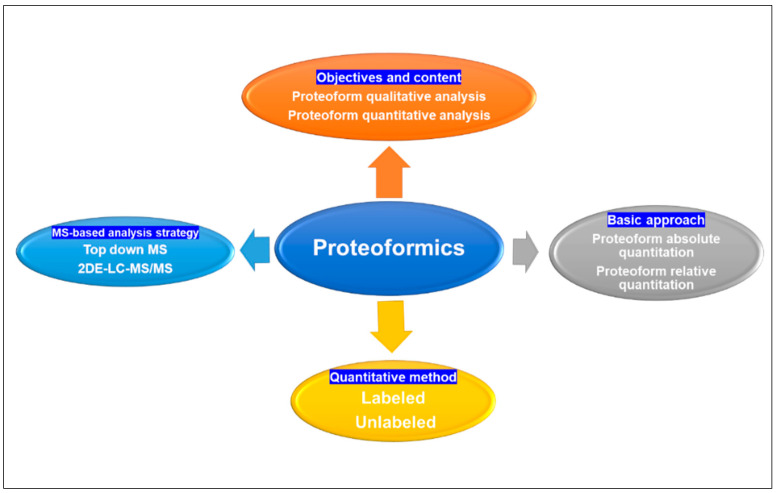
Ovarian cancer (OC) is a global health problem that frequently presents at advanced stages, is predisposed to recurrence, readily develops resistance to platinum-based drugs, and has a low survival rate. Predictive, preventive, and personalized medicine (PPPM/3PM) offers an integrated solution with the use of genetic, proteomic, and metabolic biomarkers to identify high-risk individuals for early detection. Metabolic reprogramming is one of the key strategies employed by tumor cells to adapt to the microenvironment and support unlimited proliferation. Pyruvate kinases M1 and M2 (PKM1/2) are encoded by the PKM gene, a pivotal enzyme in the last step of the glycolytic pathway, which is at the crossroads of aerobic oxidation and the Warburg effect to serve as a potential regulator of glucose metabolism and influence cellular energy production and metabolic reprogramming. Commonly, the ratio of PKM1-to-PKM2 is changed in tumors compared to normal controls, and PKM2 is highly expressed in OC to induce a high glycolysis rate and participate in the malignant invasion and metastatic characteristics of cancer cells with epithelial/mesenchymal transition (EMT). PKM2 inhibitors suppress the migration and growth of OC cells by interfering with the Warburg effect. Proteoforms are the final structural and functional forms of a gene/protein, and the canonical protein PKM contains all proteoforms encoded by the same PKM gene. The complexity of PKM can be elucidated by proteoformics. The OC-specific PKM proteoform might represent a specific target for therapeutic interventions against OC. In the framework of PPPM/3PM, the OC-specific PKM proteoform might be the early warning and prognosis biomarker. It is important to clarify the molecular mechanisms of PKM proteoforms in cancer metabolism. This review analyzes the expression, function, and molecular mechanisms of PKM proteoforms in OC, which help identify specific biomarkers for OC.
MetabolitesBiochemistry, Genetics and Molecular Biology-Molecular Biology
CiteScore
5.70
自引率
7.30%
发文量
1070
审稿时长
17.17 days
期刊介绍:
Metabolites (ISSN 2218-1989) is an international, peer-reviewed open access journal of metabolism and metabolomics. Metabolites publishes original research articles and review articles in all molecular aspects of metabolism relevant to the fields of metabolomics, metabolic biochemistry, computational and systems biology, biotechnology and medicine, with a particular focus on the biological roles of metabolites and small molecule biomarkers. Metabolites encourages scientists to publish their experimental and theoretical results in as much detail as possible. Therefore, there is no restriction on article length. Sufficient experimental details must be provided to enable the results to be accurately reproduced. Electronic material representing additional figures, materials and methods explanation, or supporting results and evidence can be submitted with the main manuscript as supplementary material.





 京公网安备 11010802042870号
京ICP备2023020795号-1
京公网安备 11010802042870号
京ICP备2023020795号-1

 分享
分享
 求助内容:
求助内容: 应助结果提醒方式:
 扫码关注我们
