Nicholas Vlado Pavic, Shane Zhang, Alexander George Maloof, Rudy Goh, Joshua Kovoor, Pramesh Kovoor, Ron Postuma, Dennis Lau, Suzanne Edwards, Stephen Bacchi
{"title":"Pyridostigmine in the management of orthostatic hypotension: a systematic review and meta-analysis.","authors":"Nicholas Vlado Pavic, Shane Zhang, Alexander George Maloof, Rudy Goh, Joshua Kovoor, Pramesh Kovoor, Ron Postuma, Dennis Lau, Suzanne Edwards, Stephen Bacchi","doi":"10.1136/openhrt-2024-003106","DOIUrl":null,"url":null,"abstract":"<p><strong>Background: </strong>Current pharmacological approaches for the treatment of orthostatic hypotension (OH) may detrimentally affect supine blood pressure (BP). This side effect is often unacceptable and limits the utility of medical management. Pyridostigmine has been proposed as a potential treatment alternative which may improve OH without worsening supine hypertension. This systematic review and meta-analysis aimed to evaluate the currently available data regarding the use of pyridostigmine in the treatment of all-cause OH.</p><p><strong>Methods: </strong>A systematic review was conducted in accordance with the Preferred Reporting Items for Systematic Reviews and Meta-Analyses guidelines. PubMed, EMBASE, Cochrane and SCOPUS were searched for publications until 4 June 2024. A random-effects model was used for meta-analysis.</p><p><strong>Results: </strong>The search returned 715 results, of which 6 randomised controlled trials met the inclusion criteria. Several studies reported a statistically significant improvement in orthostatic BP following pyridostigmine administration. Two studies found that pyridostigmine had no effect on standing BP among patients with severe autonomic failure. One study suggested that combination therapy with atomoxetine may elicit a synergistic effect. In most studies, pyridostigmine had no significant effect on supine BP. Adverse effects were minimal across the included studies. The pooled results from the meta-analysis showed that while pyridostigmine alone resulted in lower systolic and diastolic orthostatic drop, neither result was statistically significant. However, when pyridostigmine is combined with midodrine, this demonstrated a significant improvement in systolic orthostatic drop.</p><p><strong>Conclusions: </strong>Pyridostigmine may be useful in the management of OH, particularly in patients with supine hypertension. The standing BP response to pyridostigmine may be greater in patients who have a relatively preserved baroreflex function and sympathetic reserve.</p><p><strong>Prospero registration number: </strong>CRD42024555402.</p>","PeriodicalId":19505,"journal":{"name":"Open Heart","volume":"12 1","pages":""},"PeriodicalIF":2.8000,"publicationDate":"2025-03-25","publicationTypes":"Journal Article","fieldsOfStudy":null,"isOpenAccess":false,"openAccessPdf":"https://www.ncbi.nlm.nih.gov/pmc/articles/PMC11938227/pdf/","citationCount":"0","resultStr":null,"platform":"Semanticscholar","paperid":null,"PeriodicalName":"Open Heart","FirstCategoryId":"1085","ListUrlMain":"https://doi.org/10.1136/openhrt-2024-003106","RegionNum":0,"RegionCategory":null,"ArticlePicture":[],"TitleCN":null,"AbstractTextCN":null,"PMCID":null,"EPubDate":"","PubModel":"","JCR":"Q2","JCRName":"CARDIAC & CARDIOVASCULAR SYSTEMS","Score":null,"Total":0}
引用次数: 0
Abstract
Background: Current pharmacological approaches for the treatment of orthostatic hypotension (OH) may detrimentally affect supine blood pressure (BP). This side effect is often unacceptable and limits the utility of medical management. Pyridostigmine has been proposed as a potential treatment alternative which may improve OH without worsening supine hypertension. This systematic review and meta-analysis aimed to evaluate the currently available data regarding the use of pyridostigmine in the treatment of all-cause OH.
Methods: A systematic review was conducted in accordance with the Preferred Reporting Items for Systematic Reviews and Meta-Analyses guidelines. PubMed, EMBASE, Cochrane and SCOPUS were searched for publications until 4 June 2024. A random-effects model was used for meta-analysis.
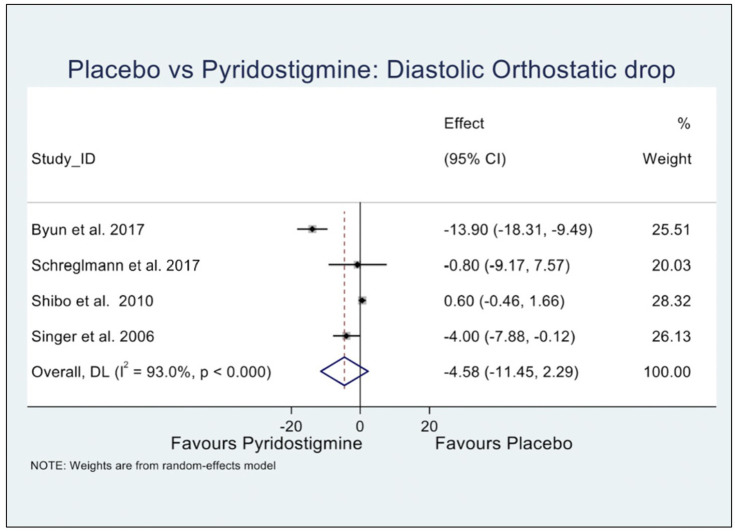
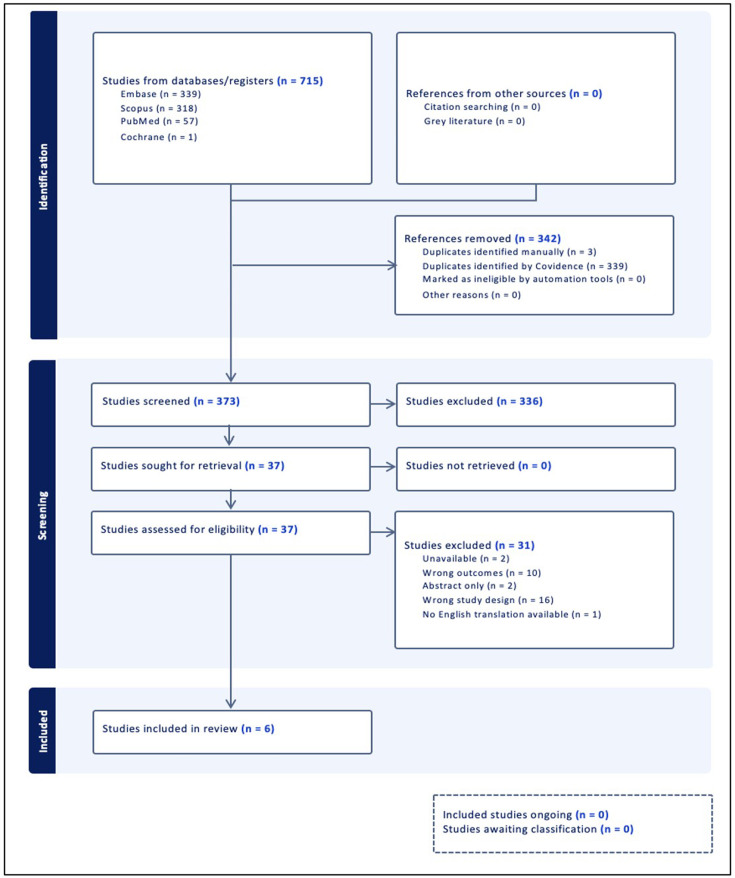
Results: The search returned 715 results, of which 6 randomised controlled trials met the inclusion criteria. Several studies reported a statistically significant improvement in orthostatic BP following pyridostigmine administration. Two studies found that pyridostigmine had no effect on standing BP among patients with severe autonomic failure. One study suggested that combination therapy with atomoxetine may elicit a synergistic effect. In most studies, pyridostigmine had no significant effect on supine BP. Adverse effects were minimal across the included studies. The pooled results from the meta-analysis showed that while pyridostigmine alone resulted in lower systolic and diastolic orthostatic drop, neither result was statistically significant. However, when pyridostigmine is combined with midodrine, this demonstrated a significant improvement in systolic orthostatic drop.
Conclusions: Pyridostigmine may be useful in the management of OH, particularly in patients with supine hypertension. The standing BP response to pyridostigmine may be greater in patients who have a relatively preserved baroreflex function and sympathetic reserve.
期刊介绍:
Open Heart is an online-only, open access cardiology journal that aims to be “open” in many ways: open access (free access for all readers), open peer review (unblinded peer review) and open data (data sharing is encouraged). The goal is to ensure maximum transparency and maximum impact on research progress and patient care. The journal is dedicated to publishing high quality, peer reviewed medical research in all disciplines and therapeutic areas of cardiovascular medicine. Research is published across all study phases and designs, from study protocols to phase I trials to meta-analyses, including small or specialist studies. Opinionated discussions on controversial topics are welcomed. Open Heart aims to operate a fast submission and review process with continuous publication online, to ensure timely, up-to-date research is available worldwide. The journal adheres to a rigorous and transparent peer review process, and all articles go through a statistical assessment to ensure robustness of the analyses. Open Heart is an official journal of the British Cardiovascular Society.






 京公网安备 11010802042870号
京ICP备2023020795号-1
京公网安备 11010802042870号
京ICP备2023020795号-1

 分享
分享
 求助内容:
求助内容: 应助结果提醒方式:
 扫码关注我们
