Kunyu Hao, Curtis Adrian Wadey, Alan R Barker, Craig A Williams
{"title":"The effect of strength training interventions on people with congenital heart disease: a systematic review.","authors":"Kunyu Hao, Curtis Adrian Wadey, Alan R Barker, Craig A Williams","doi":"10.1136/openhrt-2024-003091","DOIUrl":null,"url":null,"abstract":"<p><strong>Aim: </strong>To assess the effectiveness and safety of strength training (ST) interventions in people with congenital heart disease (ConHD).</p><p><strong>Methods: </strong>Participants included people of all ages diagnosed with all complexity of ConHD. Interventions included strength training or inspiratory muscle training (IMT) which were delivered in whole or as part of a more holistic programme. Included studies were randomised controlled trials, non-randomised controlled trials and cohort studies. A comprehensive literature search using five databases until June 2023 was conducted. Two authors independently screened all the identified studies and assessed the risk of bias. Due to the paucity of studies and significant differences in study design, albatross plots were produced, and synthesis without meta-analyses was used to assist in the interpretation of results.</p><p><strong>Results: </strong>A total of 26 studies were included with a total of 659 participants (53% female). Three of five studies demonstrated that ST significantly improves muscle strength. The albatross plots (20 studies) compared peak oxygen consumption (peak V̇O<sub>2</sub>) of ST alone, combined training and IMT and showed that 16 studies observed an improvement with a standardised mean difference between 0.10 and 0.50. Combined training was more effective than ST alone and IMT for peak V̇O<sub>2</sub>, and ST alone was second. The results showed high heterogeneity. Three studies (one ST alone and two combined training) reported a total of five adverse events, but none reported serious adverse events or fatalities.</p><p><strong>Conclusion: </strong>This systematic review indicates a moderate improvement in muscle strength by ST alone, with a small improvement in peak V̇O<sub>2</sub> in people with ConHD. Although the outcomes are positive, there is still insufficient evidence to establish the clinical significance of ST.</p>","PeriodicalId":19505,"journal":{"name":"Open Heart","volume":"12 1","pages":""},"PeriodicalIF":2.8000,"publicationDate":"2025-03-25","publicationTypes":"Journal Article","fieldsOfStudy":null,"isOpenAccess":false,"openAccessPdf":"https://www.ncbi.nlm.nih.gov/pmc/articles/PMC11938245/pdf/","citationCount":"0","resultStr":null,"platform":"Semanticscholar","paperid":null,"PeriodicalName":"Open Heart","FirstCategoryId":"1085","ListUrlMain":"https://doi.org/10.1136/openhrt-2024-003091","RegionNum":0,"RegionCategory":null,"ArticlePicture":[],"TitleCN":null,"AbstractTextCN":null,"PMCID":null,"EPubDate":"","PubModel":"","JCR":"Q2","JCRName":"CARDIAC & CARDIOVASCULAR SYSTEMS","Score":null,"Total":0}
引用次数: 0
Abstract
Aim: To assess the effectiveness and safety of strength training (ST) interventions in people with congenital heart disease (ConHD).
Methods: Participants included people of all ages diagnosed with all complexity of ConHD. Interventions included strength training or inspiratory muscle training (IMT) which were delivered in whole or as part of a more holistic programme. Included studies were randomised controlled trials, non-randomised controlled trials and cohort studies. A comprehensive literature search using five databases until June 2023 was conducted. Two authors independently screened all the identified studies and assessed the risk of bias. Due to the paucity of studies and significant differences in study design, albatross plots were produced, and synthesis without meta-analyses was used to assist in the interpretation of results.
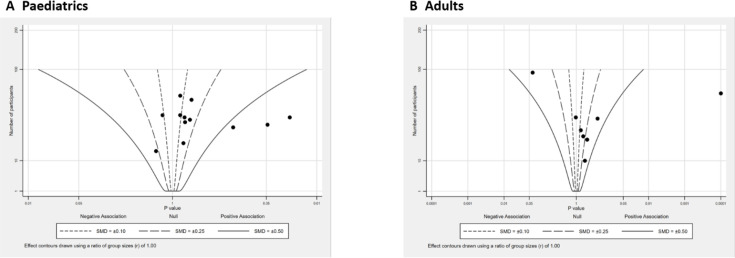
Results: A total of 26 studies were included with a total of 659 participants (53% female). Three of five studies demonstrated that ST significantly improves muscle strength. The albatross plots (20 studies) compared peak oxygen consumption (peak V̇O2) of ST alone, combined training and IMT and showed that 16 studies observed an improvement with a standardised mean difference between 0.10 and 0.50. Combined training was more effective than ST alone and IMT for peak V̇O2, and ST alone was second. The results showed high heterogeneity. Three studies (one ST alone and two combined training) reported a total of five adverse events, but none reported serious adverse events or fatalities.
Conclusion: This systematic review indicates a moderate improvement in muscle strength by ST alone, with a small improvement in peak V̇O2 in people with ConHD. Although the outcomes are positive, there is still insufficient evidence to establish the clinical significance of ST.
期刊介绍:
Open Heart is an online-only, open access cardiology journal that aims to be “open” in many ways: open access (free access for all readers), open peer review (unblinded peer review) and open data (data sharing is encouraged). The goal is to ensure maximum transparency and maximum impact on research progress and patient care. The journal is dedicated to publishing high quality, peer reviewed medical research in all disciplines and therapeutic areas of cardiovascular medicine. Research is published across all study phases and designs, from study protocols to phase I trials to meta-analyses, including small or specialist studies. Opinionated discussions on controversial topics are welcomed. Open Heart aims to operate a fast submission and review process with continuous publication online, to ensure timely, up-to-date research is available worldwide. The journal adheres to a rigorous and transparent peer review process, and all articles go through a statistical assessment to ensure robustness of the analyses. Open Heart is an official journal of the British Cardiovascular Society.






 京公网安备 11010802042870号
京ICP备2023020795号-1
京公网安备 11010802042870号
京ICP备2023020795号-1

 分享
分享
 求助内容:
求助内容: 应助结果提醒方式:
 扫码关注我们
