Waléria D P Gusmão, Aline Silva-Costa, Victor M Silva, Claudia R C Moreno
{"title":"Night Work and Social Jet Lag: Pathways to Arterial Stiffness?","authors":"Waléria D P Gusmão, Aline Silva-Costa, Victor M Silva, Claudia R C Moreno","doi":"10.3390/clockssleep7010010","DOIUrl":null,"url":null,"abstract":"<p><p>Cardiovascular diseases are the leading cause of morbidity and mortality worldwide. These conditions, characterized by multifactorial etiology, are associated with arterial stiffness, and adequate sleep serves as a preventive factor. Professionals engaged in night work are at an increased risk of premature vascular aging due to potential disruption of the sleep-wake cycle and sleep restriction. The aim of this study was to assess the relationship between duration of exposure to night work and arterial stiffness in nursing professionals. A total of 63 nursing professionals working rotating shifts participated in the study. Arterial stiffness was measured using oscillometric pulse wave velocity, and sleep-wake patterns were monitored using actigraphy. Path analysis revealed no direct association between duration of night work exposure and arterial stiffness in the professionals studied. However, an increase of 1 standard deviation (SD) in social jet lag duration was significantly associated with a 0.212 SD increase in perceived stress (<i>p</i> = 0.047). Furthermore, an increase of 1 SD in social jet lag duration was significantly associated with a 0.093 SD increase in the highest pulse wave velocity (<i>p</i> = 0.034). Thus, an association was found between increased social jet lag and elevated pulse wave velocity, an independent predictor of higher cardiovascular risk.</p>","PeriodicalId":33568,"journal":{"name":"Clocks & Sleep","volume":"7 1","pages":""},"PeriodicalIF":2.1000,"publicationDate":"2025-03-03","publicationTypes":"Journal Article","fieldsOfStudy":null,"isOpenAccess":false,"openAccessPdf":"https://www.ncbi.nlm.nih.gov/pmc/articles/PMC11941686/pdf/","citationCount":"0","resultStr":null,"platform":"Semanticscholar","paperid":null,"PeriodicalName":"Clocks & Sleep","FirstCategoryId":"1085","ListUrlMain":"https://doi.org/10.3390/clockssleep7010010","RegionNum":0,"RegionCategory":null,"ArticlePicture":[],"TitleCN":null,"AbstractTextCN":null,"PMCID":null,"EPubDate":"","PubModel":"","JCR":"Q3","JCRName":"CLINICAL NEUROLOGY","Score":null,"Total":0}
引用次数: 0
Abstract
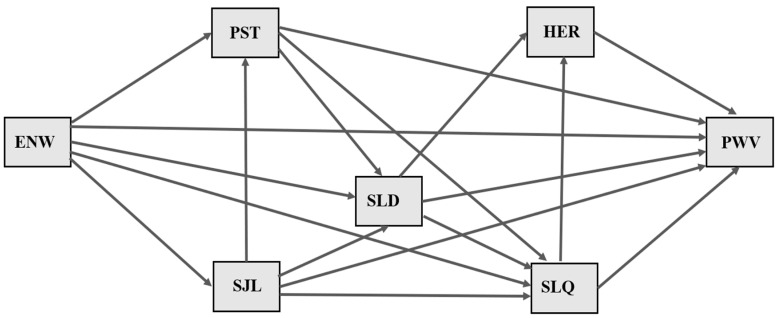
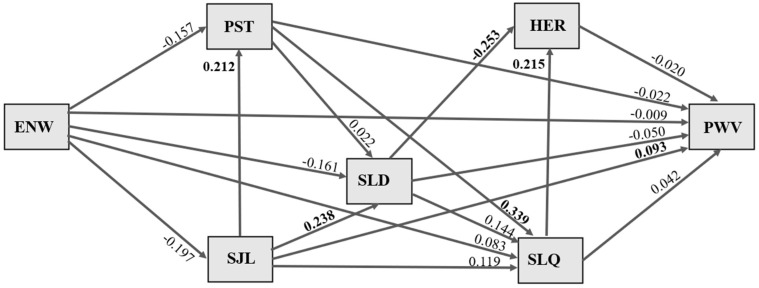
Cardiovascular diseases are the leading cause of morbidity and mortality worldwide. These conditions, characterized by multifactorial etiology, are associated with arterial stiffness, and adequate sleep serves as a preventive factor. Professionals engaged in night work are at an increased risk of premature vascular aging due to potential disruption of the sleep-wake cycle and sleep restriction. The aim of this study was to assess the relationship between duration of exposure to night work and arterial stiffness in nursing professionals. A total of 63 nursing professionals working rotating shifts participated in the study. Arterial stiffness was measured using oscillometric pulse wave velocity, and sleep-wake patterns were monitored using actigraphy. Path analysis revealed no direct association between duration of night work exposure and arterial stiffness in the professionals studied. However, an increase of 1 standard deviation (SD) in social jet lag duration was significantly associated with a 0.212 SD increase in perceived stress (p = 0.047). Furthermore, an increase of 1 SD in social jet lag duration was significantly associated with a 0.093 SD increase in the highest pulse wave velocity (p = 0.034). Thus, an association was found between increased social jet lag and elevated pulse wave velocity, an independent predictor of higher cardiovascular risk.




 京公网安备 11010802042870号
京ICP备2023020795号-1
京公网安备 11010802042870号
京ICP备2023020795号-1

 分享
分享
 求助内容:
求助内容: 应助结果提醒方式:
 扫码关注我们
