Mehmet Levent Erdas, Abdullah Emre Caglar, Emmanuel Uche, Zahoor Ahmed
{"title":"Future Pathways for Net Zero Emission: Analyzing the Nexus of Entrepreneurship and Ecological Sustainability Development in Developed Economies","authors":"Mehmet Levent Erdas, Abdullah Emre Caglar, Emmanuel Uche, Zahoor Ahmed","doi":"10.1002/bse.4264","DOIUrl":null,"url":null,"abstract":"<p>In recent decades, environmental protection and green development have become important goals of developed economies. This is because the development of economies has augmented societies' sensitivity toward environmental protection. In addition, the instances of environment-related catastrophes have substantially increased, and floods, droughts, heatwaves, and cyclones have become common. Economic growth, mainly when driven by fossil fuel-dependent industries, significantly contributes to increased greenhouse gas emissions and, consequently, climate change. Accordingly, global carbon emissions (<span>CEs</span>) have recorded a substantial growth of over 50% from the inception of the Industrial Revolution due to increased energy consumption (IEA <span>2021</span>). Given the relevance of energy patterns in environmental sustainability, the COP26 agenda to control global warming by restricting it below 2°C and even mounting efforts toward achieving 1.5°C for attaining carbon neutrality (United Nations <span>2021</span>) will require a massive surge in investments related to green energy.</p><p>Economies mostly use fossil energy to achieve economic growth. In this context, the International Renewable Energy Agency (<span>2023</span>) points out that currently, the global capacity to produce renewable energy is insufficient to restrict global warming to the desired levels; thus, the capacity to produce renewables will need to be increased by around threefold by 2030 to reach the objective of 1.5°C. This will require a massive surge in green energy innovation by uplifting investments in renewable energy research and development (R&D). Lee and Min (<span>2015</span>) acknowledge that green investments can stimulate the generation of renewables, boosting their availability and, thereby, augmenting sustainable growth. This makes sense since alternative energy sources, including hydro, geothermal, solar, wind, and bioenergy, are considered to be green with a favorable effect on the sustainability of the environment (Ahmed et al. <span>2022</span>).</p><p>Sustainable Development Goal (SDG) 7, which highlights the concept of “reliable, affordable, and sustainable energy for everyone,” points out the criticality of focusing on three fronts, that is, reliability, affordability, and sustainability. Unless sustainable energy is affordable, it may not be economically viable for the economies to achieve energy transition. Thus, the markets for green energy must be properly developed to support the energy transition. In this regard, Ardito et al. (<span>2019</span>) postulate that green investments in the public sector can even influence the development of green technologies in the private sector, improving the market of cleaner technologies. Likewise, Becker (<span>2015</span>) identifies connections between private and public sector R&D. Thus, public sector green investments in renewable R&D can aid economies in achieving energy transition. According to Koçak and Ulucak (<span>2019</span>), green investments related to renewables are the essential input to the green energy innovation that supports ecological sustainability. Augmenting green innovation can lead to a surge in green growth by stimulating energy conservation and promoting green energy consumption, which in turn can increase environmental sustainability (Wang et al. <span>2023</span>). The increase in innovation due to a surge in green investments can decrease fuel wastage, production costs, and equipment losses (Sharif et al. <span>2024</span>).</p><p>Entrepreneurship (ENT) is the process of initiating and managing a business and is a vital force that promotes economic development (Stel et al. <span>2005</span>). In recent literature, scholars have discussed ENT's role in mitigating climate change (Omri <span>2018</span>). ENT helps attain socio-economic growth (Urbano and Aparicio <span>2016</span>) and ecological sustainability (York and Venkataraman <span>2010</span>). Past literature has divided ENT into many different types, such as imitative ENT, innovative ENT, collective ENT, individual ENT, and private ENT, with different impacts on economic progress and sustainability (Omri and Afi <span>2020</span>). Scholars have presented two views on the environmental impacts of ENT. The first view postulates that ENT brings innovation to the economic initiatives that support economic growth, economic productivity, and environmental sustainability (Galindo-Martín et al. <span>2021</span>; Khezri et al. <span>2024</span>; Pradhan et al. <span>2020</span>). The innovation in economic activities can promote energy savings, reduce waste, and augment resource conservation, promoting environmental sustainability. In this regard, York and Venkataraman (<span>2010</span>) suggest that entrepreneurial initiatives represent a solution to ecological problems. Patzelt and Shepherd (<span>2011</span>) argue that ENT supports agricultural activities, lessens deforestation and pollution, and decreases climate change. Conversely, studies have also suggested that ENT activities degrade the environment by augmenting economic growth and modernization (Dhahri and Omri <span>2018</span>; Omri and Afi <span>2020</span>; Riti et al. <span>2015</span>). This is because the increase in growth on account of ENT and escalation in resource consumption will upsurge nations' ecological footprints (EFs), increasing the environmental burden. Overall, studies have linked ENT with environmental sustainability with different points of view and inconsistent findings.</p><p>Given this background, this study aims to analyze the effects of green investments and asymmetric effects of ENT on environmental sustainability in selected developed nations. Considering that past literature employs various proxies to represent environmental quality, such as <span>CE</span>, carbon footprint, EF, and others with certain limitations, this study adopted the load capacity factor (LCF) because it accurately assesses environmental sustainability by comparing the demand and supply of resources. As argued before, there is a close connection between ecological unsustainability and development. Therefore, selecting a sample of developed nations for this analysis makes sense. This is because development involves massive consumption of fossil fuels, minerals, and natural resources, which can exacerbate environmental degradation and resource depletion. Apart from this, transportation and industrial activities related to development can produce air, soil, and water contamination, degrading human health and ecosystems. Development can also stimulate habitat destruction due to potential deforestation for urbanization or agricultural activities. The 13 developed nations based on the data availability for ENT and green investments are selected for the study, including the United States, Germany, Spain, Italy, Canada, the Netherlands, the United Kingdom, Japan, Sweden, Switzerland, Norway, France, and South Korea. Figure 1 illustrates that only Sweden, Norway, and Canada exhibited LCF values exceeding 1. Conversely, all other nations displayed LCF values below 1 in 2022 (GFN <span>2023</span>), indicating a higher resource utilization rate and a lower biocapacity. This suggests that a majority of the sampled nations confront challenges associated with environmental unsustainability, as they currently consume more resources than their respective territories can sustainably provide. Among the sampled nations, the United States, Japan, Germany, South Korea, Canada, the United Kingdom, and Italy are major carbon emitters (STATISTA <span>2022</span>). Consequently, most of the selected economies grapple with significant ecological challenges alongside high levels of development. Notably, these economies encompass nations with advanced technologies and a burgeoning entrepreneurial landscape. Recognizing the urgency of addressing ecological degradation, these economies actively seek to increase green investments. Therefore, this study analyzes the effects of green investments and ENT on ecological sustainability to facilitate better sustainable development policies. Assessing the nexus between ENT, green investment, and the LCF will contribute to the development of policies that support the achievement of SDGs 13 (Climate Action) and 7 (Affordable and Clean Energy). SDG 13 emphasizes the urgent need to combat climate change, and understanding the interrelationship between ENT, green investment, and LCF will provide valuable insights for policymakers on how to adjust these variables to enhance environmental sustainability and mitigate climate change. Furthermore, green technology investments in energy directly impact the availability of affordable and clean energy, a key objective of SDG 7, which aims to ensure universal access to modern, affordable, and reliable energy services.</p><p>Notably, previous research studies assess the symmetric effects of ENT on the environment, assuming that positive and negative shocks in ENT will affect the environment with equal elasticity, significance, and magnitude. Moreover, these studies also assume that both shocks will influence the environment in different directions, that is, if the positive shock increases sustainability, the negative shock decreases it, and vice versa. However, macroeconomic variables often pose asymmetric impacts due to changes in business cycles, fluctuations in supply and demand, changes in fiscal and monetary policies, and others (Ahmed et al. <span>2021</span>). Thus, the positive and negative shocks to ENT may pose effects of different elasticity, significance, and magnitude. Therefore, the use of a symmetric method may not reveal the correct associations between ENT and ecological sustainability. Given the diverse environmental effects of ENT documented in prior research, it will be interesting to unveil whether ENT increases or decreases the LCF. Second, it will be interesting to understand how positive and negative changes in ENT impact the LCF. In addition, the study will also unfold how green investments affect the LCF.</p><p>Considering this background, this research makes the following contribution to the literature. First, this study represents a novel endeavor to investigate the asymmetric impacts of ENT on ecological sustainability. Specifically, it will examine how positive and negative shocks to entrepreneurial activity affect the LCF. This research departs from previous studies, which primarily focused on the symmetric impacts of ENT on various environmental indicators. Second, this study investigates the impacts of green investments on the LCF within the context of developed nations, a facet largely overlooked in previous research. Given the pivotal role of green investments in driving energy transitions, mitigating global warming, and addressing climate change, evaluating their impact on sustainability is crucial for the development of effective environmental policies. Third, this study adopts a novel asymmetric Augmented Autoregressive Distributed Lag (CS-ARDL) test by incorporating positive and negative shocks into the standard CS-ARDL framework. This methodological innovation allows us to accurately assess the asymmetric effects of ENT and the long-run impacts of green investments on the LCF while simultaneously addressing endogeneity, cross-sectional dependence (CSD), and heterogeneity. Notably, the traditional asymmetric ARDL approach, frequently employed in prior research, often fails to account for CSD and heterogeneity, common challenges in panel data analysis. Consequently, this study provides more reliable findings than previous investigations within the ENT–environmental sustainability nexus. Furthermore, the study utilizes the LCF indicator, recognized as one of the most comprehensive measures of environmental sustainability, to analyze the intricate relationship between ENT and ecological sustainability. By providing reliable insights into the effect of green investments and positive and negative shocks in ENT on the LCF, this study will give authorities a deeper understanding of the actual relationship between these variables and environmental sustainability. This knowledge will facilitate the design of more effective policies to incentivize green investments and enhance ecological sustainability. Furthermore, understanding the asymmetric relationship between ENT and the LCF will empower authorities to assess the sustainability of entrepreneurial activities and implement policies that promote environmentally responsible entrepreneurial growth.</p><p>This study will proceed as follows: Section 2 indicates a review of the literature, Section 3 develops the model of the research and discusses methods, Section 4 explains and discusses the results, and the final section (Section 5) presents the concluding remarks and policy directions.</p><p>The novel asymmetric CS-ARDL panel econometric procedure answered three critical research questions based on in-depth empirical analysis. These identified research questions (earlier stated) had eluded policymakers, given that prior studies failed to provide any empirical answers to these burning issues. Consistent with standard econometric protocols, several pre-estimation procedures were incorporated, including the CSD test, slope homogeneity, panel unit-root test, and panel cointegration test (Table 2).</p><p>The outcome of the CD and the slope homogeneity tests eminently informs the rejection of the null hypothesis of cross-sectional independence and nonheterogeneous slopes. These highlight the chances of cross-sectional error overlap among the selected countries. Likewise, the outcome of the panel unit-root test underscores the mutual integration of the panel series between order-zero [I(0)] and order-one [I(1)]. Notably, the series of green investments and ENT are naturally stationary, whereas others became stationary after differencing once. It is also pertinent to highlight the capacity of the selected econometric technique to harmonize both the long- and short-term interactions of mix-integrated series.</p><p>This study uses novel econometric methods to determine how ENT impacts environmental sustainability. The existing literature is insufficient to explain the impacts of ENT on the environment. This study focuses on developed economies, in particular, targeting a sample where entrepreneurs can integrate into the economy more easily. Furthermore, this study presents an in-depth ENT–environment nexus by modifying the CS-ARDL method and separating ENT into positive and negative shocks. Empirical analyses confirmed the existence of an asymmetric relationship between LCF and ENT. In other words, negative movements in ENT lead to environmental quality moving toward a negative path. On the other hand, positive fluctuations in ENT contribute to ecological sustainability. These results stem from the superiority of our modified Asymmetric CS-ARDL estimator. In addition, green investments also support ecological quality. Economic growth and globalization activities are detrimental to environmental sustainability. Based on these results, our study offers a policy perspective within the framework of SDGs.</p><p>The primary sources of ENT are motivation and the enrichment of profit perspectives. The findings of our study confirm that the decrease in ENT is unsuitable for environmental sustainability. Therefore, entrepreneurial activities should be increased in a controlled manner in 13 developed economies. For this, governments need to activate policies that encourage ENT. This can be achieved through two channels. First, successful entrepreneurs should be brought together and asked what difficulties they face in entering the markets. According to their answers, ENT courses should be organized by expert teams in 13 developed economies. The aim here is to prepare individuals for ENT both scientifically and sociologically. These courses can be organized through municipalities, and individuals who do not dare to be entrepreneurs can contribute to the economy through these courses. Moreover, in these courses, where environmental awareness will also be explained, individuals will prioritize environmental concerns before starting entrepreneurial activities. Otherwise, an uncontrolled increase in entrepreneurial activities will direct entrepreneurs to fossil energy sources and support the aim of making a quick profit. Environmental concerns will be kept in the background because of a lack of financing. Second, positive financing privileges can be provided to educated entrepreneurs. Low interest rates can be applied to entrepreneurs who prioritize environmental awareness, and tax advantages can be provided. Thus, individuals will increase their environmental awareness before becoming entrepreneurs and prioritize the environment in their entrepreneurial activities. Therefore, these policies will encourage clean and accessible energy sources (SDG 7) and contribute to the climate action (SDG 13) movement.</p><p>The positive environmental contribution of green investments should continue to be utilized. Since the 13 economies in question are developed, they are in a comfortable financial position. Because of this advantage, these economies can accelerate the climate action movement by making more green investments. Since renewable energy sources require serious infrastructure and substantial financing, the results obtained from the analysis are essential for the 13 economies. In these economies, green investments are mainly carried out through the state. In this case, rapid policies should be implemented so that at least 50% of the state and 50% of the private sector. The state should activate policies encouraging the private sector to increase green investments. Green investments, especially those made by large companies, are essential. Statements should be made to the representatives of the largest companies in 13 countries, and financing packages should be announced to attract them to this area. In this way, most large companies using fossil resources can accelerate the transition to green energy sources. Countries can give these companies unused lands and thus accelerate renewable energy R&D studies. Then, 13 developed economies can take an essential step toward SDG 7.</p><p>Economic growth must create environmental pollution. Here, countries should move to accelerate the transition from fossil to green resources without compromising growth. In other words, countries should continue to grow and move away from fossil fuels and toward green resources. This cannot be achieved with short-term policies. However, it can be achieved with long-term and determined policies. Especially in the transition from fossil to green resources, serious infrastructure moves are required, and since this is a long process, energy efficiency policies should be pioneered. With the maturation of green resources, energy efficiency policies should be terminated, and fossil fuels should be moved away. In this way, economies can continue to grow and minimize environmental damage by polluting the environment to a minimum. Globalization activities provide harmful environmental conditions for 13 developed economies. Therefore, ecological damage caused by globalization should be minimized and, if possible, eliminated. For this purpose, the environmental activities of multinational companies operating globally should be examined in detail. Policies that reduce these companies' intensive use of fossil resources should be implemented. In this context, tax advantages that encourage green energy can be provided. Moreover, strict environmental policies should be implemented in trade activities, and fossil-based products should be limited.</p><p>Because of the nature of science, this study has some limitations. In addition, this study provides critical future directions. First, because of the limited data on ENT, this study covers the data from 2001 to 2022. If future studies can extend the data range, they can investigate the validity of the LCC by adding income and the income square. Second, this study uses the established business ownership rate as a proxy for ENT. Future studies can deeply examine the relationships between ENT and the environment using different subheadings for ENT. Third, this study analyzes panel data because of insufficient data length. Future studies can investigate the environmental quality of individual countries with recent time series techniques (Fourier Augmented ARDL, Fourier asymmetric ARDL, quantile on quantile, time-varying causality). Fourth, our study uses LCF as the dependent variable. Future studies can test the EKC hypothesis with environmental pollution indicators for the same sample. Thus, it can be seen whether the results change according to environmental indicators. Lastly, this study allows only ENT to be asymmetric. Future studies can investigate by allowing financial deepening, foreign direct investment, and trade openness variables to be asymmetric in addition to ENT.</p>","PeriodicalId":9518,"journal":{"name":"Business Strategy and The Environment","volume":"34 5","pages":"5644-5656"},"PeriodicalIF":13.3000,"publicationDate":"2025-03-24","publicationTypes":"Journal Article","fieldsOfStudy":null,"isOpenAccess":false,"openAccessPdf":"https://onlinelibrary.wiley.com/doi/epdf/10.1002/bse.4264","citationCount":"0","resultStr":null,"platform":"Semanticscholar","paperid":null,"PeriodicalName":"Business Strategy and The Environment","FirstCategoryId":"91","ListUrlMain":"https://onlinelibrary.wiley.com/doi/10.1002/bse.4264","RegionNum":1,"RegionCategory":"管理学","ArticlePicture":[],"TitleCN":null,"AbstractTextCN":null,"PMCID":null,"EPubDate":"","PubModel":"","JCR":"Q1","JCRName":"BUSINESS","Score":null,"Total":0}
引用次数: 0
Abstract
In recent decades, environmental protection and green development have become important goals of developed economies. This is because the development of economies has augmented societies' sensitivity toward environmental protection. In addition, the instances of environment-related catastrophes have substantially increased, and floods, droughts, heatwaves, and cyclones have become common. Economic growth, mainly when driven by fossil fuel-dependent industries, significantly contributes to increased greenhouse gas emissions and, consequently, climate change. Accordingly, global carbon emissions (CEs) have recorded a substantial growth of over 50% from the inception of the Industrial Revolution due to increased energy consumption (IEA 2021). Given the relevance of energy patterns in environmental sustainability, the COP26 agenda to control global warming by restricting it below 2°C and even mounting efforts toward achieving 1.5°C for attaining carbon neutrality (United Nations 2021) will require a massive surge in investments related to green energy.
Economies mostly use fossil energy to achieve economic growth. In this context, the International Renewable Energy Agency (2023) points out that currently, the global capacity to produce renewable energy is insufficient to restrict global warming to the desired levels; thus, the capacity to produce renewables will need to be increased by around threefold by 2030 to reach the objective of 1.5°C. This will require a massive surge in green energy innovation by uplifting investments in renewable energy research and development (R&D). Lee and Min (2015) acknowledge that green investments can stimulate the generation of renewables, boosting their availability and, thereby, augmenting sustainable growth. This makes sense since alternative energy sources, including hydro, geothermal, solar, wind, and bioenergy, are considered to be green with a favorable effect on the sustainability of the environment (Ahmed et al. 2022).
Sustainable Development Goal (SDG) 7, which highlights the concept of “reliable, affordable, and sustainable energy for everyone,” points out the criticality of focusing on three fronts, that is, reliability, affordability, and sustainability. Unless sustainable energy is affordable, it may not be economically viable for the economies to achieve energy transition. Thus, the markets for green energy must be properly developed to support the energy transition. In this regard, Ardito et al. (2019) postulate that green investments in the public sector can even influence the development of green technologies in the private sector, improving the market of cleaner technologies. Likewise, Becker (2015) identifies connections between private and public sector R&D. Thus, public sector green investments in renewable R&D can aid economies in achieving energy transition. According to Koçak and Ulucak (2019), green investments related to renewables are the essential input to the green energy innovation that supports ecological sustainability. Augmenting green innovation can lead to a surge in green growth by stimulating energy conservation and promoting green energy consumption, which in turn can increase environmental sustainability (Wang et al. 2023). The increase in innovation due to a surge in green investments can decrease fuel wastage, production costs, and equipment losses (Sharif et al. 2024).
Entrepreneurship (ENT) is the process of initiating and managing a business and is a vital force that promotes economic development (Stel et al. 2005). In recent literature, scholars have discussed ENT's role in mitigating climate change (Omri 2018). ENT helps attain socio-economic growth (Urbano and Aparicio 2016) and ecological sustainability (York and Venkataraman 2010). Past literature has divided ENT into many different types, such as imitative ENT, innovative ENT, collective ENT, individual ENT, and private ENT, with different impacts on economic progress and sustainability (Omri and Afi 2020). Scholars have presented two views on the environmental impacts of ENT. The first view postulates that ENT brings innovation to the economic initiatives that support economic growth, economic productivity, and environmental sustainability (Galindo-Martín et al. 2021; Khezri et al. 2024; Pradhan et al. 2020). The innovation in economic activities can promote energy savings, reduce waste, and augment resource conservation, promoting environmental sustainability. In this regard, York and Venkataraman (2010) suggest that entrepreneurial initiatives represent a solution to ecological problems. Patzelt and Shepherd (2011) argue that ENT supports agricultural activities, lessens deforestation and pollution, and decreases climate change. Conversely, studies have also suggested that ENT activities degrade the environment by augmenting economic growth and modernization (Dhahri and Omri 2018; Omri and Afi 2020; Riti et al. 2015). This is because the increase in growth on account of ENT and escalation in resource consumption will upsurge nations' ecological footprints (EFs), increasing the environmental burden. Overall, studies have linked ENT with environmental sustainability with different points of view and inconsistent findings.
Given this background, this study aims to analyze the effects of green investments and asymmetric effects of ENT on environmental sustainability in selected developed nations. Considering that past literature employs various proxies to represent environmental quality, such as CE, carbon footprint, EF, and others with certain limitations, this study adopted the load capacity factor (LCF) because it accurately assesses environmental sustainability by comparing the demand and supply of resources. As argued before, there is a close connection between ecological unsustainability and development. Therefore, selecting a sample of developed nations for this analysis makes sense. This is because development involves massive consumption of fossil fuels, minerals, and natural resources, which can exacerbate environmental degradation and resource depletion. Apart from this, transportation and industrial activities related to development can produce air, soil, and water contamination, degrading human health and ecosystems. Development can also stimulate habitat destruction due to potential deforestation for urbanization or agricultural activities. The 13 developed nations based on the data availability for ENT and green investments are selected for the study, including the United States, Germany, Spain, Italy, Canada, the Netherlands, the United Kingdom, Japan, Sweden, Switzerland, Norway, France, and South Korea. Figure 1 illustrates that only Sweden, Norway, and Canada exhibited LCF values exceeding 1. Conversely, all other nations displayed LCF values below 1 in 2022 (GFN 2023), indicating a higher resource utilization rate and a lower biocapacity. This suggests that a majority of the sampled nations confront challenges associated with environmental unsustainability, as they currently consume more resources than their respective territories can sustainably provide. Among the sampled nations, the United States, Japan, Germany, South Korea, Canada, the United Kingdom, and Italy are major carbon emitters (STATISTA 2022). Consequently, most of the selected economies grapple with significant ecological challenges alongside high levels of development. Notably, these economies encompass nations with advanced technologies and a burgeoning entrepreneurial landscape. Recognizing the urgency of addressing ecological degradation, these economies actively seek to increase green investments. Therefore, this study analyzes the effects of green investments and ENT on ecological sustainability to facilitate better sustainable development policies. Assessing the nexus between ENT, green investment, and the LCF will contribute to the development of policies that support the achievement of SDGs 13 (Climate Action) and 7 (Affordable and Clean Energy). SDG 13 emphasizes the urgent need to combat climate change, and understanding the interrelationship between ENT, green investment, and LCF will provide valuable insights for policymakers on how to adjust these variables to enhance environmental sustainability and mitigate climate change. Furthermore, green technology investments in energy directly impact the availability of affordable and clean energy, a key objective of SDG 7, which aims to ensure universal access to modern, affordable, and reliable energy services.
Notably, previous research studies assess the symmetric effects of ENT on the environment, assuming that positive and negative shocks in ENT will affect the environment with equal elasticity, significance, and magnitude. Moreover, these studies also assume that both shocks will influence the environment in different directions, that is, if the positive shock increases sustainability, the negative shock decreases it, and vice versa. However, macroeconomic variables often pose asymmetric impacts due to changes in business cycles, fluctuations in supply and demand, changes in fiscal and monetary policies, and others (Ahmed et al. 2021). Thus, the positive and negative shocks to ENT may pose effects of different elasticity, significance, and magnitude. Therefore, the use of a symmetric method may not reveal the correct associations between ENT and ecological sustainability. Given the diverse environmental effects of ENT documented in prior research, it will be interesting to unveil whether ENT increases or decreases the LCF. Second, it will be interesting to understand how positive and negative changes in ENT impact the LCF. In addition, the study will also unfold how green investments affect the LCF.
Considering this background, this research makes the following contribution to the literature. First, this study represents a novel endeavor to investigate the asymmetric impacts of ENT on ecological sustainability. Specifically, it will examine how positive and negative shocks to entrepreneurial activity affect the LCF. This research departs from previous studies, which primarily focused on the symmetric impacts of ENT on various environmental indicators. Second, this study investigates the impacts of green investments on the LCF within the context of developed nations, a facet largely overlooked in previous research. Given the pivotal role of green investments in driving energy transitions, mitigating global warming, and addressing climate change, evaluating their impact on sustainability is crucial for the development of effective environmental policies. Third, this study adopts a novel asymmetric Augmented Autoregressive Distributed Lag (CS-ARDL) test by incorporating positive and negative shocks into the standard CS-ARDL framework. This methodological innovation allows us to accurately assess the asymmetric effects of ENT and the long-run impacts of green investments on the LCF while simultaneously addressing endogeneity, cross-sectional dependence (CSD), and heterogeneity. Notably, the traditional asymmetric ARDL approach, frequently employed in prior research, often fails to account for CSD and heterogeneity, common challenges in panel data analysis. Consequently, this study provides more reliable findings than previous investigations within the ENT–environmental sustainability nexus. Furthermore, the study utilizes the LCF indicator, recognized as one of the most comprehensive measures of environmental sustainability, to analyze the intricate relationship between ENT and ecological sustainability. By providing reliable insights into the effect of green investments and positive and negative shocks in ENT on the LCF, this study will give authorities a deeper understanding of the actual relationship between these variables and environmental sustainability. This knowledge will facilitate the design of more effective policies to incentivize green investments and enhance ecological sustainability. Furthermore, understanding the asymmetric relationship between ENT and the LCF will empower authorities to assess the sustainability of entrepreneurial activities and implement policies that promote environmentally responsible entrepreneurial growth.
This study will proceed as follows: Section 2 indicates a review of the literature, Section 3 develops the model of the research and discusses methods, Section 4 explains and discusses the results, and the final section (Section 5) presents the concluding remarks and policy directions.
The novel asymmetric CS-ARDL panel econometric procedure answered three critical research questions based on in-depth empirical analysis. These identified research questions (earlier stated) had eluded policymakers, given that prior studies failed to provide any empirical answers to these burning issues. Consistent with standard econometric protocols, several pre-estimation procedures were incorporated, including the CSD test, slope homogeneity, panel unit-root test, and panel cointegration test (Table 2).
The outcome of the CD and the slope homogeneity tests eminently informs the rejection of the null hypothesis of cross-sectional independence and nonheterogeneous slopes. These highlight the chances of cross-sectional error overlap among the selected countries. Likewise, the outcome of the panel unit-root test underscores the mutual integration of the panel series between order-zero [I(0)] and order-one [I(1)]. Notably, the series of green investments and ENT are naturally stationary, whereas others became stationary after differencing once. It is also pertinent to highlight the capacity of the selected econometric technique to harmonize both the long- and short-term interactions of mix-integrated series.
This study uses novel econometric methods to determine how ENT impacts environmental sustainability. The existing literature is insufficient to explain the impacts of ENT on the environment. This study focuses on developed economies, in particular, targeting a sample where entrepreneurs can integrate into the economy more easily. Furthermore, this study presents an in-depth ENT–environment nexus by modifying the CS-ARDL method and separating ENT into positive and negative shocks. Empirical analyses confirmed the existence of an asymmetric relationship between LCF and ENT. In other words, negative movements in ENT lead to environmental quality moving toward a negative path. On the other hand, positive fluctuations in ENT contribute to ecological sustainability. These results stem from the superiority of our modified Asymmetric CS-ARDL estimator. In addition, green investments also support ecological quality. Economic growth and globalization activities are detrimental to environmental sustainability. Based on these results, our study offers a policy perspective within the framework of SDGs.
The primary sources of ENT are motivation and the enrichment of profit perspectives. The findings of our study confirm that the decrease in ENT is unsuitable for environmental sustainability. Therefore, entrepreneurial activities should be increased in a controlled manner in 13 developed economies. For this, governments need to activate policies that encourage ENT. This can be achieved through two channels. First, successful entrepreneurs should be brought together and asked what difficulties they face in entering the markets. According to their answers, ENT courses should be organized by expert teams in 13 developed economies. The aim here is to prepare individuals for ENT both scientifically and sociologically. These courses can be organized through municipalities, and individuals who do not dare to be entrepreneurs can contribute to the economy through these courses. Moreover, in these courses, where environmental awareness will also be explained, individuals will prioritize environmental concerns before starting entrepreneurial activities. Otherwise, an uncontrolled increase in entrepreneurial activities will direct entrepreneurs to fossil energy sources and support the aim of making a quick profit. Environmental concerns will be kept in the background because of a lack of financing. Second, positive financing privileges can be provided to educated entrepreneurs. Low interest rates can be applied to entrepreneurs who prioritize environmental awareness, and tax advantages can be provided. Thus, individuals will increase their environmental awareness before becoming entrepreneurs and prioritize the environment in their entrepreneurial activities. Therefore, these policies will encourage clean and accessible energy sources (SDG 7) and contribute to the climate action (SDG 13) movement.
The positive environmental contribution of green investments should continue to be utilized. Since the 13 economies in question are developed, they are in a comfortable financial position. Because of this advantage, these economies can accelerate the climate action movement by making more green investments. Since renewable energy sources require serious infrastructure and substantial financing, the results obtained from the analysis are essential for the 13 economies. In these economies, green investments are mainly carried out through the state. In this case, rapid policies should be implemented so that at least 50% of the state and 50% of the private sector. The state should activate policies encouraging the private sector to increase green investments. Green investments, especially those made by large companies, are essential. Statements should be made to the representatives of the largest companies in 13 countries, and financing packages should be announced to attract them to this area. In this way, most large companies using fossil resources can accelerate the transition to green energy sources. Countries can give these companies unused lands and thus accelerate renewable energy R&D studies. Then, 13 developed economies can take an essential step toward SDG 7.
Economic growth must create environmental pollution. Here, countries should move to accelerate the transition from fossil to green resources without compromising growth. In other words, countries should continue to grow and move away from fossil fuels and toward green resources. This cannot be achieved with short-term policies. However, it can be achieved with long-term and determined policies. Especially in the transition from fossil to green resources, serious infrastructure moves are required, and since this is a long process, energy efficiency policies should be pioneered. With the maturation of green resources, energy efficiency policies should be terminated, and fossil fuels should be moved away. In this way, economies can continue to grow and minimize environmental damage by polluting the environment to a minimum. Globalization activities provide harmful environmental conditions for 13 developed economies. Therefore, ecological damage caused by globalization should be minimized and, if possible, eliminated. For this purpose, the environmental activities of multinational companies operating globally should be examined in detail. Policies that reduce these companies' intensive use of fossil resources should be implemented. In this context, tax advantages that encourage green energy can be provided. Moreover, strict environmental policies should be implemented in trade activities, and fossil-based products should be limited.
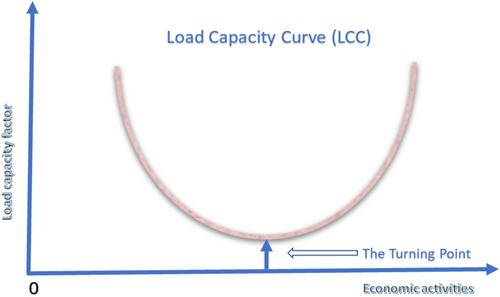
Because of the nature of science, this study has some limitations. In addition, this study provides critical future directions. First, because of the limited data on ENT, this study covers the data from 2001 to 2022. If future studies can extend the data range, they can investigate the validity of the LCC by adding income and the income square. Second, this study uses the established business ownership rate as a proxy for ENT. Future studies can deeply examine the relationships between ENT and the environment using different subheadings for ENT. Third, this study analyzes panel data because of insufficient data length. Future studies can investigate the environmental quality of individual countries with recent time series techniques (Fourier Augmented ARDL, Fourier asymmetric ARDL, quantile on quantile, time-varying causality). Fourth, our study uses LCF as the dependent variable. Future studies can test the EKC hypothesis with environmental pollution indicators for the same sample. Thus, it can be seen whether the results change according to environmental indicators. Lastly, this study allows only ENT to be asymmetric. Future studies can investigate by allowing financial deepening, foreign direct investment, and trade openness variables to be asymmetric in addition to ENT.
期刊介绍:
Business Strategy and the Environment (BSE) is a leading academic journal focused on business strategies for improving the natural environment. It publishes peer-reviewed research on various topics such as systems and standards, environmental performance, disclosure, eco-innovation, corporate environmental management tools, organizations and management, supply chains, circular economy, governance, green finance, industry sectors, and responses to climate change and other contemporary environmental issues. The journal aims to provide original contributions that enhance the understanding of sustainability in business. Its target audience includes academics, practitioners, business managers, and consultants. However, BSE does not accept papers on corporate social responsibility (CSR), as this topic is covered by its sibling journal Corporate Social Responsibility and Environmental Management. The journal is indexed in several databases and collections such as ABI/INFORM Collection, Agricultural & Environmental Science Database, BIOBASE, Emerald Management Reviews, GeoArchive, Environment Index, GEOBASE, INSPEC, Technology Collection, and Web of Science.



 京公网安备 11010802042870号
京ICP备2023020795号-1
京公网安备 11010802042870号
京ICP备2023020795号-1

 分享
分享
 求助内容:
求助内容: 应助结果提醒方式:
 扫码关注我们
