{"title":"Actively N2O-Reducing Oxygen-Tolerant Microbial Consortium Attained by Using a High-Dilution-Rate Chemostat Fed with Methanol","authors":"Yiwen Zhou, Kohei Oba, Tianxiang Xu, Megumi Kuroiwa, Tomoyuki Hori, Akihiko Terada","doi":"10.1021/acs.est.4c12732","DOIUrl":null,"url":null,"abstract":"Nitrous oxide-reducing bacteria (N<sub>2</sub>ORB) are generally considered the only biological sink for the potent greenhouse gas N<sub>2</sub>O. Although N<sub>2</sub>O consumption activities by diverse heterotrophic N<sub>2</sub>ORB have been detected, knowledge gaps remain about the phylogenies, physiologies, and activities of N<sub>2</sub>ORB. Here, we successfully enriched a methylotrophic N<sub>2</sub>ORB consortium under intermittent oxygen and N<sub>2</sub>O supplies. <sup>15</sup>N tracer analysis showed that the N<sub>2</sub>O consumption activity of the enriched consortium was higher than its N<sub>2</sub>O production activity in the presence of either a single or multiple electron acceptors (i.e., nitrogen oxides). The observed maximum N<sub>2</sub>O consumption was 80.7 μmol·g-biomass<sup>–1</sup>·h<sup>–1</sup>. Quantitative PCR results showed that clade I <i>nosZ</i> bacteria overwhelmed clade II <i>nosZ</i> bacteria at high (0.41 mmol·min<sup>–1</sup>) and low (0.08 mmol·min<sup>–1</sup>) N<sub>2</sub>O loading rates. The dilution rate and N<sub>2</sub>O loading rate affected the microbial community composition and activity. A higher N<sub>2</sub>O loading rate stimulated active and oxygen-tolerant N<sub>2</sub>ORB that boosted N<sub>2</sub>O consumption by approximately 50% in the presence of oxygen. Metagenomic analysis unraveled the predominance of a novel methylotrophic N<sub>2</sub>ORB, possessing entire denitrifying genes and high-affinity terminal oxidase genes, from the reactor with a high N<sub>2</sub>O loading rate. The unique physiological traits of the consortium enriched by methanol shed light on a novel function─aerobic N<sub>2</sub>O consumption by N<sub>2</sub>ORB─and pave the way for innovative N<sub>2</sub>O mitigation strategies applying powerful N<sub>2</sub>O sinks in engineered systems.","PeriodicalId":36,"journal":{"name":"环境科学与技术","volume":"40 1","pages":""},"PeriodicalIF":11.3000,"publicationDate":"2025-03-27","publicationTypes":"Journal Article","fieldsOfStudy":null,"isOpenAccess":false,"openAccessPdf":"","citationCount":"0","resultStr":null,"platform":"Semanticscholar","paperid":null,"PeriodicalName":"环境科学与技术","FirstCategoryId":"1","ListUrlMain":"https://doi.org/10.1021/acs.est.4c12732","RegionNum":1,"RegionCategory":"环境科学与生态学","ArticlePicture":[],"TitleCN":null,"AbstractTextCN":null,"PMCID":null,"EPubDate":"","PubModel":"","JCR":"Q1","JCRName":"ENGINEERING, ENVIRONMENTAL","Score":null,"Total":0}
引用次数: 0
Abstract
Nitrous oxide-reducing bacteria (N2ORB) are generally considered the only biological sink for the potent greenhouse gas N2O. Although N2O consumption activities by diverse heterotrophic N2ORB have been detected, knowledge gaps remain about the phylogenies, physiologies, and activities of N2ORB. Here, we successfully enriched a methylotrophic N2ORB consortium under intermittent oxygen and N2O supplies. 15N tracer analysis showed that the N2O consumption activity of the enriched consortium was higher than its N2O production activity in the presence of either a single or multiple electron acceptors (i.e., nitrogen oxides). The observed maximum N2O consumption was 80.7 μmol·g-biomass–1·h–1. Quantitative PCR results showed that clade I nosZ bacteria overwhelmed clade II nosZ bacteria at high (0.41 mmol·min–1) and low (0.08 mmol·min–1) N2O loading rates. The dilution rate and N2O loading rate affected the microbial community composition and activity. A higher N2O loading rate stimulated active and oxygen-tolerant N2ORB that boosted N2O consumption by approximately 50% in the presence of oxygen. Metagenomic analysis unraveled the predominance of a novel methylotrophic N2ORB, possessing entire denitrifying genes and high-affinity terminal oxidase genes, from the reactor with a high N2O loading rate. The unique physiological traits of the consortium enriched by methanol shed light on a novel function─aerobic N2O consumption by N2ORB─and pave the way for innovative N2O mitigation strategies applying powerful N2O sinks in engineered systems.
期刊介绍:
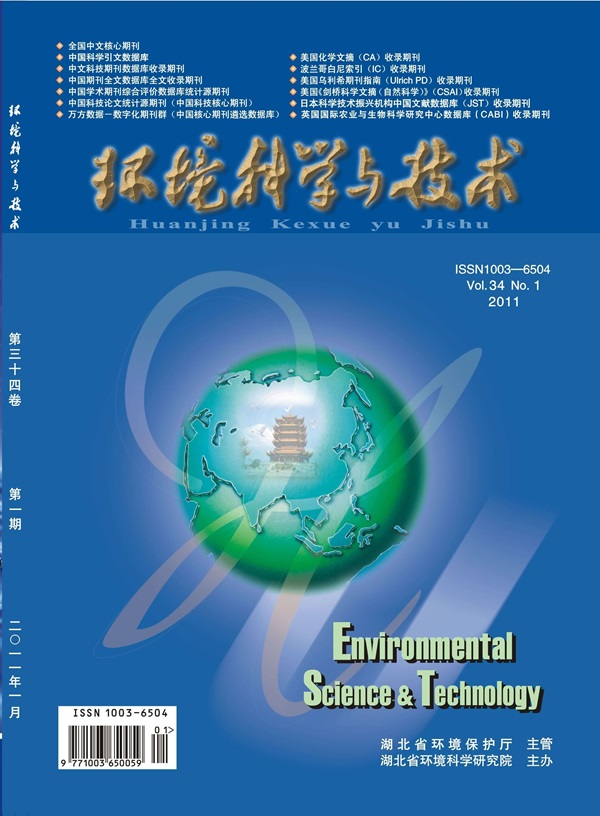
Environmental Science & Technology (ES&T) is a co-sponsored academic and technical magazine by the Hubei Provincial Environmental Protection Bureau and the Hubei Provincial Academy of Environmental Sciences.
Environmental Science & Technology (ES&T) holds the status of Chinese core journals, scientific papers source journals of China, Chinese Science Citation Database source journals, and Chinese Academic Journal Comprehensive Evaluation Database source journals. This publication focuses on the academic field of environmental protection, featuring articles related to environmental protection and technical advancements.




 京公网安备 11010802042870号
京ICP备2023020795号-1
京公网安备 11010802042870号
京ICP备2023020795号-1

 分享
分享
 求助内容:
求助内容: 应助结果提醒方式:
 扫码关注我们
