{"title":"Urban visual representation and ethical narrative risks","authors":"Yanchun Chen , Wenqiang Han , Yu Zou","doi":"10.1016/j.cities.2025.105937","DOIUrl":null,"url":null,"abstract":"<div><div>Short videos have facilitated the representation of urban physical space within the media landscape. However, this representation intentionally or unintentionally conveys certain ethical narrative issues and risks. This study utilizes DTM and social network analysis, focusing on videos and comments related to the urban landscape of Philadelphia on YouTube, aiming to awaken a new urban ethical narrative. The study reveals that the visual representation of Philadelphia not only reshapes the city's physical space but also extends its mediated memory through symbolic urban imagery. Moreover, Philadelphia's urban narrative exhibits dynamic characteristics of social construction. Throughout the evolution of urban themes at different stages, society's memory of Philadelphia emerges as a process of continuous creation, revision, and reconstruction by both recorders and viewers. Additionally, while society is engaged in weaving urban memory, the narrative obscurity stemming from stereotypes and narrative biases, alongside the narrative imbalance in how recorders and viewers construct urban memory, can easily distort the authentic image of the city. These factors present potential ethical risks in the narratives produced by urban visual media. Therefore, it is essential to advocate for values rooted in humanitarianism and peaceful order, thereby fostering the creation of a “harmonious city.”</div></div>","PeriodicalId":48405,"journal":{"name":"Cities","volume":"162 ","pages":"Article 105937"},"PeriodicalIF":6.6000,"publicationDate":"2025-03-28","publicationTypes":"Journal Article","fieldsOfStudy":null,"isOpenAccess":false,"openAccessPdf":"","citationCount":"0","resultStr":null,"platform":"Semanticscholar","paperid":null,"PeriodicalName":"Cities","FirstCategoryId":"96","ListUrlMain":"https://www.sciencedirect.com/science/article/pii/S0264275125002379","RegionNum":1,"RegionCategory":"经济学","ArticlePicture":[],"TitleCN":null,"AbstractTextCN":null,"PMCID":null,"EPubDate":"","PubModel":"","JCR":"Q1","JCRName":"URBAN STUDIES","Score":null,"Total":0}
引用次数: 0
Abstract
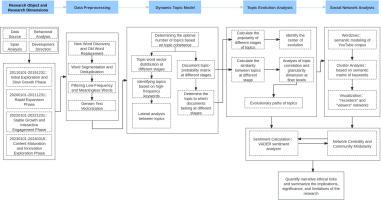
Short videos have facilitated the representation of urban physical space within the media landscape. However, this representation intentionally or unintentionally conveys certain ethical narrative issues and risks. This study utilizes DTM and social network analysis, focusing on videos and comments related to the urban landscape of Philadelphia on YouTube, aiming to awaken a new urban ethical narrative. The study reveals that the visual representation of Philadelphia not only reshapes the city's physical space but also extends its mediated memory through symbolic urban imagery. Moreover, Philadelphia's urban narrative exhibits dynamic characteristics of social construction. Throughout the evolution of urban themes at different stages, society's memory of Philadelphia emerges as a process of continuous creation, revision, and reconstruction by both recorders and viewers. Additionally, while society is engaged in weaving urban memory, the narrative obscurity stemming from stereotypes and narrative biases, alongside the narrative imbalance in how recorders and viewers construct urban memory, can easily distort the authentic image of the city. These factors present potential ethical risks in the narratives produced by urban visual media. Therefore, it is essential to advocate for values rooted in humanitarianism and peaceful order, thereby fostering the creation of a “harmonious city.”
期刊介绍:
Cities offers a comprehensive range of articles on all aspects of urban policy. It provides an international and interdisciplinary platform for the exchange of ideas and information between urban planners and policy makers from national and local government, non-government organizations, academia and consultancy. The primary aims of the journal are to analyse and assess past and present urban development and management as a reflection of effective, ineffective and non-existent planning policies; and the promotion of the implementation of appropriate urban policies in both the developed and the developing world.



 京公网安备 11010802042870号
京ICP备2023020795号-1
京公网安备 11010802042870号
京ICP备2023020795号-1

 分享
分享
 求助内容:
求助内容: 应助结果提醒方式:
 扫码关注我们
