Sivakumar Singaravelu, Heidi Abrahamse and Sathish Sundar Dhilip Kumar
{"title":"Three-dimensional bio-derived materials for biomedical applications: challenges and opportunities","authors":"Sivakumar Singaravelu, Heidi Abrahamse and Sathish Sundar Dhilip Kumar","doi":"10.1039/D4RA07531E","DOIUrl":null,"url":null,"abstract":"<p >Three-dimensional (3D) bio-derived materials are emerging as a promising approach to enhance wound healing therapies. These innovative materials can be tailored to meet the specific needs of various wound types and patients, facilitating the controlled release of therapeutic agents such as growth factors and antibiotics, which promote cell growth and tissue regeneration. Despite their potential, significant challenges remain in achieving optimal biocompatibility, ensuring structural integrity, and maintaining precise release mechanisms. Additionally, issues such as scalability, cost-effectiveness, and regulatory compliance pose substantial barriers to widespread use. However, recent advances in materials science and interdisciplinary research offer new opportunities to overcome these challenges. This review provides a comprehensive analysis of the current state of 3D bio-derived materials in biomedical applications, highlighting the types of materials available, their advantages and limitations, and the progress made in their design and development. It also outlines new directions for future research aimed at bridging the gap between scientific discoveries and their practical applications in injury healing strategies. The findings of this review underscore the significant potential of 3D bio-derived materials in revolutionizing wound healing and advancing personalized therapeutic approaches.</p>","PeriodicalId":102,"journal":{"name":"RSC Advances","volume":" 12","pages":" 9375-9397"},"PeriodicalIF":4.6000,"publicationDate":"2025-03-28","publicationTypes":"Journal Article","fieldsOfStudy":null,"isOpenAccess":false,"openAccessPdf":"https://pubs.rsc.org/en/content/articlepdf/2025/ra/d4ra07531e?page=search","citationCount":"0","resultStr":null,"platform":"Semanticscholar","paperid":null,"PeriodicalName":"RSC Advances","FirstCategoryId":"92","ListUrlMain":"https://pubs.rsc.org/en/content/articlelanding/2025/ra/d4ra07531e","RegionNum":3,"RegionCategory":"化学","ArticlePicture":[],"TitleCN":null,"AbstractTextCN":null,"PMCID":null,"EPubDate":"","PubModel":"","JCR":"Q2","JCRName":"CHEMISTRY, MULTIDISCIPLINARY","Score":null,"Total":0}
引用次数: 0
Abstract
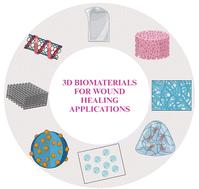
Three-dimensional (3D) bio-derived materials are emerging as a promising approach to enhance wound healing therapies. These innovative materials can be tailored to meet the specific needs of various wound types and patients, facilitating the controlled release of therapeutic agents such as growth factors and antibiotics, which promote cell growth and tissue regeneration. Despite their potential, significant challenges remain in achieving optimal biocompatibility, ensuring structural integrity, and maintaining precise release mechanisms. Additionally, issues such as scalability, cost-effectiveness, and regulatory compliance pose substantial barriers to widespread use. However, recent advances in materials science and interdisciplinary research offer new opportunities to overcome these challenges. This review provides a comprehensive analysis of the current state of 3D bio-derived materials in biomedical applications, highlighting the types of materials available, their advantages and limitations, and the progress made in their design and development. It also outlines new directions for future research aimed at bridging the gap between scientific discoveries and their practical applications in injury healing strategies. The findings of this review underscore the significant potential of 3D bio-derived materials in revolutionizing wound healing and advancing personalized therapeutic approaches.
期刊介绍:
An international, peer-reviewed journal covering all of the chemical sciences, including multidisciplinary and emerging areas. RSC Advances is a gold open access journal allowing researchers free access to research articles, and offering an affordable open access publishing option for authors around the world.




 京公网安备 11010802042870号
京ICP备2023020795号-1
京公网安备 11010802042870号
京ICP备2023020795号-1

 分享
分享
 求助内容:
求助内容: 应助结果提醒方式:
 扫码关注我们
