{"title":"Body posture aftereffects-does viewing slouched bodies change people's perception of normal posture?","authors":"Eva Tzschaschel, Ian D Stephen, Kevin Brooks","doi":"10.1098/rsos.241677","DOIUrl":null,"url":null,"abstract":"<p><p>People lead increasingly sedentary lifestyles and spend extended periods sitting in slouched and head-forward positions, which can lead to health issues. People are so accustomed to seeing slouched posture that they may perceive it as normal and fail to notice their own slouched posture. We aim to investigate this possibility using the visual adaptation paradigm, which has provided insights into the perception of body size and shape in the context of exposure to thin bodies in the media. The experiment was conducted in three phases. First, participants established the posture they perceived as normal by manipulating body stimuli shown in profile view. In the second phase, the adaptation phase, participants viewed bodies with extremely upright or slouched postures before establishing their perceived normal posture again in the third phase. Perceived normal posture differed significantly before versus after adaptation, demonstrating a visual aftereffect. However, this only applied if test and adaptation bodies were presented in the same orientation, suggesting that our representation of posture is retina-centred rather than object-centred. This result reduces the likelihood that visual adaptation influences the increase in slouched posture in the population. These results contribute to understanding visual influences on people's perception of body posture.</p>","PeriodicalId":21525,"journal":{"name":"Royal Society Open Science","volume":"12 3","pages":"241677"},"PeriodicalIF":2.9000,"publicationDate":"2025-03-26","publicationTypes":"Journal Article","fieldsOfStudy":null,"isOpenAccess":false,"openAccessPdf":"https://www.ncbi.nlm.nih.gov/pmc/articles/PMC11937922/pdf/","citationCount":"0","resultStr":null,"platform":"Semanticscholar","paperid":null,"PeriodicalName":"Royal Society Open Science","FirstCategoryId":"103","ListUrlMain":"https://doi.org/10.1098/rsos.241677","RegionNum":3,"RegionCategory":"综合性期刊","ArticlePicture":[],"TitleCN":null,"AbstractTextCN":null,"PMCID":null,"EPubDate":"2025/3/1 0:00:00","PubModel":"eCollection","JCR":"Q1","JCRName":"MULTIDISCIPLINARY SCIENCES","Score":null,"Total":0}
引用次数: 0
Abstract
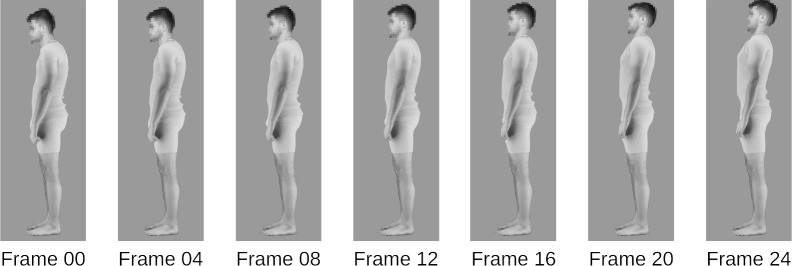
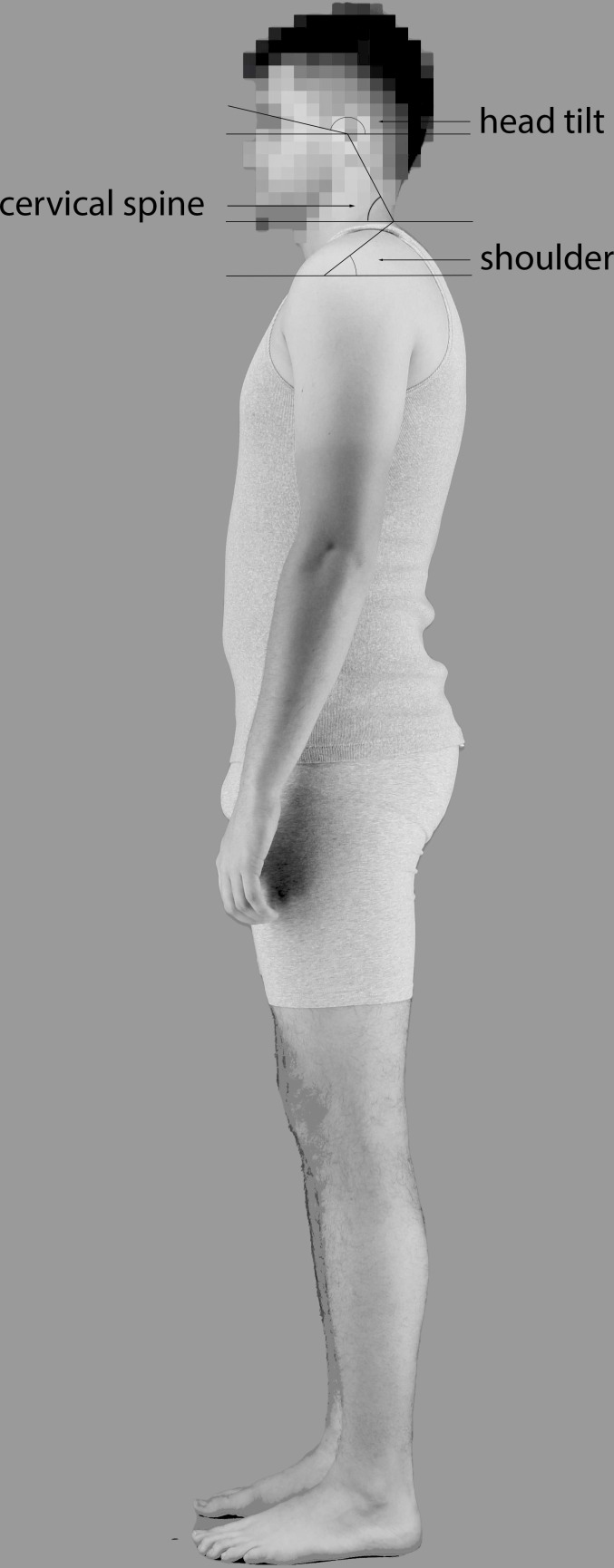
People lead increasingly sedentary lifestyles and spend extended periods sitting in slouched and head-forward positions, which can lead to health issues. People are so accustomed to seeing slouched posture that they may perceive it as normal and fail to notice their own slouched posture. We aim to investigate this possibility using the visual adaptation paradigm, which has provided insights into the perception of body size and shape in the context of exposure to thin bodies in the media. The experiment was conducted in three phases. First, participants established the posture they perceived as normal by manipulating body stimuli shown in profile view. In the second phase, the adaptation phase, participants viewed bodies with extremely upright or slouched postures before establishing their perceived normal posture again in the third phase. Perceived normal posture differed significantly before versus after adaptation, demonstrating a visual aftereffect. However, this only applied if test and adaptation bodies were presented in the same orientation, suggesting that our representation of posture is retina-centred rather than object-centred. This result reduces the likelihood that visual adaptation influences the increase in slouched posture in the population. These results contribute to understanding visual influences on people's perception of body posture.
期刊介绍:
Royal Society Open Science is a new open journal publishing high-quality original research across the entire range of science on the basis of objective peer-review.
The journal covers the entire range of science and mathematics and will allow the Society to publish all the high-quality work it receives without the usual restrictions on scope, length or impact.




 京公网安备 11010802042870号
京ICP备2023020795号-1
京公网安备 11010802042870号
京ICP备2023020795号-1

 分享
分享
 求助内容:
求助内容: 应助结果提醒方式:
 扫码关注我们
