Anqi Lin, Yanxi Ding, Zhengrui Li, Aimin Jiang, Zaoqu Liu, Hank Z H Wong, Quan Cheng, Jian Zhang, Peng Luo
{"title":"Glucagon-like peptide 1 receptor agonists and cancer risk: advancing precision medicine through mechanistic understanding and clinical evidence.","authors":"Anqi Lin, Yanxi Ding, Zhengrui Li, Aimin Jiang, Zaoqu Liu, Hank Z H Wong, Quan Cheng, Jian Zhang, Peng Luo","doi":"10.1186/s40364-025-00765-3","DOIUrl":null,"url":null,"abstract":"<p><p>Glucagon-like peptide-1 receptor agonists (GLP-1RAs) have emerged as a primary first-line treatment for type 2 diabetes. This has raised concerns about their impact on cancer risk, spurring extensive research. This review systematically examines the varied effects of GLP-1RAs on the risk of different types of tumors, including overall cancer risk and specific cancers such as thyroid, pancreatic, reproductive system, liver, and colorectal cancers. The potential biological mechanisms underlying their influence on cancer risk are complex, involving metabolic regulation, direct antitumor effects, immune modulation, and epigenetic changes. A systematic comparison with other antidiabetic agents reveals notable differences in their influence on cancer risk across drug classes. Additionally, critical factors that shape the relationship between GLP-1RAs and cancer risk are thoroughly analyzed, including patient demographics, comorbidities, treatment regimens, and lifestyle factors, offering essential insights for developing individualized treatment protocols. Despite significant research progress, critical gaps remain. Future research should prioritize elucidating the molecular mechanisms behind the antitumor effects, refining individualized treatment strategies, investigating early tumor prevention applications, assessing potential benefits for non-diabetic populations, advancing the development of novel therapies, establishing robust safety monitoring frameworks, and building precision medicine decision-making platforms. These efforts aim to establish novel roles for GLP-1RAs in cancer prevention. and treatment, thereby advancing the progress of precision medicine.</p>","PeriodicalId":54225,"journal":{"name":"Biomarker Research","volume":"13 1","pages":"50"},"PeriodicalIF":11.5000,"publicationDate":"2025-03-27","publicationTypes":"Journal Article","fieldsOfStudy":null,"isOpenAccess":false,"openAccessPdf":"https://www.ncbi.nlm.nih.gov/pmc/articles/PMC11948983/pdf/","citationCount":"0","resultStr":null,"platform":"Semanticscholar","paperid":null,"PeriodicalName":"Biomarker Research","FirstCategoryId":"3","ListUrlMain":"https://doi.org/10.1186/s40364-025-00765-3","RegionNum":2,"RegionCategory":"医学","ArticlePicture":[],"TitleCN":null,"AbstractTextCN":null,"PMCID":null,"EPubDate":"","PubModel":"","JCR":"Q1","JCRName":"MEDICINE, RESEARCH & EXPERIMENTAL","Score":null,"Total":0}
引用次数: 0
Abstract
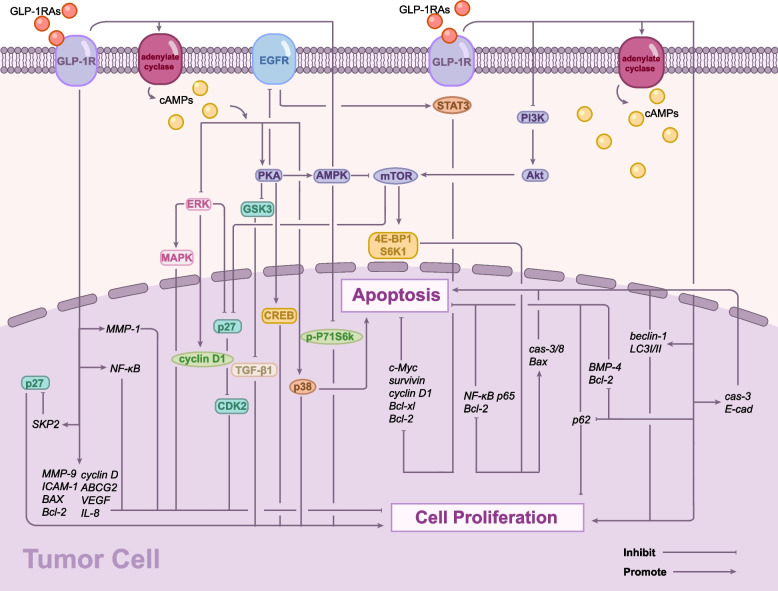
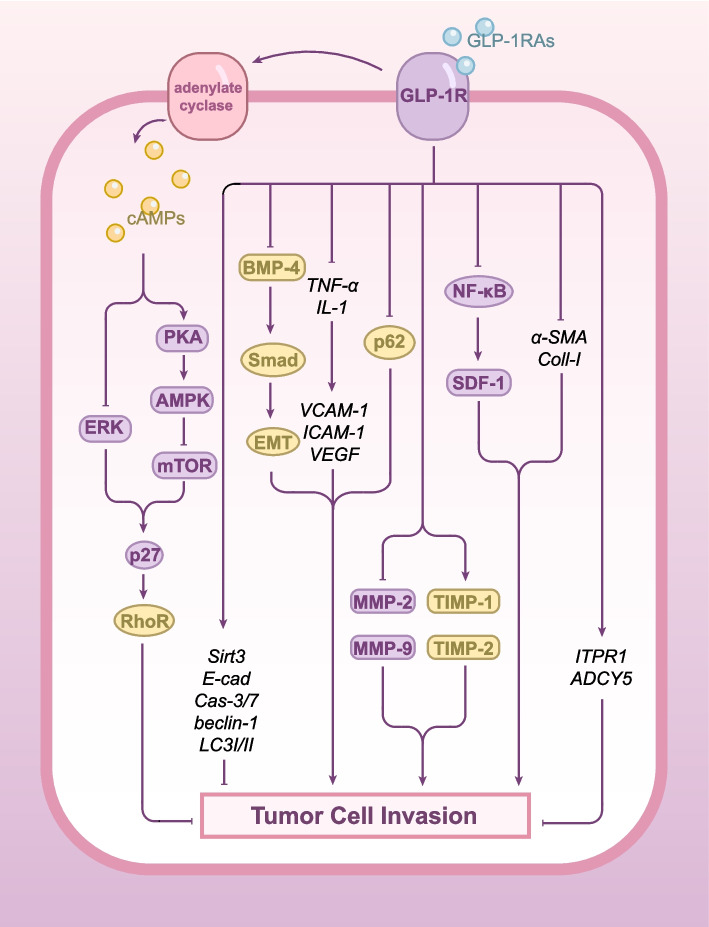
Glucagon-like peptide-1 receptor agonists (GLP-1RAs) have emerged as a primary first-line treatment for type 2 diabetes. This has raised concerns about their impact on cancer risk, spurring extensive research. This review systematically examines the varied effects of GLP-1RAs on the risk of different types of tumors, including overall cancer risk and specific cancers such as thyroid, pancreatic, reproductive system, liver, and colorectal cancers. The potential biological mechanisms underlying their influence on cancer risk are complex, involving metabolic regulation, direct antitumor effects, immune modulation, and epigenetic changes. A systematic comparison with other antidiabetic agents reveals notable differences in their influence on cancer risk across drug classes. Additionally, critical factors that shape the relationship between GLP-1RAs and cancer risk are thoroughly analyzed, including patient demographics, comorbidities, treatment regimens, and lifestyle factors, offering essential insights for developing individualized treatment protocols. Despite significant research progress, critical gaps remain. Future research should prioritize elucidating the molecular mechanisms behind the antitumor effects, refining individualized treatment strategies, investigating early tumor prevention applications, assessing potential benefits for non-diabetic populations, advancing the development of novel therapies, establishing robust safety monitoring frameworks, and building precision medicine decision-making platforms. These efforts aim to establish novel roles for GLP-1RAs in cancer prevention. and treatment, thereby advancing the progress of precision medicine.
Biomarker ResearchBiochemistry, Genetics and Molecular Biology-Molecular Medicine
CiteScore
15.80
自引率
1.80%
发文量
80
审稿时长
10 weeks
期刊介绍:
Biomarker Research, an open-access, peer-reviewed journal, covers all aspects of biomarker investigation. It seeks to publish original discoveries, novel concepts, commentaries, and reviews across various biomedical disciplines. The field of biomarker research has progressed significantly with the rise of personalized medicine and individual health. Biomarkers play a crucial role in drug discovery and development, as well as in disease diagnosis, treatment, prognosis, and prevention, particularly in the genome era.




 京公网安备 11010802042870号
京ICP备2023020795号-1
京公网安备 11010802042870号
京ICP备2023020795号-1

 分享
分享
 求助内容:
求助内容: 应助结果提醒方式:
 扫码关注我们
