Natalia Juica, Gonzalo Bustos-Quevedo, Sindy Devis, Nicolas Oneto, Carolina Klagges, Jeffri Retamal and Luis Constandil
{"title":"Acaricidal activity of geraniol-loaded lignin nanoparticles for the control of Brevipalpus chilensis: an eco-friendly approach to crop protection†","authors":"Natalia Juica, Gonzalo Bustos-Quevedo, Sindy Devis, Nicolas Oneto, Carolina Klagges, Jeffri Retamal and Luis Constandil","doi":"10.1039/D5EN00155B","DOIUrl":null,"url":null,"abstract":"<p >The environmental pollution and health risks associated with synthetic pesticides have driven increasing interest in plant-derived biopesticides like geraniol. However, their practical application is limited by high volatility and low solubility. In this study, lignin nanoparticles were used as a carrier system to enhance the stability and acaricidal efficacy of geraniol against <em>Brevipalpus chilensis</em>. The nanoprecipitation process enabled the synthesis of spherical geraniol-loaded lignin nanoparticles with an average size of 200 ± 27.2 nm, a surface charge of −29 ± 3.9 mV and an encapsulation efficiency of 46.5%. The release profile of encapsulated geraniol was assessed, and UV exposure assays demonstrated significantly improved stability compared to free geraniol. Bioassays revealed significantly higher mortality rates of <em>Brevipalpus chilensis</em> when treated with geraniol-loaded nanoparticles compared to free geraniol, highlighting the enhanced efficacy of the encapsulated compound. Additionally, nanoparticle formulations exhibited low cytotoxicity in HeLa cells. Overall, this study underscores the potential of lignin nanoparticles as a promising delivery system for optimizing biopesticide formulations in sustainable agriculture.</p>","PeriodicalId":73,"journal":{"name":"Environmental Science: Nano","volume":" 5","pages":" 2767-2774"},"PeriodicalIF":5.1000,"publicationDate":"2025-03-28","publicationTypes":"Journal Article","fieldsOfStudy":null,"isOpenAccess":false,"openAccessPdf":"https://pubs.rsc.org/en/content/articlepdf/2025/en/d5en00155b?page=search","citationCount":"0","resultStr":null,"platform":"Semanticscholar","paperid":null,"PeriodicalName":"Environmental Science: Nano","FirstCategoryId":"6","ListUrlMain":"https://pubs.rsc.org/en/content/articlelanding/2025/en/d5en00155b","RegionNum":2,"RegionCategory":"环境科学与生态学","ArticlePicture":[],"TitleCN":null,"AbstractTextCN":null,"PMCID":null,"EPubDate":"","PubModel":"","JCR":"Q1","JCRName":"CHEMISTRY, MULTIDISCIPLINARY","Score":null,"Total":0}
引用次数: 0
Abstract
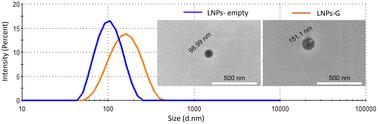
The environmental pollution and health risks associated with synthetic pesticides have driven increasing interest in plant-derived biopesticides like geraniol. However, their practical application is limited by high volatility and low solubility. In this study, lignin nanoparticles were used as a carrier system to enhance the stability and acaricidal efficacy of geraniol against Brevipalpus chilensis. The nanoprecipitation process enabled the synthesis of spherical geraniol-loaded lignin nanoparticles with an average size of 200 ± 27.2 nm, a surface charge of −29 ± 3.9 mV and an encapsulation efficiency of 46.5%. The release profile of encapsulated geraniol was assessed, and UV exposure assays demonstrated significantly improved stability compared to free geraniol. Bioassays revealed significantly higher mortality rates of Brevipalpus chilensis when treated with geraniol-loaded nanoparticles compared to free geraniol, highlighting the enhanced efficacy of the encapsulated compound. Additionally, nanoparticle formulations exhibited low cytotoxicity in HeLa cells. Overall, this study underscores the potential of lignin nanoparticles as a promising delivery system for optimizing biopesticide formulations in sustainable agriculture.
期刊介绍:
Environmental Science: Nano serves as a comprehensive and high-impact peer-reviewed source of information on the design and demonstration of engineered nanomaterials for environment-based applications. It also covers the interactions between engineered, natural, and incidental nanomaterials with biological and environmental systems. This scope includes, but is not limited to, the following topic areas:
Novel nanomaterial-based applications for water, air, soil, food, and energy sustainability
Nanomaterial interactions with biological systems and nanotoxicology
Environmental fate, reactivity, and transformations of nanoscale materials
Nanoscale processes in the environment
Sustainable nanotechnology including rational nanomaterial design, life cycle assessment, risk/benefit analysis



 京公网安备 11010802042870号
京ICP备2023020795号-1
京公网安备 11010802042870号
京ICP备2023020795号-1

 分享
分享
 求助内容:
求助内容: 应助结果提醒方式:
 扫码关注我们
