Matthew Burke, , , Emma Wells, , , Caleb Larison, , , Gouthami Rao, , , Matthew James Bentley, , , Yarrow S. Linden, , , Patrick Smeets, , , Jennifer DeFrance, , , Joe Brown, , and , Karl G. Linden*,
{"title":"Systematic Review of Microorganism Removal Performance by Physiochemical Water Treatment Technologies","authors":"Matthew Burke, , , Emma Wells, , , Caleb Larison, , , Gouthami Rao, , , Matthew James Bentley, , , Yarrow S. Linden, , , Patrick Smeets, , , Jennifer DeFrance, , , Joe Brown, , and , Karl G. Linden*, ","doi":"10.1021/acs.est.4c03459","DOIUrl":null,"url":null,"abstract":"<p >Access to safe drinking water is crucial for public health necessitating the use of effective water treatment processes. We conducted a systematic literature review on microorganism removal by physical treatment processes used in drinking water treatment systems with the aim of providing current summary data to update the World Health Organization’s Guidelines for Drinking Water Quality (GDWQ) and to reflect on the data available for comparison of treatment technologies. We reviewed peer-reviewed articles reporting original data that were published between 1997 and March 2022 on the following physical treatment technologies: roughing filters, storage reservoirs, bank filtration, conventional and high-rate clarification, dissolved air flotation, lime softening, granular media filtration, slow sand filtration, precoat filtration, membrane filtration, granular activated carbon, ceramic membrane filtration, and soil aquifer treatment. The literature search was conducted in several databases including Web of Science and PubMed. Data from 165 articles were included in the analysis and used to calculate Log Reduction Values (LRVs) for each technology by microbial contaminant type (bacteria, virus, or protozoa). The quantity and quality of data ranged widely for each technology. We found granular media, membranes (microfiltration (MF), ultrafiltration (UF), and reverse osmosis (RO)), and precoat filtration to remove the most protozoa with average LRVs of 3.0 (95% CI 2.8–3.3), 5.7 (95% CI 5.4–6.0), and 4.4 (95% CI 4.1–4.7), respectively. Bacteria was removed most effectively by membrane filtration (MF, UF, RO) with average LRVs of 4.5 (95% CI 3.9–5.1) and moderately by dissolved air flotation, lime softening, and soil aquifer treatment with average LRVs of 2.7, 2.6, and 2.4 respectively. Viruses were removed most effectively by reverse osmosis membrane filtration with an average LRV of 4.9 (95% CI 4.0–5.7). This data provides valuable information on pathogen reduction and areas of needed research. The variation in results underscores the importance of further consideration when selecting technologies to use and the need for standardized reporting in both lab and field studies. It is important to consider variables in water quality and technology operation that may impact treatment effectiveness when selecting treatment options for use. The findings contribute to ongoing efforts to revise the WHO’s GDWQ, offering updated insights into LRVs for different water treatment technologies.</p>","PeriodicalId":36,"journal":{"name":"环境科学与技术","volume":"59 41","pages":"21763–21775"},"PeriodicalIF":11.3000,"publicationDate":"2025-03-28","publicationTypes":"Journal Article","fieldsOfStudy":null,"isOpenAccess":false,"openAccessPdf":"","citationCount":"0","resultStr":null,"platform":"Semanticscholar","paperid":null,"PeriodicalName":"环境科学与技术","FirstCategoryId":"1","ListUrlMain":"https://pubs.acs.org/doi/10.1021/acs.est.4c03459","RegionNum":1,"RegionCategory":"环境科学与生态学","ArticlePicture":[],"TitleCN":null,"AbstractTextCN":null,"PMCID":null,"EPubDate":"","PubModel":"","JCR":"Q1","JCRName":"ENGINEERING, ENVIRONMENTAL","Score":null,"Total":0}
引用次数: 0
Abstract
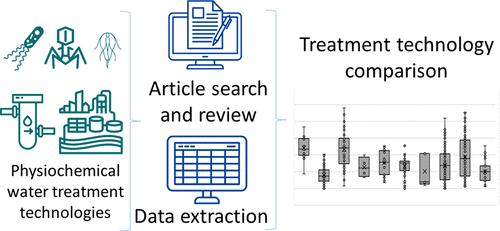
Access to safe drinking water is crucial for public health necessitating the use of effective water treatment processes. We conducted a systematic literature review on microorganism removal by physical treatment processes used in drinking water treatment systems with the aim of providing current summary data to update the World Health Organization’s Guidelines for Drinking Water Quality (GDWQ) and to reflect on the data available for comparison of treatment technologies. We reviewed peer-reviewed articles reporting original data that were published between 1997 and March 2022 on the following physical treatment technologies: roughing filters, storage reservoirs, bank filtration, conventional and high-rate clarification, dissolved air flotation, lime softening, granular media filtration, slow sand filtration, precoat filtration, membrane filtration, granular activated carbon, ceramic membrane filtration, and soil aquifer treatment. The literature search was conducted in several databases including Web of Science and PubMed. Data from 165 articles were included in the analysis and used to calculate Log Reduction Values (LRVs) for each technology by microbial contaminant type (bacteria, virus, or protozoa). The quantity and quality of data ranged widely for each technology. We found granular media, membranes (microfiltration (MF), ultrafiltration (UF), and reverse osmosis (RO)), and precoat filtration to remove the most protozoa with average LRVs of 3.0 (95% CI 2.8–3.3), 5.7 (95% CI 5.4–6.0), and 4.4 (95% CI 4.1–4.7), respectively. Bacteria was removed most effectively by membrane filtration (MF, UF, RO) with average LRVs of 4.5 (95% CI 3.9–5.1) and moderately by dissolved air flotation, lime softening, and soil aquifer treatment with average LRVs of 2.7, 2.6, and 2.4 respectively. Viruses were removed most effectively by reverse osmosis membrane filtration with an average LRV of 4.9 (95% CI 4.0–5.7). This data provides valuable information on pathogen reduction and areas of needed research. The variation in results underscores the importance of further consideration when selecting technologies to use and the need for standardized reporting in both lab and field studies. It is important to consider variables in water quality and technology operation that may impact treatment effectiveness when selecting treatment options for use. The findings contribute to ongoing efforts to revise the WHO’s GDWQ, offering updated insights into LRVs for different water treatment technologies.
获得安全饮用水对公共健康至关重要,因此必须使用有效的水处理工艺。我们对饮用水处理系统中使用的物理处理工艺的微生物去除进行了系统的文献综述,目的是提供当前的汇总数据,以更新世界卫生组织的《饮用水质量指南》(GDWQ),并反思可用于比较处理技术的数据。我们回顾了1997年至2022年3月期间发表的同行评审的文章,这些文章报告了以下物理处理技术的原始数据:粗过滤器、储水池、堤防过滤、常规和高速澄清、溶气浮选、石灰软化、颗粒介质过滤、慢砂过滤、预膜过滤、膜过滤、颗粒活性炭、陶瓷膜过滤和土壤含水层处理。文献检索在Web of Science和PubMed等多个数据库中进行。来自165篇文章的数据被纳入分析,并用于按微生物污染物类型(细菌、病毒或原生动物)计算每种技术的对数减少值(lrv)。每种技术的数据数量和质量差别很大。我们发现颗粒介质、膜(微滤(MF)、超滤(UF)和反渗透(RO))和预膜过滤去除的原生动物最多,平均LRVs分别为3.0 (95% CI 2.8-3.3)、5.7 (95% CI 5.4-6.0)和4.4 (95% CI 4.1-4.7)。膜过滤(MF、UF、RO)对细菌的去除效果最好,平均LRVs为4.5 (95% CI为3.9 ~ 5.1);溶气浮选、石灰软化和土壤含水层处理对细菌的去除效果较好,平均LRVs分别为2.7、2.6和2.4。反渗透膜滤除病毒效果最好,平均LRV为4.9 (95% CI 4.0 ~ 5.7)。这些数据为减少病原体和需要进行研究的领域提供了有价值的信息。结果的差异强调了在选择使用的技术时进一步考虑的重要性,以及在实验室和实地研究中进行标准化报告的必要性。在选择使用的处理方案时,考虑可能影响处理效果的水质和技术操作变量是很重要的。这些发现有助于修订世卫组织GDWQ的持续努力,为不同水处理技术的lrv提供最新见解。
期刊介绍:
Environmental Science & Technology (ES&T) is a co-sponsored academic and technical magazine by the Hubei Provincial Environmental Protection Bureau and the Hubei Provincial Academy of Environmental Sciences.
Environmental Science & Technology (ES&T) holds the status of Chinese core journals, scientific papers source journals of China, Chinese Science Citation Database source journals, and Chinese Academic Journal Comprehensive Evaluation Database source journals. This publication focuses on the academic field of environmental protection, featuring articles related to environmental protection and technical advancements.




 京公网安备 11010802042870号
京ICP备2023020795号-1
京公网安备 11010802042870号
京ICP备2023020795号-1

 分享
分享
 求助内容:
求助内容: 应助结果提醒方式:
 扫码关注我们
