{"title":"Genetic, Epigenetic, and Hormonal Regulation of Stress Phenotypes in Major Depressive Disorder: From Maladaptation to Resilience.","authors":"Anushka Arvind, S Sreelekshmi, Neelima Dubey","doi":"10.1007/s10571-025-01549-x","DOIUrl":null,"url":null,"abstract":"<p><p>Major Depressive Disorder (MDD) is a complex psychiatric disorder with varied molecular mechanisms underlying its aetiology, diagnosis, and treatment. This review explores the crucial roles of stress, genetics, epigenetics, and hormones in shaping susceptibility and resilience to mood disorders. We discuss how acute stress can be beneficial, while prolonged stress disrupts brain function, leading to MDD. The review also highlights the significance of various animal models in understanding depression pathophysiology, including zebrafish, mice, and rats, which exhibit distinct sex differences in stress responses. Furthermore, we delve into the molecular bases of susceptible and resilient phenotypes, focusing on genetic aspects such as gene polymorphisms, mutations, and telomere length alterations. The review also examines epigenetic aspects including DNA methylation, histone acetylation and deacetylation, histone methylation and HMTs, and miRNA, which contribute to the development of MDD. Additionally, we explore the role of hormones such as estrogen, progesterone, and prolactin in modulating stress responses and influencing MDD susceptibility and resilience. Finally, we discuss the clinical implications of these findings, including recent clinical methods for determining MDD susceptibility and resiliency phenotypes. By consolidating the current knowledge and insights, this review aims to provide a comprehensive understanding of the molecular basis of susceptibility and resilience in mood disorders, contributing to the ongoing efforts in combating this debilitating disorder.</p>","PeriodicalId":9742,"journal":{"name":"Cellular and Molecular Neurobiology","volume":"45 1","pages":"29"},"PeriodicalIF":4.8000,"publicationDate":"2025-03-26","publicationTypes":"Journal Article","fieldsOfStudy":null,"isOpenAccess":false,"openAccessPdf":"https://www.ncbi.nlm.nih.gov/pmc/articles/PMC11947386/pdf/","citationCount":"0","resultStr":null,"platform":"Semanticscholar","paperid":null,"PeriodicalName":"Cellular and Molecular Neurobiology","FirstCategoryId":"3","ListUrlMain":"https://doi.org/10.1007/s10571-025-01549-x","RegionNum":4,"RegionCategory":"医学","ArticlePicture":[],"TitleCN":null,"AbstractTextCN":null,"PMCID":null,"EPubDate":"","PubModel":"","JCR":"Q3","JCRName":"CELL BIOLOGY","Score":null,"Total":0}
引用次数: 0
Abstract
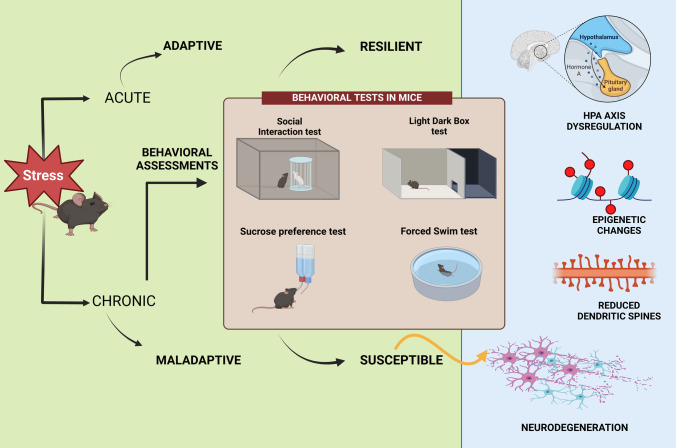
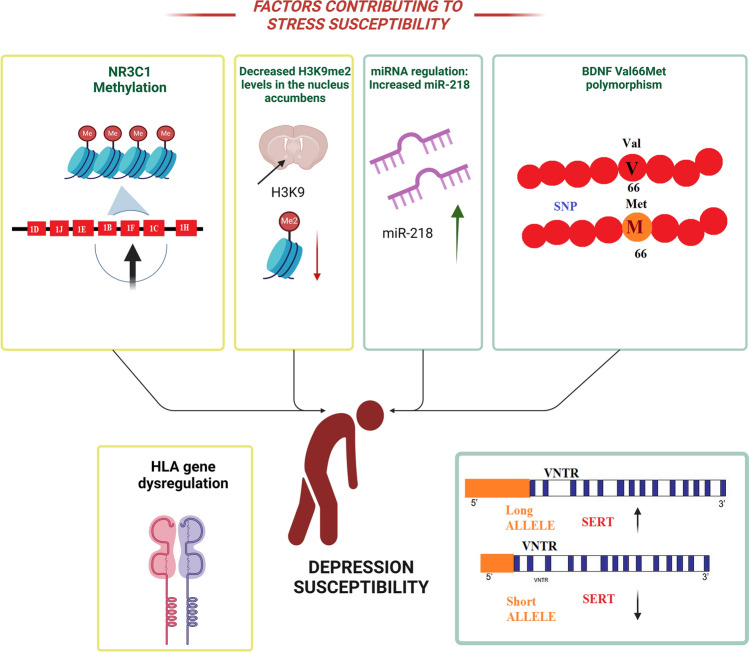
Major Depressive Disorder (MDD) is a complex psychiatric disorder with varied molecular mechanisms underlying its aetiology, diagnosis, and treatment. This review explores the crucial roles of stress, genetics, epigenetics, and hormones in shaping susceptibility and resilience to mood disorders. We discuss how acute stress can be beneficial, while prolonged stress disrupts brain function, leading to MDD. The review also highlights the significance of various animal models in understanding depression pathophysiology, including zebrafish, mice, and rats, which exhibit distinct sex differences in stress responses. Furthermore, we delve into the molecular bases of susceptible and resilient phenotypes, focusing on genetic aspects such as gene polymorphisms, mutations, and telomere length alterations. The review also examines epigenetic aspects including DNA methylation, histone acetylation and deacetylation, histone methylation and HMTs, and miRNA, which contribute to the development of MDD. Additionally, we explore the role of hormones such as estrogen, progesterone, and prolactin in modulating stress responses and influencing MDD susceptibility and resilience. Finally, we discuss the clinical implications of these findings, including recent clinical methods for determining MDD susceptibility and resiliency phenotypes. By consolidating the current knowledge and insights, this review aims to provide a comprehensive understanding of the molecular basis of susceptibility and resilience in mood disorders, contributing to the ongoing efforts in combating this debilitating disorder.
期刊介绍:
Cellular and Molecular Neurobiology publishes original research concerned with the analysis of neuronal and brain function at the cellular and subcellular levels. The journal offers timely, peer-reviewed articles that describe anatomic, genetic, physiologic, pharmacologic, and biochemical approaches to the study of neuronal function and the analysis of elementary mechanisms. Studies are presented on isolated mammalian tissues and intact animals, with investigations aimed at the molecular mechanisms or neuronal responses at the level of single cells. Cellular and Molecular Neurobiology also presents studies of the effects of neurons on other organ systems, such as analysis of the electrical or biochemical response to neurotransmitters or neurohormones on smooth muscle or gland cells.




 京公网安备 11010802042870号
京ICP备2023020795号-1
京公网安备 11010802042870号
京ICP备2023020795号-1

 分享
分享
 求助内容:
求助内容: 应助结果提醒方式:
 扫码关注我们
